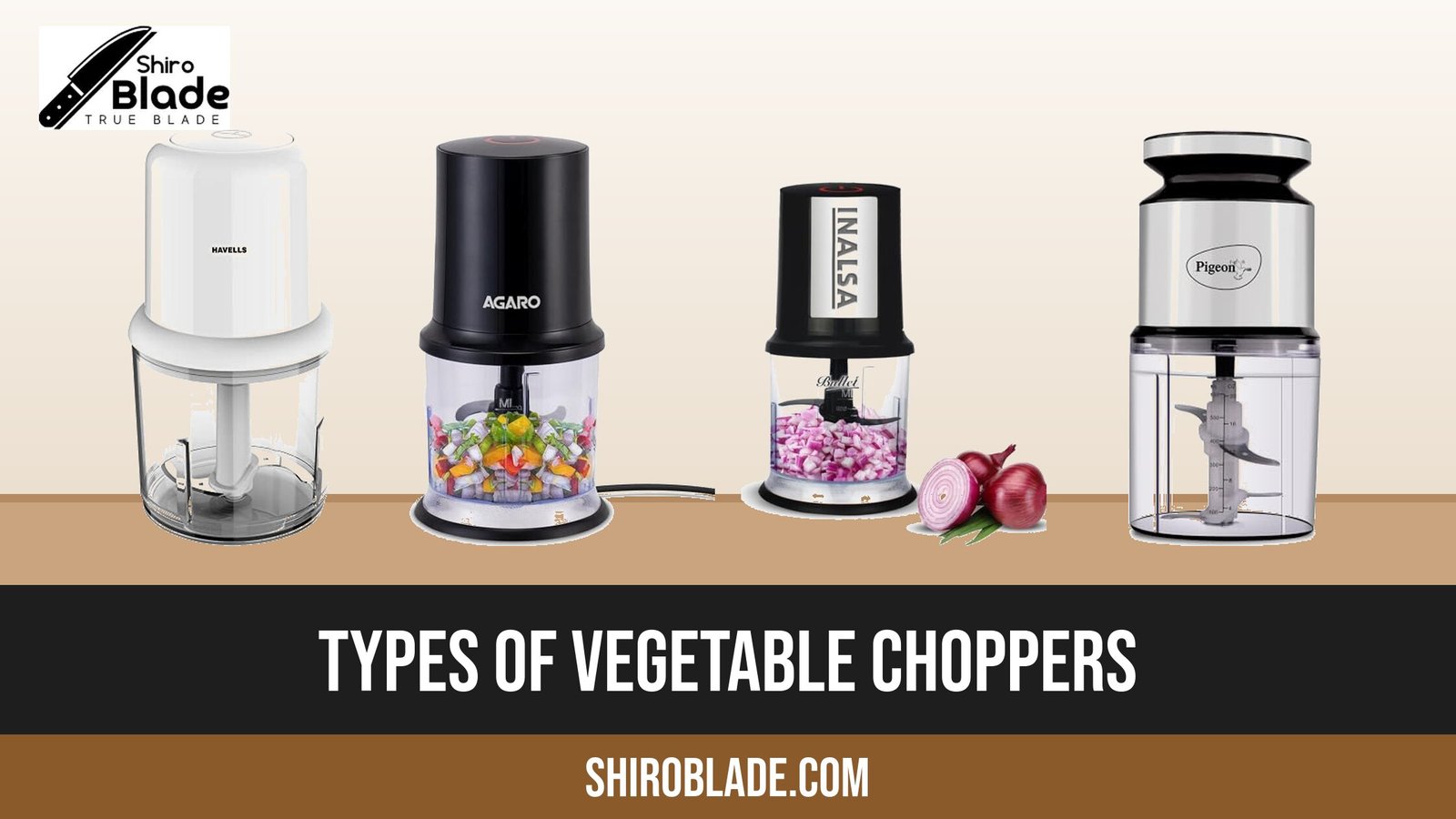
Walk into any Indian kitchenware shop or open Amazon.in and you will find a dozen things called a vegetable chopper. Some run on a string, some on a 400 W motor, and some on a USB battery. They look similar, but they suit very different kitchens.
This guide explains the main types of chopper, how each one works, what it chops well, what it can’t do, and the price range you can expect, so you buy the right one the first time.
Affiliate disclosure: Some links on this page are Amazon.in affiliate links. If you buy through them, I may earn a small commission at no extra cost to you. Read the disclosure.
Short Answer: The Main Types of Chopper
There are six common types of vegetable chopper in India: manual press choppers, pull-cord (string) choppers, push-through dicers, corded electric choppers, cordless rechargeable choppers and chopping bowls that attach to a hand blender or food processor. For a family that cooks an onion-tomato or ginger-garlic base every day, a 300 to 400 W electric chopper saves the most time. A pull-cord chopper is the best no-power option.
| Type | Power | Typical price |
|---|---|---|
|
Manual press chopper |
Your hand |
₹200 to ₹600 |
|
Pull-cord chopper |
Your hand |
₹230 to ₹1,000 |
|
Push-through dicer |
Your hand |
₹300 to ₹1,200 |
|
Electric chopper |
200 to 400 W, corded |
₹1,400 to ₹3,000 |
|
Cordless chopper |
30 to 45 W, battery |
₹600 to ₹1,200 |
|
Hand blender or processor bowl |
Shared motor |
₹2,500 and up |
Prices are typical ranges on Amazon.in and brand stores in October 2026. Check the latest price before you buy.
1. Manual Press Chopper (Plunger Chopper)
A manual press chopper has a spring-loaded plunger on top of a cup. Each time you press down, a zigzag stainless steel blade drops into the food and turns a few degrees, so every press cuts at a new angle. Ten to fifteen presses turn a quartered onion into a fine chop.
- Good for: one onion, a handful of nuts for kheer, coriander and mint, boiled eggs
- Not good for: tomatoes (they turn to pulp), large batches, ginger with fibres
- Watch out for: small bowls, usually 200 to 500 ml, and plastic plungers that crack if you press too hard
2. Pull-Cord Chopper (String Chopper)
The pull-cord chopper is the most popular no-power type in India. You pull a string on the lid and a gear spins 2 to 5 curved blades inside a 500 to 900 ml bowl. More pulls give a finer chop. Borosil, Wonderchef, Pigeon and Tupperware all sell versions, and some come with a whisk attachment for buttermilk or eggs.
- Good for: onion, tomato, capsicum, coriander, green chillies, salsa and chutney bases
- Not good for: carrots, beetroot, coconut and dry nuts in large amounts, which strain the cord
- Watch out for: the cord and its gear are the weak points; pull straight and gently, never yank to the end
3. Push-Through Dicer (Vegetable Cutter with Grid)
A dicer is a box with a steel grid blade. You place half an onion, a potato or a cucumber on the grid and press the lid down, and the vegetable comes out as even cubes or sticks in the tray below. Most come with 2 to 4 grid sizes, roughly 6 mm, 10 mm and 13 mm.
It is the only chopper type that gives you neat, uniform dice for salads, kachumber, poha, upma and aloo sabzi. It does not mince, so it is no help for ginger-garlic paste.
4. Electric Chopper (Corded)
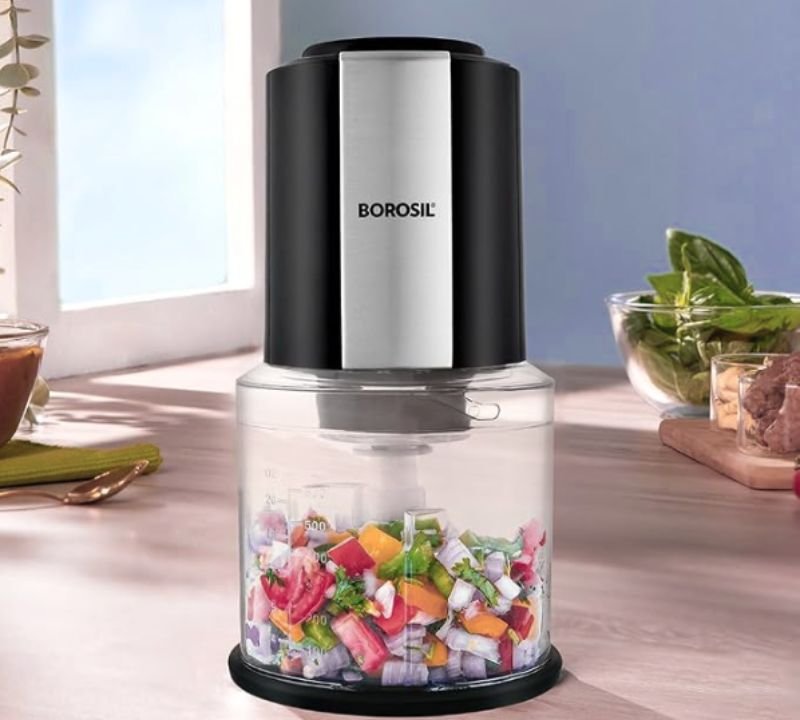
An electric chopper has a motor unit that sits on top of a bowl, usually 0.5 to 2 litres. Pressing the top runs a twin, triple or four-level stainless steel blade at high speed. Most models sold in India are rated 200 W to 400 W. A 300 W motor handles onions, tomatoes, ginger, garlic and herbs easily, and a 400 W motor is better for carrots, nuts, coconut pieces and boneless meat.
Popular models include the Borosil Chef Delite 300W with a thermal cut-off and the Inalsa Bullet 400W with a copper-wound motor. We compared eight of them in our list of the best electric vegetable choppers in India.
- Good for: a daily masala base, ginger-garlic, chutney, nuts, keema, breadcrumbs
- Not good for: dry spices, rice, ice and coffee beans; that is a mixer grinder job
- Watch out for: run time limits of about 30 to 60 seconds; pulse and rest the motor
5. Cordless Rechargeable Chopper
A cordless chopper is a small electric chopper with a lithium battery, usually charged by USB-C in about 2 hours. Motors are around 30 to 45 W and bowls hold 250 to 350 ml. That is enough for a few cloves of garlic, a piece of ginger, green chillies or half an onion.
It suits bachelor kitchens, hostels, travel and quick baby food. It is not a replacement for a corded chopper in a family kitchen, because it chops coarser, holds less and slows down as the battery runs low.
6. Hand Blender or Food Processor Chopping Bowl
Many hand blenders and food processors come with a chopping bowl and blade. You fit the bowl under the same motor you use for blending soups or kneading dough. It saves counter space, but the setup takes longer and the bowls are often smaller than a dedicated chopper. If you already own a mixer grinder and food processor, check for this attachment before buying a separate chopper.
Manual vs Electric Chopper: Which Type Is Better?
| Point | Manual (press or pull) | Electric (corded or cordless) |
|---|---|---|
|
Speed |
30 to 60 seconds per onion |
5 to 10 seconds per onion |
|
Batch size |
Small to medium |
Medium to large |
|
Hard foods |
Struggles with carrot and nuts |
Handles them at 300 to 400 W |
|
Control |
Very good, you feel each pull |
Good with short pulses |
|
Power cut |
Works anyway |
Corded stops; cordless works if charged |
|
Noise |
Quiet |
Loud for a few seconds |
|
Price |
₹200 to ₹1,000 |
₹600 to ₹3,000 |
For most Indian homes, the best answer is one electric chopper for daily onion and ginger-garlic, plus a sharp knife for slicing. Our guide to the uses of an electric chopper shows how much daily prep it can take over.
How to Choose the Right Type of Chopper
1. How Much Do You Chop?
One or two people chopping one onion a day can manage with a pull-cord chopper. A family of four or more that makes curry, sambar and chutney daily should buy a 300 to 400 W electric chopper with a 500 ml to 900 ml bowl. Joint families and meal preppers can look at 1.5 to 2 litre steel bowls.
2. What Do You Chop Most?
Soft vegetables and herbs work in every type. Carrots, beetroot, coconut, nuts and boneless meat need an electric motor. Neat cubes for salad need a dicer or a knife, because blade choppers can only mince.
3. Check Safety and Build
For electric choppers, look for a lid lock that stops the blade unless the motor is seated, a thermal cut-off, anti-skid feet and the ISI mark. Kitchen machines sold in India are covered by Indian safety standards from the Bureau of Indian Standards. For manual choppers, check that the blades are stainless steel and the bowl is BPA-free.
4. Keep a Knife for What a Chopper Can't Do
No chopper slices thin onion rings for biryani, julienne carrots or neat bhindi rounds. Our guide to the types of vegetable cutting shows which cuts need a knife, and the types of kitchen knives guide shows which blade suits each job.
Conclusion
Each type of chopper solves a different problem. Pull-cord and press choppers are cheap, quiet and work without power. Dicers give neat cubes. Cordless choppers handle small jobs anywhere. A corded electric chopper is the one that saves real time in a busy Indian kitchen. If that is the type you need, start with our tested list of the best electric vegetable choppers in India.
FAQs
How many types of chopper are there?
For home kitchens there are six common types: manual press choppers, pull-cord choppers, push-through dicers, corded electric choppers, cordless rechargeable choppers and chopping bowls that attach to a hand blender or food processor.
Which type of chopper is best for onions?
A 300 W or stronger electric chopper is fastest for daily onions. A pull-cord chopper is the best no-power option for one or two onions at a time.
Is a pull chopper better than an electric chopper?
A pull chopper is cheaper, quieter and works in a power cut, but it is slower and struggles with hard vegetables and nuts. An electric chopper is better for large batches and harder foods.
Can a chopper make cubes for salad?
Blade choppers mince food; they do not make even cubes. Use a push-through dicer with a grid blade, or a sharp knife, for neat salad cubes.
Are cordless choppers good?
They are good for small jobs such as garlic, ginger and chillies. With 30 to 45 W motors and 250 to 350 ml bowls, they are not a substitute for a corded chopper in a family kitchen.

Indian knife collector with a deep respect for Japanese knife making. What began as an interest in Damascus patterns grew into a focused study of Japanese knives from Sakai and Seki. Through Shiroblade, I share simple guides on buying, using, and caring for knives, helping readers understand real craftsmanship beyond looks.