
Even a stainless steel knife can get orange spots, especially in a humid Indian kitchen or after a night in the sink. Most of the time it is surface rust, and you can remove it with things you already have: baking soda, vinegar, lemon and salt.
This guide shows you how to remove rust from knives safely, which method suits light or heavy rust, and how to stop the rust from coming back.
Affiliate disclosure: Some links on this page are Amazon.in affiliate links. If you buy through them, I may earn a small commission at no extra cost to you. Read the disclosure.
Short Answer: How to Remove Rust from Knives
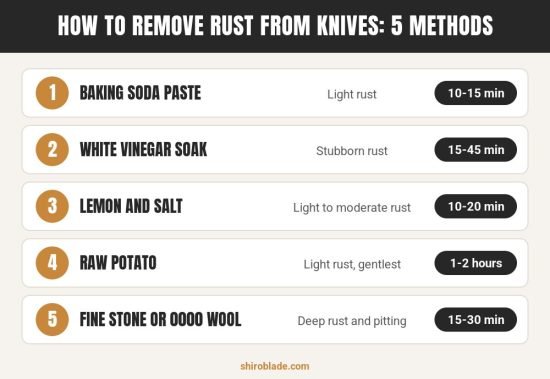
For light rust, make a thick paste of baking soda and water, rub it on the spots with a soft sponge or old toothbrush, wait 5 to 10 minutes, then scrub, rinse and dry. For stubborn rust, soak the blade in white vinegar for 5 to 30 minutes and scrub with a non-scratch scrubber. Always dry the knife completely and wipe on a thin layer of food-safe oil afterwards.
| Method | Best for | Time |
|---|---|---|
|
Baking soda paste |
Light spots on stainless steel |
10 to 15 minutes |
|
White vinegar soak |
Moderate or stubborn rust |
15 to 45 minutes |
|
Lemon juice and salt |
Light to moderate rust |
10 to 20 minutes |
|
Raw potato |
Light rust, gentle on the blade |
1 to 2 hours |
|
Fine abrasive or sharpening stone |
Deep rust and pitting |
15 to 30 minutes |
Why Do Knives Rust?
Rust is iron oxide. It forms when the iron in steel reacts with water and oxygen. Salt, acids and heat speed this up.
Stainless steel contains at least 10.5% chromium, which forms a thin protective oxide film on the surface (a process called passivation). That film makes the steel rust-resistant, not rust-proof. Budget knives in 3Cr13 or 420-grade stainless steel (about 12% to 14% chromium) resist rust well but can still spot if left wet or salty. Carbon steel knives have little chromium and rust within hours if left wet.
Common Causes of Rust on Kitchen Knives in India
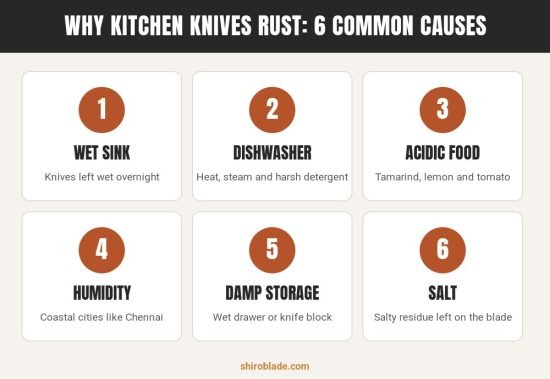
- Leaving knives wet in the sink or on the drying rack overnight
- Dishwashers: long hot cycles, harsh detergent and steam strip the protective film
- Acidic and salty foods such as tamarind, lemon, tomato, raw mango and pickles left on the blade
- Coastal humidity in cities like Chennai, Mumbai and Kochi
- Storing knives wet in a closed drawer or a wet knife block
What You Need
- Baking soda (cooking soda)
- White vinegar (around 5% acetic acid, the usual kitchen vinegar)
- A lemon and coarse salt
- A raw potato (optional)
- A soft sponge, old toothbrush or non-scratch scrubber
- Clean dry cloths
- Food-safe oil: mineral oil, camellia oil or a neutral cooking oil
Wear gloves if you have cuts on your hands; vinegar and lemon sting. Keep the edge pointing away from you while scrubbing.
How to Remove Rust from Knives: 5 Methods
1. Baking Soda Paste (Light Rust)
Mix 2 tablespoons of baking soda with about 1 tablespoon of water to make a thick paste. Spread it over the rust spots and leave it for 5 to 10 minutes. Scrub gently along the length of the blade (not across the edge) with a toothbrush or soft sponge, then rinse and dry. Baking soda is mildly abrasive, so it lifts rust without scratching most finishes.
2. White Vinegar Soak (Stubborn Rust)
Pour white vinegar into a tall glass or a tray deep enough to cover the rusty part of the blade. Soak for 5 minutes for light rust and up to 30 minutes for heavier rust, checking every 5 to 10 minutes. Then scrub with a non-scratch scrubber, rinse well and dry. Keep the wooden handle out of the vinegar, and don’t leave the blade soaking for hours, as acid can etch or dull the finish.
3. Lemon Juice and Salt
Sprinkle coarse salt over the rust, squeeze lemon juice over it and let it sit for 5 to 10 minutes. Use the lemon rind as a scrubber, rubbing along the blade. The citric acid loosens the rust and the salt acts as a gentle abrasive. Rinse thoroughly, because salt left on steel causes new rust.
4. Raw Potato
Push the rusty blade into a raw potato and leave it for 1 to 2 hours. Potatoes contain oxalic acid, which helps break down light rust. Remove the knife, scrub any loose rust off, then rinse and dry. It is the slowest method but also the gentlest.
5. Fine Abrasive or Sharpening Stone (Deep Rust)
If rust remains after the methods above, use a fine abrasive: a fine steel wool pad (grade 0000), a rust eraser or the fine side of a sharpening stone (1000 grit or higher), with water. Rub lightly along the blade until the steel is clean.
Rust on the edge itself usually means you need to resharpen; follow our guide on how to sharpen a knife at home. If you don’t own a stone yet, our guide to the 7 types of knife sharpeners helps you pick the right tool, and our list of the best knife sharpeners in India covers models for every budget.
Which Rust Removal Method Should You Use?
| Knife type | Best method | Avoid |
|---|---|---|
|
Stainless steel kitchen knife |
Baking soda paste, then vinegar if needed |
Coarse steel wool, bleach |
|
Carbon steel knife |
Baking soda or fine stone; oil straight after |
Long acid soaks |
|
Damascus knife |
Baking soda paste, very gentle |
Vinegar or lemon (acid can fade the pattern) |
|
Knife with wooden handle |
Paste on the blade only |
Soaking the whole knife |
|
Serrated bread knife |
Vinegar soak with a toothbrush |
Stones and steel wool on the teeth |
Damascus patterns are made visible by acid etching, so strong acids can change how the pattern looks. Read more in our guide to types of Damascus steel.
Is It Safe to Use a Rusty Knife?
A knife with a few light rust spots is safe once you clean it properly. Rust itself is not toxic in the tiny amounts on a knife. The real problems are hygiene and edge damage: rust pits trap food and bacteria, and a rusty edge cuts poorly and can snag.
Don’t use a knife with deep pitting, flaking rust or a cracked blade for food prep until it is cleaned back to bare steel. If the rust has eaten into the edge or the tang near the handle, it is usually cheaper and safer to replace a budget knife. Our guide on how to choose a kitchen knife can help you pick a better one.
How to Prevent Your Knives from Rusting
- Wash by hand and dry immediately with a cloth. Never let a knife air-dry in the rack.
- Keep knives out of the dishwasher.
- Wipe the blade after cutting acidic or salty foods like tamarind, lemon, tomato and pickles.
- Oil carbon steel knives: wipe a few drops of food-safe oil on the blade before storing. Over time carbon steel builds a grey patina that protects it; that dark colour is not rust.
- Store dry and ventilated in a knife stand or on a magnetic strip, not loose in a damp drawer.
Rust vs Stain vs Patina: How to Tell
| Mark | What it looks like | What to do |
|---|---|---|
|
Rust |
Orange or reddish-brown, rough, rubs off on a cloth |
Remove with the methods above |
|
Water spots or stains |
White, grey or cloudy marks, smooth to the touch |
Wipe with vinegar or baking soda |
|
Patina (carbon steel) |
Even grey, blue or black colour, smooth |
Leave it; it protects the blade |
|
Heat tint |
Rainbow or golden colour, usually from high heat |
Harmless; polish off if you want |
Conclusion
Most rust on kitchen knives is surface rust that comes off in minutes. Start with the gentlest method, a baking soda paste, and move to vinegar, lemon and salt, or a fine stone only if you need to. Then dry the knife fully, add a thin coat of oil and store it in a dry place. Do that every time and rust stays away for good. If deep rust has dulled the edge, our list of the best knife sharpeners in India will help you pick a tool to restore it.
FAQs
What is the fastest way to remove rust from a knife?
A white vinegar soak for 5 to 15 minutes followed by a scrub with a non-scratch pad removes most rust quickly. Rinse, dry and oil the blade afterwards.
Does vinegar damage knives?
Short soaks of up to about 30 minutes are fine for stainless steel. Long soaks can etch or dull the finish, so check the blade often and avoid vinegar on Damascus and wooden handles.
Why does my stainless steel knife rust?
Stainless steel is rust-resistant, not rust-proof. Leaving it wet, using the dishwasher, salty or acidic food and humid weather can break down its protective chromium oxide layer, especially on budget 3Cr13 or 420-grade steel.
Can I use a rusty knife for cooking?
Light rust is fine once it is fully cleaned off. Do not use a knife with deep pits or flaking rust until it is cleaned back to bare steel, as pits trap food and bacteria.
How do I stop my knives from rusting?
Hand wash, dry immediately, keep knives out of the dishwasher, wipe off acidic foods and store them in a dry knife stand. Oil carbon steel blades with a few drops of food-safe oil.
Is a dark grey colour on my carbon steel knife rust?
No. An even grey, blue or black colour is patina, which protects carbon steel. Rust is orange or reddish-brown and feels rough.

Indian knife collector with a deep respect for Japanese knife making. What began as an interest in Damascus patterns grew into a focused study of Japanese knives from Sakai and Seki. Through Shiroblade, I share simple guides on buying, using, and caring for knives, helping readers understand real craftsmanship beyond looks.


Pingback: How to Use Chopper: Electric Chopper Step by Step