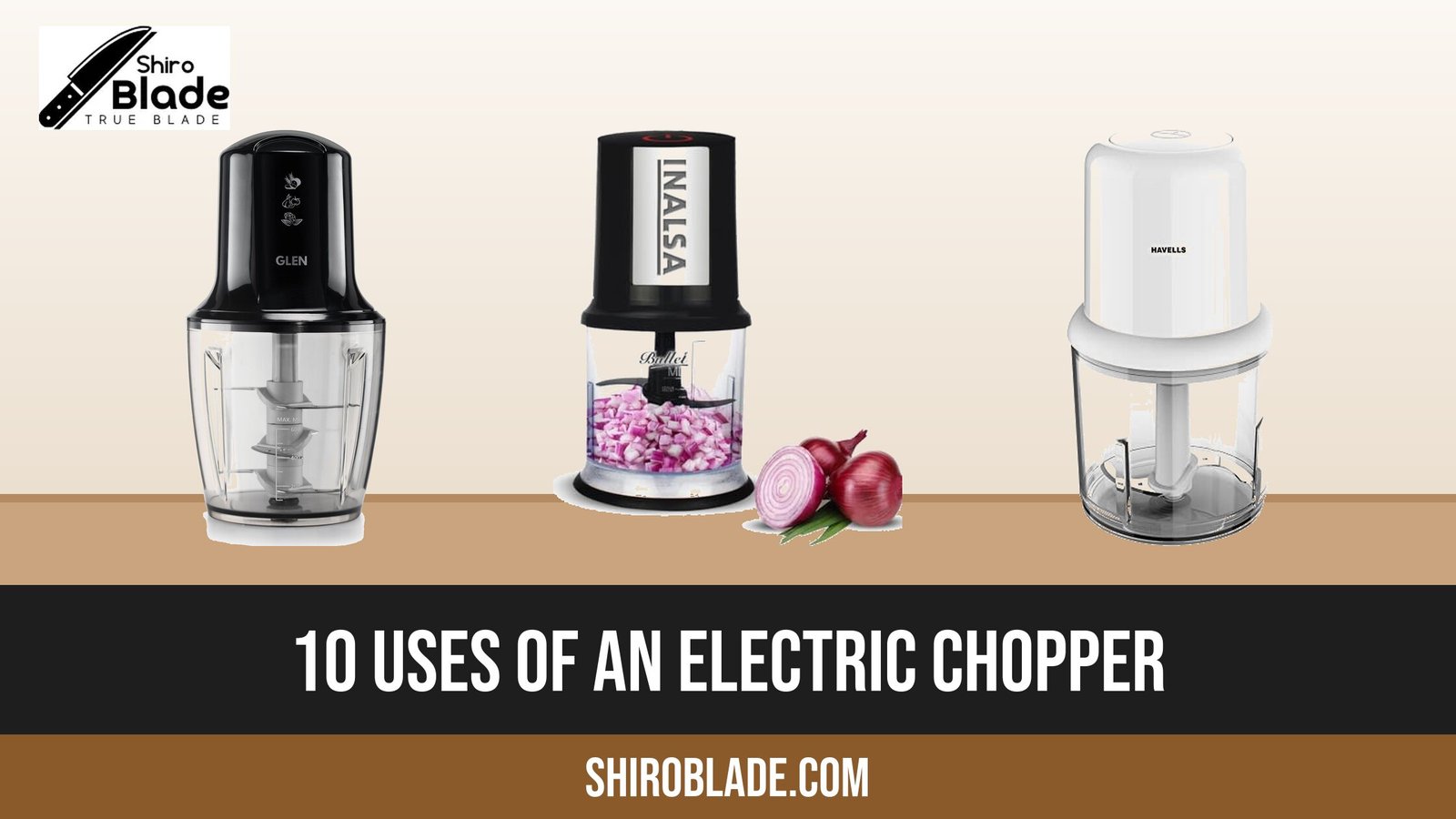
Most people buy an electric chopper for one job: onions without tears. Then it sits in a cupboard. That’s a waste, because a 300 to 400 W chopper can handle a good share of the daily prep in an Indian kitchen.
Here are 10 chopper uses that make it worth the counter space, with the number of pulses to use and what to avoid, so you get the right texture every time.
Affiliate disclosure: Some links on this page are Amazon.in affiliate links. If you buy through them, I may earn a small commission at no extra cost to you. Read the disclosure.
Short Answer: What Is an Electric Chopper Used For?
An electric chopper is used to chop and mince onions, tomatoes, ginger, garlic, green chillies, herbs, nuts, coconut, boiled vegetables and boneless meat in a few seconds. It also makes breadcrumbs, green chutney and coarse pastes, and models with a whisking disc can beat eggs and batter. It is not meant for dry spices, rice, dal, ice or bones.

10 Electric Chopper Uses in an Indian Kitchen
1. Onion-Tomato Masala Base
This is the use that pays for the chopper. Quarter 2 onions, add them to the bowl and pulse 4 to 6 times for a fine chop for curry, sambar, rajma or chole. Chop tomatoes separately in 2 to 3 pulses, because they release water fast. Chop onions and tomatoes together only when you want a wet masala for gravy.
2. Ginger-Garlic Paste
Peel 10 to 12 garlic cloves and a 2 inch piece of ginger, cut the ginger into small chunks across the fibres and run the chopper for 15 to 20 seconds in short bursts. Add a teaspoon of oil or water for a smoother paste. A chopper gives a slightly coarse paste, which many cooks prefer for tadka. For a very smooth paste that keeps for weeks, use the small jar of a mixer grinder.
3. Green Chutney
Add a cup of coriander, half a cup of mint, 2 green chillies, a small piece of ginger, lemon juice and salt. Pulse to break the leaves, then add 2 to 3 tablespoons of water and run for 10 to 15 seconds. Thick chutney for sandwiches and chaat comes out better in a chopper than in a big mixer jar, which needs more water to move.
4. Coconut Chutney and Grated Coconut
Cut fresh coconut into small 1 to 2 cm pieces and pulse 8 to 10 times for a coarse, grated texture for poriyal, thoran or sundal. For coconut chutney, add roasted chana dal, green chilli and a little water. A 400 W chopper such as the AGARO 400W handles hard coconut better than a 200 W model.
5. Nuts and Dry Fruits
Chop almonds, cashews and pistachios for kheer, halwa, laddoo and kulfi in 3 to 5 quick pulses. Stop early: hold the button too long and nuts turn to powder, then to nut butter. Chill cashews for 15 minutes first if you want clean pieces.
6. Keema from Boneless Chicken or Mutton
Cut boneless meat into 2 to 3 cm cubes, chill it in the freezer for 15 to 20 minutes until firm, then pulse 8 to 12 times. Home keema lets you control the fat and cleanliness. Use only boneless meat; bones chip the blades the same way they chip a thin knife edge. Big batches are easier in a 900 ml to 2 litre bowl like the InstaCuppa 2L stainless steel chopper.
7. Pav Bhaji, Cutlet and Tikki Mix
Boiled potato, peas, carrot and cauliflower pulse into a coarse mash for pav bhaji, veg cutlets and aloo tikki in 4 to 6 pulses. Let the vegetables cool first. Steam from hot food builds pressure under the lid and can loosen the motor unit.
8. Breadcrumbs
Tear slightly dry bread into pieces and run the chopper for 10 to 15 seconds for fine crumbs to coat cutlets, fish fry and croquettes. Toast the bread first for crisper, longer-lasting crumbs.
9. Salsa, Kachumber and Chopped Salads
For a quick salsa or kachumber, pulse onion, tomato, cucumber and coriander just 2 or 3 times. A chopper minces rather than dices, so the pieces are uneven. For neat cubes, use a knife; our guide to the types of vegetable cutting shows how.
10. Whisking Eggs, Batter and Homemade Butter
Choppers that come with a whisking disc, such as the Glen 300W triple-blade chopper, can beat eggs for omelettes, mix pancake batter and churn collected malai into butter. Do not expect stiff egg-white peaks; that needs a hand mixer.
Bonus Uses: Baby Food, Paneer and Herbs
- Baby food: purée steamed carrot, apple or dal in small batches.
- Paneer bhurji: 2 pulses crumble paneer evenly.
- Herb butter and pesto: coriander or basil with garlic, nuts and oil.
- Garlic peeling: some choppers include a garlic-peeler attachment; it works on dry, firm cloves.
What You Should Not Use an Electric Chopper For
| Food | Why not | Use instead |
|---|---|---|
|
Dry whole spices |
Blades sit too high to grind fine |
Mixer grinder dry jar |
|
Rice and dal batter |
Needs long grinding with water |
Wet grinder or mixer |
|
Ice and frozen food |
Chips blades, strains motor |
Blender rated for ice |
|
Meat with bones |
Damages blades |
Cleaver and board |
|
Hot liquids |
Steam pushes the lid up |
Cool first, or a hand blender |
|
Thin onion rings, julienne |
A chopper only minces |
A sharp knife |
Most brands also list a short continuous run time, often 30 seconds to 1 minute. Pulse in short bursts and rest the motor for a minute between batches.
Chopper vs Knife: Which Jobs Need Which?
A chopper is fastest for anything that ends up as a mince or paste: masala bases, chutneys, ginger-garlic and keema. A knife is still the right tool for slices, rings, julienne and neat dice, and for meat with bone. Most cooks use both. Our guide to the types of kitchen knives shows which blade handles which job, and a good chopping board makes knife work faster and safer.
Conclusion
Used well, an electric chopper takes over the most repetitive part of Indian cooking: the daily onion, tomato, ginger, garlic and chutney prep. Pulse instead of holding the button, chop in batches, keep spices and rice for the mixer grinder, and it will last for years. To get the most from yours, read our step-by-step guide on how to use an electric chopper, or compare models in our list of the best electric vegetable choppers in India.
FAQs
Can an electric chopper make ginger-garlic paste?
Yes. Peel the garlic, cut ginger into small chunks and run the chopper in short bursts for 15 to 20 seconds with a teaspoon of oil or water. The paste is slightly coarse; a mixer grinder jar gives a smoother paste.
Can I grind spices in an electric chopper?
No. Most brands advise against grinding dry spices, rice or coffee beans in a chopper. The blades are designed to chop, not grind. Use the dry jar of a mixer grinder.
Can a chopper be used for meat?
Yes, for boneless chicken or mutton cut into small cubes and chilled for 15 to 20 minutes. Never put meat with bones in a chopper.
Can I make chutney in an electric chopper?
Yes. Green chutney and coconut chutney work well. Add only 2 to 3 tablespoons of water so the blades can reach the leaves or coconut.
Why does my chopper turn onions into paste?
You are holding the button too long. Pulse 4 to 6 times for a fine chop, and chop onions separately from tomatoes.

Indian knife collector with a deep respect for Japanese knife making. What began as an interest in Damascus patterns grew into a focused study of Japanese knives from Sakai and Seki. Through Shiroblade, I share simple guides on buying, using, and caring for knives, helping readers understand real craftsmanship beyond looks.