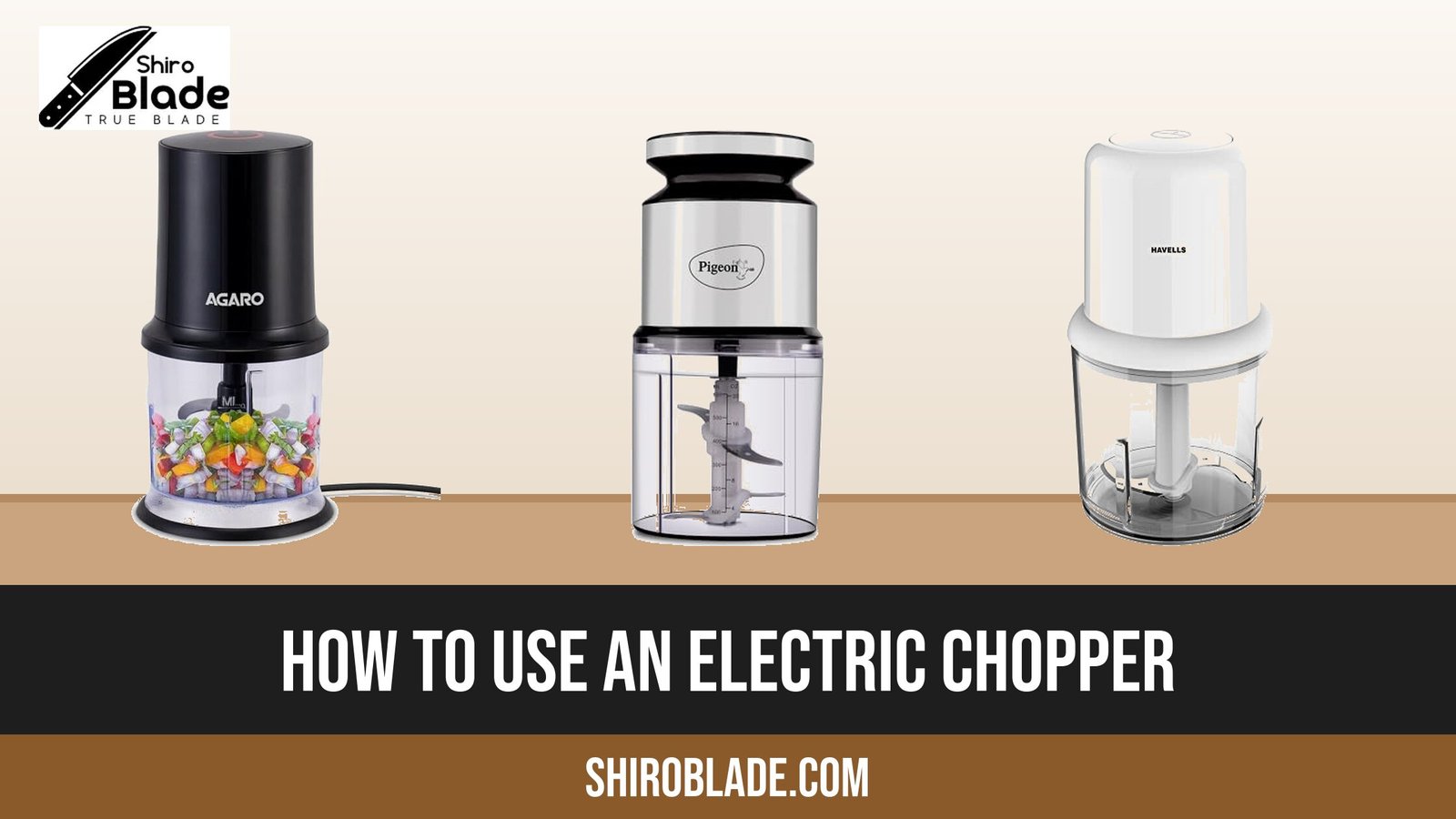
An electric chopper looks simple: put food in, press the top. But most complaints about choppers, like onions turning to paste, garlic left in big pieces or a motor that smells hot, come from using it the wrong way.
This guide shows you how to use a chopper step by step, how many pulses each food needs, how to clean it and how to keep the blades sharp, so it works like new for years.
Affiliate disclosure: Some links on this page are Amazon.in affiliate links. If you buy through them, I may earn a small commission at no extra cost to you. Read the disclosure.
Short Answer: How to Use an Electric Chopper
Place the bowl on a dry counter, fit the blade on the centre pin, add food cut into 2 to 3 cm pieces up to about half the bowl, then fit the lid and motor unit. Press the top in 1 second pulses and check the texture every few pulses. Unplug, lift the motor off, take the blade out by its plastic hub and empty the bowl. Rinse the bowl and blade right away.
Parts of an Electric Chopper
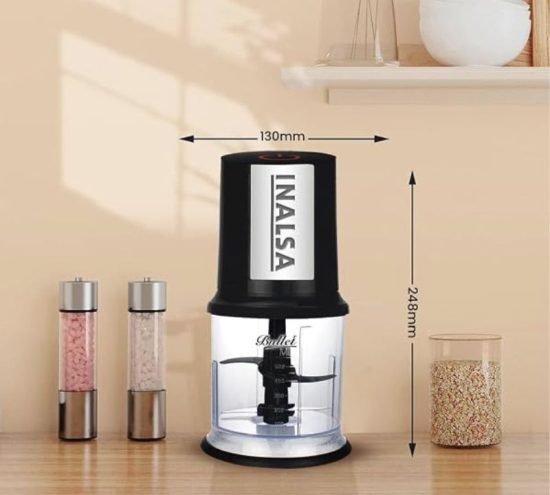
Almost every model sold in India, from the Pigeon Ultra Fast 300W to the CÜRAA ChopLab Pro, has the same five parts:
- Motor unit: the top part with the power button. Never put it in water.
- Bowl: plastic or stainless steel, usually 0.5 to 2 litres, with a fixed pin in the centre.
- Blade assembly: twin, triple or four-level stainless steel blades on a plastic hub that slides onto the pin.
- Splash lid: sits between the bowl and motor and often locks the motor in place.
- Anti-skid base: rubber feet or a rubber ring, which doubles as a storage lid on some models.
How to Use an Electric Chopper: Step by Step
Step 1: Set Up on a Dry, Flat Surface
Place the bowl on its rubber base on a dry granite or steel counter. Slide the blade assembly onto the centre pin, holding it by the plastic hub only. Make sure it drops all the way down; a blade that sits high leaves a layer of uncut food at the bottom.
Step 2: Cut Food to the Right Size
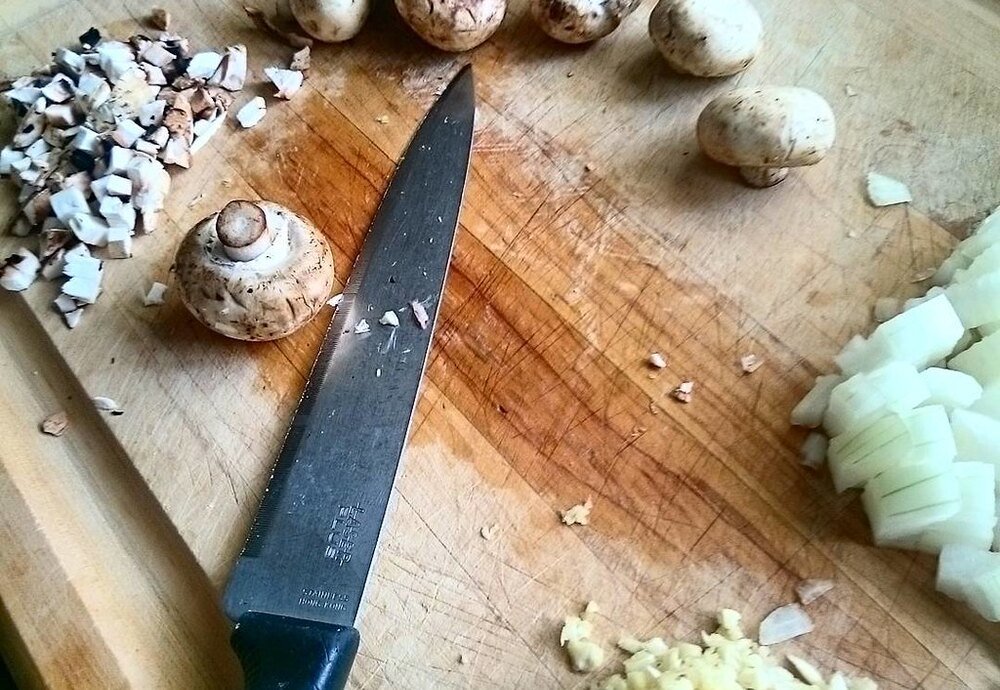
Cut onions into quarters, tomatoes into halves and carrots into 1 to 2 cm rounds. Peel garlic and cut ginger into 1 cm chunks across the fibres, which stops long strings wrapping around the blade. Pieces that are too big bounce around; pieces that are too small fall under the lower blade.
Step 3: Fill Only to Half or the Max Line
An overfilled bowl chops unevenly and strains the motor. Fill to about half for hard food and to the max line for soft food. For two cloves of garlic, add a small onion piece with it so the blades have something to catch.
Step 4: Fit the Lid and Motor Unit
Seat the splash lid and then the motor unit. Most choppers have a safety lock and won’t start until the motor sits flat. If yours doesn’t run, lift and reseat the top before you assume it’s faulty.
Step 5: Pulse, Don't Hold
Press the button for about 1 second, release, and repeat. Pulsing lets the food drop back onto the blades for an even chop. Check after every 3 pulses. Holding the button down is what turns onions into a watery paste.
Step 6: Unplug, Then Empty
Always unplug before you touch the blade. Lift off the motor unit and lid, pull the blade out by its hub, then scrape the food out with a spatula. Never put your fingers in the bowl while the blade is still inside.
How to Chop Onion, Garlic and Make Chutney in a Chopper
Onion
Peel 2 medium onions, quarter them and pulse 4 to 6 times for a fine chop for curries, or 2 to 3 times for a coarse chop for poha and salads. Chopping in a closed bowl keeps the eye-stinging compound away from your face; NPR explains the science of why onions make you cry.
Garlic and Ginger-Garlic Paste
For chopped garlic, pulse 10 to 12 peeled cloves 4 to 5 times. For ginger-garlic paste, add equal amounts of ginger and garlic with a teaspoon of oil or water and run in short bursts for 15 to 20 seconds, scraping down the sides once.
Green Chutney
Add coriander, mint, green chillies, ginger, salt and lemon juice. Pulse 3 to 4 times to break the leaves, add 2 to 3 tablespoons of water and run for 10 to 15 seconds. For coconut chutney, use small coconut pieces and a 300 to 400 W chopper.
Common Mistakes When Using a Chopper
| Mistake | What happens | Fix |
|---|---|---|
|
Holding the button |
Onion turns to paste |
Pulse 1 second at a time |
|
Overfilling the bowl |
Top layer stays whole |
Fill to half, chop in batches |
|
Too little food |
Garlic stays in big pieces |
Add more, or use a knife |
|
Chopping hot food |
Lid lifts, steam leaks |
Let food cool first |
|
Running for minutes |
Motor overheats |
Rest 1 minute after 30 to 60 seconds |
|
Grinding spices or rice |
Blades blunt, motor strains |
Use a mixer grinder |
How to Clean an Electric Chopper
- Unplug and remove the motor unit.
- Remove the blade by its hub and rinse it under running water straight away, before onion and turmeric dry on. Use a bottle brush, not your fingers, near the edges.
- Wash the bowl and lid with warm soapy water. To remove onion and garlic smell, rub with a paste of baking soda and water or a cut lemon.
- Wipe the motor unit with a damp cloth only. Water inside the motor is the most common reason choppers fail.
- Dry everything fully before you assemble it again.
Check your manual before using a dishwasher; some bowls are dishwasher safe, most blades and lids are not. For safe food handling at home, the FSSAI recommends washing tools that touch raw meat separately and drying them well.
How to Care for Chopper Blades
Chopper blades are usually 420-grade or similar stainless steel. They resist rust but can spot if left wet, especially after salt, lemon or tamarind. Dry them right after washing. If you see orange spots, the baking soda method in our guide on how to remove rust from knives works on chopper blades too.
A chopper blade that tears instead of cuts is usually dull or bent. Most brands sell replacement blade sets, which is safer and easier than sharpening a curved blade at home. Keep hard bones, ice and frozen food out of the bowl and the blades will stay sharp much longer.
Conclusion
Using a chopper well comes down to four habits: cut food to size, fill only halfway, pulse instead of holding the button, and clean the blade straight after use. Follow them and you get an even chop every time and a motor that lasts. Want more ideas? See our list of 10 electric chopper uses in Indian cooking. Still choosing one? Our guide to the types of vegetable choppers and the list of the best electric vegetable choppers in India will help.
FAQs
How many seconds should I run an electric chopper?
Use 1 second pulses. Most foods need 3 to 10 pulses. Brands usually rate choppers for 30 seconds to 1 minute of continuous running, so rest the motor for a minute between batches.
Why is my chopper not starting?
Most choppers have a safety lock. The motor only runs when the lid and motor unit are seated properly. Lift the top, check the lid is aligned and press it down firmly.
Can I wash the electric chopper in a dishwasher?
Some bowls are dishwasher safe, but most blades, lids and all motor units are not. Check the manual and never put the motor unit in water.
How do I get garlic smell out of my chopper?
Wash the bowl with warm soapy water, then rub it with baking soda paste or a cut lemon and rinse. Dry it with the lid open.
Can I use a chopper for small amounts of garlic?
Two or three cloves often fall below the lower blade. Chop at least a handful, add a piece of onion, or use a knife for very small amounts.

Indian knife collector with a deep respect for Japanese knife making. What began as an interest in Damascus patterns grew into a focused study of Japanese knives from Sakai and Seki. Through Shiroblade, I share simple guides on buying, using, and caring for knives, helping readers understand real craftsmanship beyond looks.