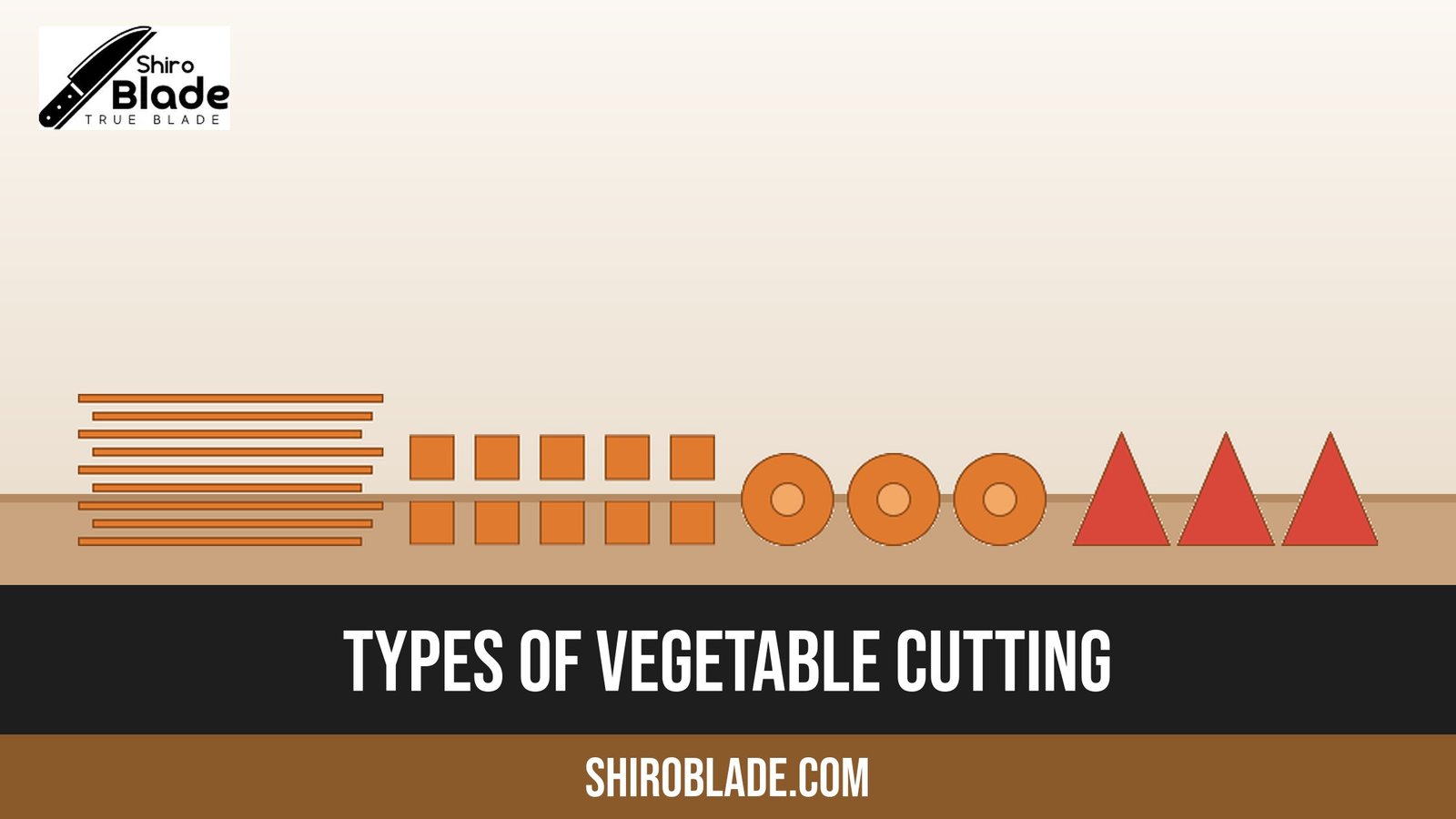
The same onion can be sliced into rings for biryani, diced for pav bhaji or minced for a curry base, and each cut changes how the dish cooks and tastes. Even-sized pieces cook evenly; uneven ones leave some pieces raw and others burnt.
This guide covers the 12 basic types of cutting vegetables, with pictures, standard sizes, the Indian dishes that use each cut and the knife that does it best.
Affiliate disclosure: Some links on this page are Amazon.in affiliate links. If you buy through them, I may earn a small commission at no extra cost to you. Read the disclosure.
Short Answer: The Main Types of Vegetable Cutting
The basic types of cutting vegetables are dice (brunoise 3 mm, small 6 mm, medium 12 mm, large 20 mm), sticks (julienne 3 mm and batonnet 6 mm), chiffonade ribbons, mince, rough chop, rounds, diagonal cuts, wedges and paysanne. A chef’s knife or santoku handles almost all of them. An electric chopper only helps with mince and rough chop.
| Cut | Size | Common Indian use |
|---|---|---|
|
Brunoise |
3 mm cubes |
Garnish, fried rice, raita |
|
Small dice |
6 mm cubes |
Poha, upma, kachumber |
|
Medium dice |
12 mm cubes |
Aloo sabzi, pulao, sambar |
|
Large dice |
20 mm cubes |
Avial, kurma, stews |
|
Julienne |
3 mm x 3 mm x 5 cm |
Ginger garnish, stir-fry, salads |
|
Batonnet |
6 mm x 6 mm x 6 cm |
Bhindi fry, potato fries |
|
Chiffonade |
Thin ribbons |
Methi, palak, cabbage thoran |
|
Mince |
Under 3 mm |
Ginger, garlic, chillies |
|
Rounds |
3 to 6 mm coins |
Carrot poriyal, cucumber salad |
|
Diagonal |
Slanted rounds |
Beans, carrots in stir-fry |
|
Wedges |
Long triangles |
Tomato salad, lemon, potato |
|
Paysanne |
12 mm x 12 mm x 3 mm |
Vegetable soup, mixed veg |
Dice Cuts: Brunoise, Small, Medium and Large
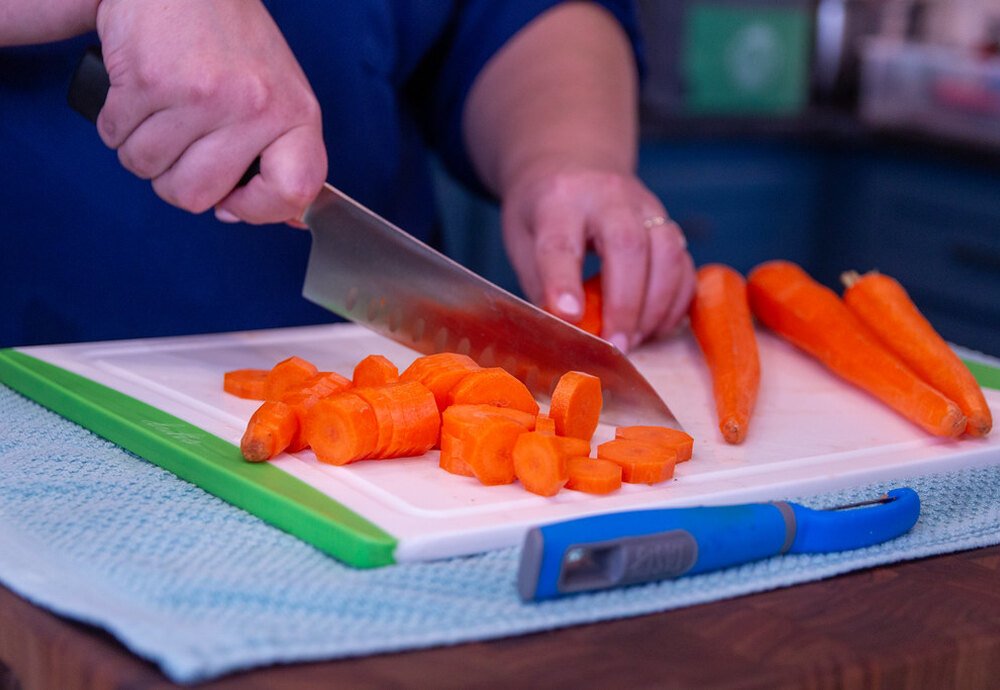
Dicing means cutting a vegetable into even cubes. First square off the vegetable, cut it into planks, cut the planks into sticks, then cut across the sticks. Classic culinary sizes are well documented by cooking schools such as Wekiva Culinary.
1. Brunoise (3 mm)
The smallest dice, made from julienne sticks cut across. Use it for carrots and capsicum in fried rice, a fine onion garnish on bhel or raita, and ginger for chutney. It takes patience and a very sharp, thin blade.
2. Small Dice (6 mm)
The everyday cut for onions, tomatoes and cucumber in poha, upma, kachumber and pav bhaji. Small dice cooks fast and spreads flavour evenly through the dish.
3. Medium Dice (12 mm)
The standard size for potatoes in aloo sabzi, vegetables in pulao and sambar. It holds its shape through 15 to 20 minutes of cooking.
4. Large Dice (20 mm)
Big cubes of pumpkin, yam, potato and raw banana for avial, kurma, korma and stews that simmer for a long time.
Stick Cuts: Julienne and Batonnet
5. Julienne (Matchsticks)
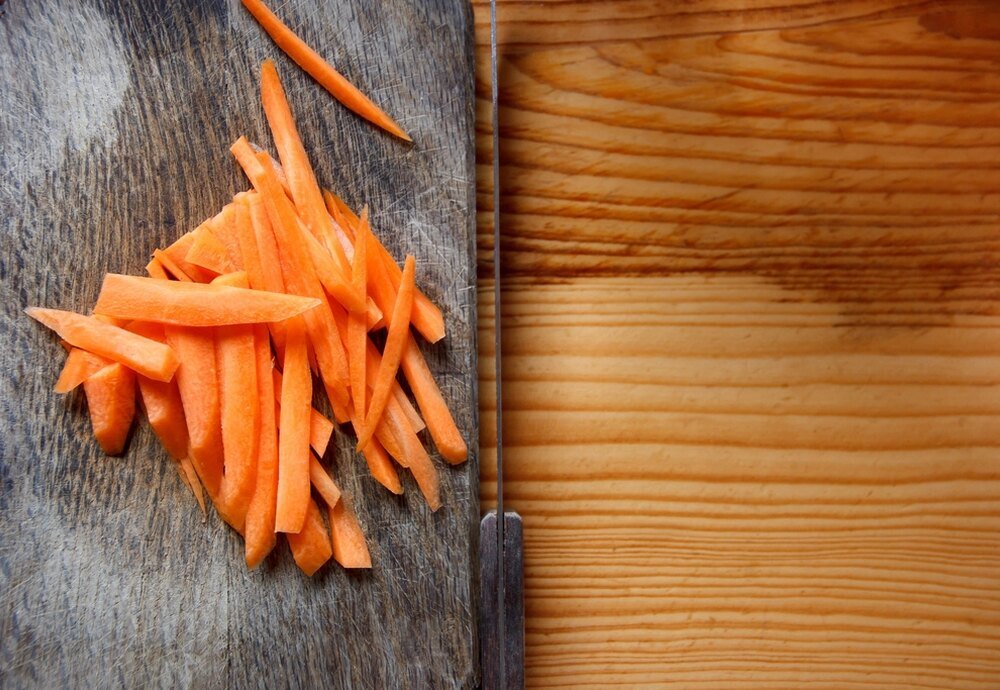
Thin sticks about 3 mm thick and 5 cm long. Julienne ginger is the classic garnish for dal and kadhi; julienne carrot, capsicum and cabbage go into stir-fries, spring rolls and salads. Cut thin planks, stack 2 or 3, then slice them into sticks.
6. Batonnet (Thick Sticks)
Thicker sticks around 6 mm square and 6 cm long. Use them for potato fries, raw banana chips, carrot and cucumber sticks for dips, and long-cut bhindi fry. A batonnet cut across becomes a small dice.
Leaf and Fine Cuts: Chiffonade, Mince and Rough Chop
7. Chiffonade (Ribbons)
For leafy greens and herbs: stack the leaves, roll them tightly and slice across the roll into thin ribbons. Use it for palak and methi, cabbage thoran, basil and curry leaves. A sharp knife gives clean ribbons; a blunt knife or a chopper bruises the leaves and turns them dark.
8. Mince
Very fine, uneven pieces under 3 mm, mainly for garlic, ginger, green chillies and coriander stems. Rock a chef’s knife back and forth over the pile. This is also the one job an electric vegetable chopper does faster than a knife.
9. Rough Chop
Uneven pieces of roughly 1 to 2 cm, used when the vegetable will be blended or strained later, such as onion and tomato for a gravy that is ground into a paste, or vegetables for stock.
Shape Cuts: Rounds, Diagonal, Wedges and Paysanne
10. Rounds (Rondelle)
Coins cut straight across carrots, cucumbers, radish, bananas and bhindi, usually 3 to 6 mm thick. Common in carrot poriyal, cucumber salad and bhindi masala.
11. Diagonal (Bias Cut)
Rounds cut at a 45 degree angle. The longer oval face cooks faster and looks better in stir-fries and Indo-Chinese dishes. Works well on beans, carrots, spring onions and drumsticks.
12. Wedges and Paysanne
Wedges are long triangles cut from round vegetables and fruit: tomatoes for salad, lemons for serving and potatoes for roasting. Paysanne is a thin, flat cut about 12 mm across and 3 mm thick, often in squares or triangles, used in vegetable soups and mixed vegetable curries so everything cooks at the same speed.
Which Knife Is Best for Each Vegetable Cut?
- Chef’s knife (8 inch / 20 cm): the all-rounder for dice, julienne, chiffonade and mince. See what a chef’s knife is used for.
- Santoku: a shorter Japanese knife with a flat edge, very good for even slices and dice on Indian vegetables.
- Nakiri: a Japanese vegetable knife with a straight, rectangular blade for clean push cuts through onions, carrots and cabbage. Our guide to Japanese kitchen knife types explains the nakiri, usuba and santoku.
- Paring knife: for peeling, wedges, coring tomatoes and small garnish work. Read our guide to paring knife uses.
For the full list of blades and their jobs, see the types of kitchen knives guide. If you want one good set that covers every cut here, compare our picks of the best high-end knife sets.
Knife vs Chopper: Which Cuts Can a Chopper Do?
An electric or pull-cord chopper spins a blade through the bowl, so it can only mince or rough chop. It cannot make even dice, julienne, rounds or chiffonade. That makes it ideal for onion-tomato masala, ginger-garlic and chutney, and useless for neat salad cubes or biryani onions.
The smart kitchen setup is both: a chopper for daily masala prep and a sharp knife for everything else. Our guide to the types of vegetable choppers covers the chopper side, including push-through dicers that can make cubes.
Tips for Cutting Vegetables Evenly and Safely
- Make a flat base first. Cut a thin slice off round vegetables like onion, potato and carrot so they don’t roll.
- Use the claw grip. Curl your fingertips under and guide the blade with your knuckles.
- Keep the knife sharp. A sharp blade is safer because it doesn’t slip; follow our guide on how to sharpen a knife at home.
- Use a stable board. Put a damp cloth under it. See the best chopping boards in India.
- Cut to the cooking time. Smaller pieces for quick stir-fries, larger ones for slow curries.
Conclusion
Learn three or four of these cuts well, small dice, julienne, rounds and mince, and you can cook almost any Indian dish evenly and faster. Use a sharp chef’s knife or santoku on a stable board for the neat cuts, and let a chopper handle the daily mince. For a knife that makes all of these cuts easy, start with our list of the best kitchen knives under ₹2000.
FAQs
What are the basic types of cutting vegetables?
The basic cuts are dice (brunoise, small, medium, large), julienne, batonnet, chiffonade, mince, rough chop, rounds, diagonal, wedges and paysanne.
What is the difference between chopping and dicing?
Chopping gives rough, uneven pieces. Dicing gives even cubes of a set size, such as 6 mm for small dice or 12 mm for medium dice.
What size is a julienne cut?
A julienne is a thin stick about 3 mm thick and 5 cm long. Cut across, julienne sticks become 3 mm brunoise cubes.
Which knife is best for cutting vegetables?
An 8 inch chef’s knife or a santoku handles most cuts. A nakiri is excellent for straight push cuts through vegetables, and a paring knife is best for peeling and small work.
Can a vegetable chopper dice vegetables?
A blade chopper can only mince or rough chop. For even cubes, use a knife or a push-through dicer with a grid blade.

Indian knife collector with a deep respect for Japanese knife making. What began as an interest in Damascus patterns grew into a focused study of Japanese knives from Sakai and Seki. Through Shiroblade, I share simple guides on buying, using, and caring for knives, helping readers understand real craftsmanship beyond looks.