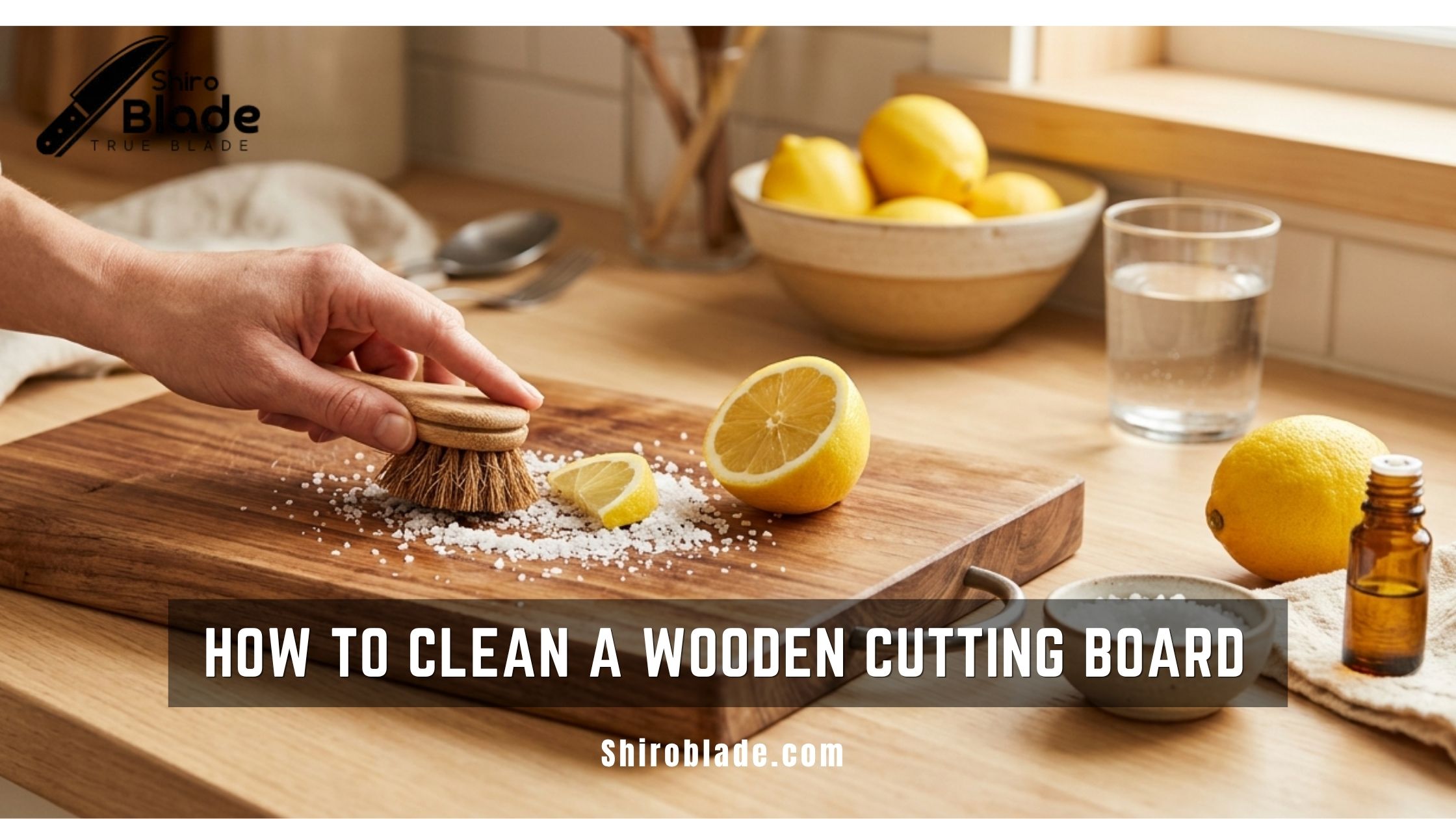
Knowing how to clean a wooden cutting board properly is what separates a board that lasts ten years from one that cracks, smells or grows mould in six months. Wood is not hard to care for, but it has rules plastic doesn’t.
This guide covers daily washing, sanitising after raw meat, removing haldi stains and garlic smells, oiling, and restoring an old board, based on USDA food safety guidance and how wood actually behaves in a humid Indian kitchen.
Short Answer: How to Clean a Wooden Cutting Board
- Scrape off food bits with a bench scraper or the spine of your knife.
- Wash both sides with hot water and dish soap, scrubbing along the grain.
- Rinse quickly. Never soak the board.
- Dry with a cloth, then stand it upright so air reaches both sides.
- Oil with food-grade mineral oil about once a month, or when it looks pale and dry.
After raw chicken, mutton or fish, add a sanitising step (below).
How to Clean a Wooden Cutting Board Daily
1. Scrape Off Food First
Push onion skins and vegetable bits into the bin with a bench scraper or the spine of your knife, never the edge. Removing solids first means less food is pushed into the grain when you scrub.
2. Wash With Soapy Water
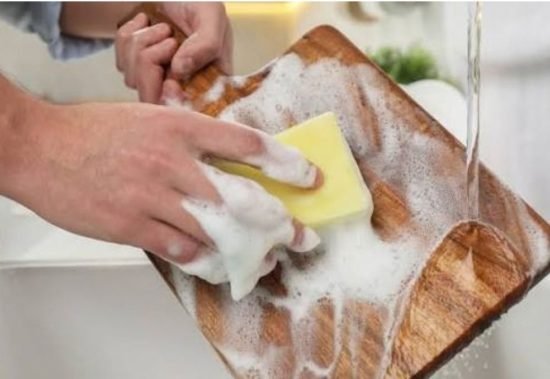
The USDA Food Safety and Inspection Service recommends washing all cutting boards with hot, soapy water after each use. Use a brush or scrub pad and work along the grain, and wash both sides even if you used only one. Washing one side only makes the board absorb water unevenly, which is a common cause of warping.
3. Rinse Fast, Never Soak
Rinse under the tap and get the board out of the water within a minute or two. Wood swells as it absorbs water and shrinks as it dries. Soaking it in a sink or leaving it under a pile of steel vessels is the fastest way to open glue joints and crack the board.
4. Dry Upright
Wipe it with a clean cloth, then stand it on its edge or lean it against the wall so air reaches both faces. A board dried flat on the counter stays wet underneath, and in Chennai or Mumbai humidity that is how mould spots start.
How to Sanitise a Wooden Board After Raw Meat
Soap and water removes most bacteria, but after raw chicken, mutton or fish it is worth sanitising. The USDA says both wooden and plastic boards can be sanitised with 1 tablespoon of unscented liquid chlorine bleach per gallon of water (about 3.8 litres), which works out to a little under 1 teaspoon per litre. Flood the surface, leave it a few minutes, rinse and air-dry.

| Cleaner | Use it for | How | Note |
|---|---|---|---|
|
Dilute bleach |
After raw meat or fish |
About 4 ml per litre of water, few minutes, rinse |
USDA-recommended; never use neat bleach |
|
3% hydrogen peroxide |
Occasional deep clean |
Pour on, let it fizz, wipe and rinse |
Pharmacy strength only |
|
White vinegar |
Light daily wipe, smells |
Spray or wipe, then rinse |
Mild; not a replacement for washing |
|
Lemon and coarse salt |
Smells and light stains |
Scrub with a cut lemon dipped in salt |
Gentle, kitchen-safe |
|
Baking soda paste |
Stains and odours |
Paste with water, scrub, rinse |
Slightly abrasive, safe on wood |
Even with sanitising, the safest habit is to keep a separate board only for raw non-veg. Many cooks use a thick plastic board for that job; see our plastic vs wood cutting board comparison.
How to Remove Turmeric Stains From a Wooden Board
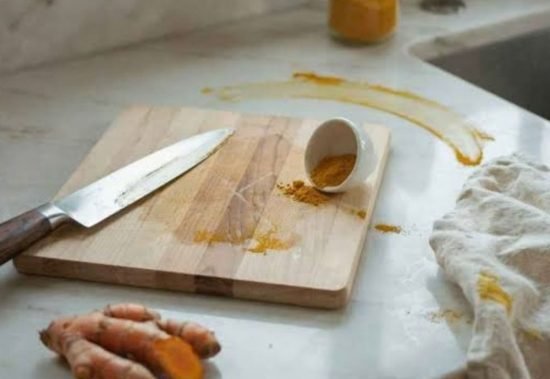
Haldi’s yellow colour comes from curcumin, which breaks down in sunlight. That makes the sun your best stain remover.
- Fresh stain: Wash right away; turmeric sets in minutes on dry wood.
- Set stain: Scrub with a paste of baking soda and lemon juice, leave 10 minutes, rinse.
- Old stain: Dry the board in direct sunlight for a few hours. Turn it once so it dries evenly.
- Stubborn stain: Lightly sand the spot with 220-grit sandpaper, then re-oil.
How to Remove Garlic, Onion and Fish Smells
Smells sit in the top layer of the wood fibres. Rub the board with half a lemon dipped in coarse salt, leave it 5 minutes, then rinse. For stronger smells, cover the board with a baking soda paste for 15 minutes before rinsing. If a smell keeps coming back after washing, the wood is holding moisture: dry it in the sun and oil it.
How to Oil a Wooden Cutting Board
Oil fills the wood fibres so water, juices and stains can’t soak in. Oil a new board every day for the first week, then about once a month, or whenever it looks pale and water stops beading on the surface.
- Start with a clean, completely dry board.
- Pour food-grade mineral oil on the surface and spread it with a cloth, covering all sides and edges.
- Leave it overnight standing upright.
- Wipe off the extra oil the next morning.
Which oil? Use food-grade mineral oil or a board cream (mineral oil with beeswax). Fractionated coconut oil also works because it stays liquid and doesn’t go rancid. Avoid groundnut, sunflower and olive oil: they turn rancid inside the wood and leave a sticky smell.
How to Restore an Old or Rough Wooden Board
Deep knife marks, raised grain and dark stains can usually be fixed. Sand the surface with 120-grit sandpaper to remove marks, then 220-grit for a smooth finish. Wipe off the dust with a damp cloth, let it dry, and oil it as above. You can do this once or twice a year; plastic boards cannot be restored this way.
Common Mistakes That Ruin Wooden Boards
- Dishwasher: The USDA notes solid wood boards can be dishwasher-washed but laminated (glued) boards may crack and split. Most wooden boards sold in India are glued, so hand-wash.
- Soaking: Even 30 minutes in a sink can open glue joints.
- Drying flat: Traps moisture underneath and causes warping and mould.
- Cooking oil: Goes rancid inside the wood.
- Neat bleach or harsh cleaners: Dry out and crack the fibres.
- Storing near the stove: Heat dries one side faster and warps the board.
When to Replace a Wooden Cutting Board
The USDA advises discarding any board that is excessively worn or has hard-to-clean grooves. Replace a wooden board if it has a crack that goes through, mould that comes back after sanding, a smell that won’t leave after drying and oiling, or a split glue line. For new picks, see our best wooden chopping boards in India list or our best chopping boards in India guide.
Conclusion
To clean a wooden cutting board, scrape, wash with hot soapy water, rinse fast, dry upright and oil once a month. Sanitise with dilute bleach after raw meat, use sunlight for turmeric and lemon with salt for smells. Follow these steps and a good hardwood board will outlast several plastic ones.
Still choosing a board material? Our types of cutting boards guide compares wood, steel, plastic and six more.
FAQs
How often should I clean my wooden cutting board?
Wash it after every use with hot soapy water and dry it upright. Sanitise it after raw meat or fish, and oil it about once a month.
Can I use vinegar to clean a wooden cutting board?
Yes, white vinegar is fine for a light wipe and for removing smells. It is mild, so it doesn’t replace washing with soap or sanitising with dilute bleach after raw meat.
Can I put a wooden cutting board in the dishwasher?
Avoid it. The USDA notes laminated (glued) boards may crack and split in a dishwasher, and most wooden boards sold in India are glued.
What oil is best for a wooden cutting board?
Food-grade mineral oil or a mineral oil and beeswax board cream. Fractionated coconut oil also works. Avoid cooking oils like groundnut or sunflower, which go rancid.
How do I get turmeric stains out of a wooden board?
Scrub with baking soda and lemon juice, then dry the board in direct sunlight. Turmeric’s colour fades in sunlight. For old stains, lightly sand and re-oil.
Why does my wooden cutting board smell?
It is usually holding moisture or food oils. Scrub with lemon and salt, dry it in the sun, and oil it once it is fully dry.

Indian knife collector with a deep respect for Japanese knife making. What began as an interest in Damascus patterns grew into a focused study of Japanese knives from Sakai and Seki. Through Shiroblade, I share simple guides on buying, using, and caring for knives, helping readers understand real craftsmanship beyond looks.