
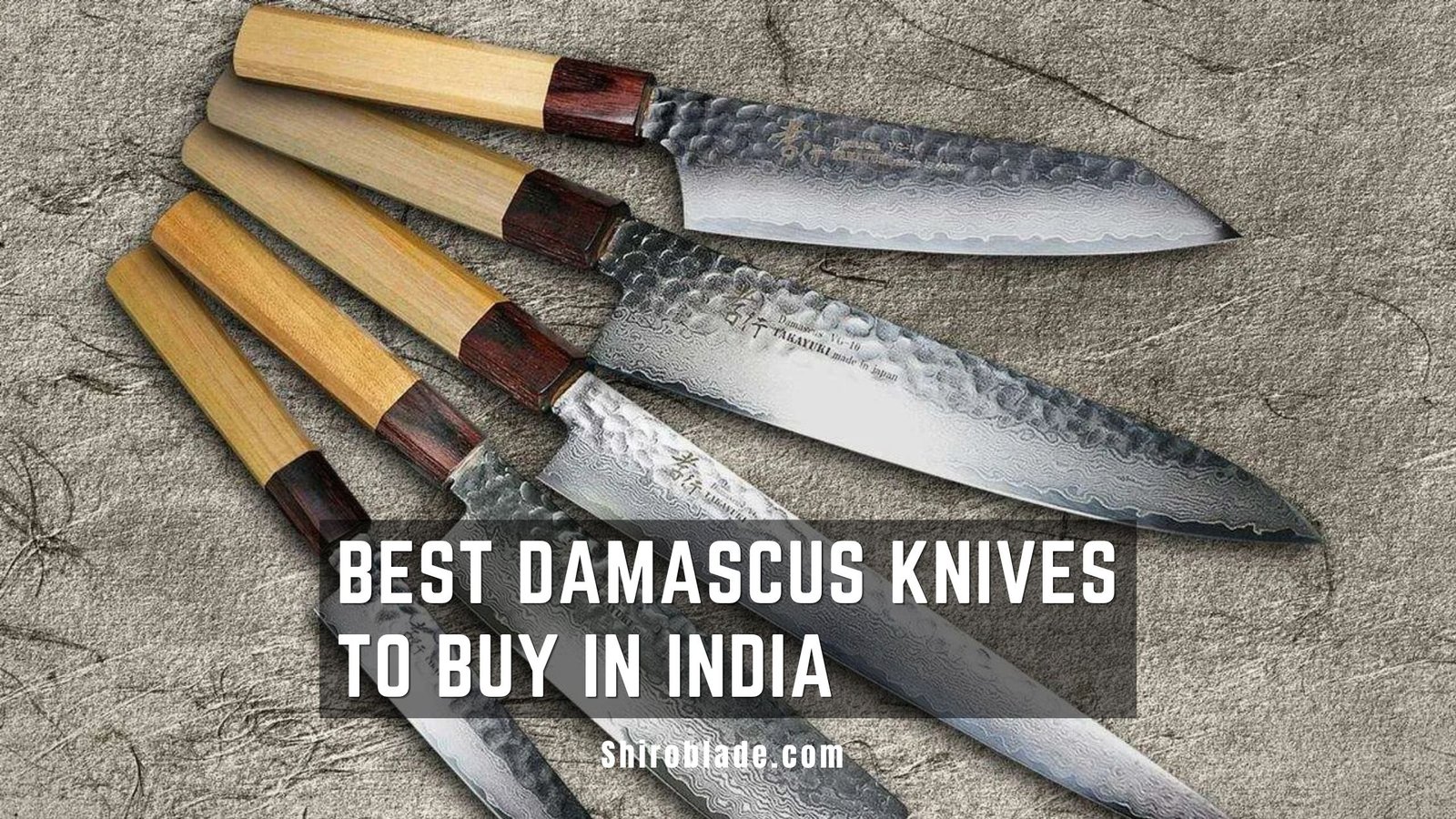
We compared 7 of the best Damascus knives in India on core steel, HRC, layers, handle and price, so you buy a real blade and not a laser-etched fake.
Real Damascus kitchen knives wrap a hard core steel (VG-10, VG-MAX, SG2) in layered stainless cladding. Genuine ones cost about ₹9,500 to ₹80,000 on Amazon.in.
Knives sold as “Damascus” for ₹1,000 to ₹3,000 are single-sheet steel with a laser-printed pattern. All 7 below are genuine layered blades.
Affiliate disclosure: this post contains Amazon affiliate links. If you buy through them, we may earn a small commission at no extra cost to you. Read our disclosure.
On This Page
Short Answer: Best Damascus Knife in India
The best Damascus knife in India for most home cooks is the Shun Premier 7-Inch Santoku (8.8/10): VG-MAX core at 60–61 HRC, 68 cladding layers and a hammered finish that stops vegetables sticking.
- Best premium: Kramer by Zwilling Santoku (8.7/10). SG2 core at 63 HRC.
- Best budget: Kai Seki Magoroku Santoku (8.1/10). Real Japanese Damascus from about ₹9,500.
- Best Gyuto: Yoshihiro 16-Layer 8.25-Inch (8.2/10). Thin VG-10 blade for rocking cuts.
- Best stain-proof handle: Dalstrong Shogun X 6-Inch (8.5/10). G10 handle.
Our Top Picks: Best Damascus Knives in India
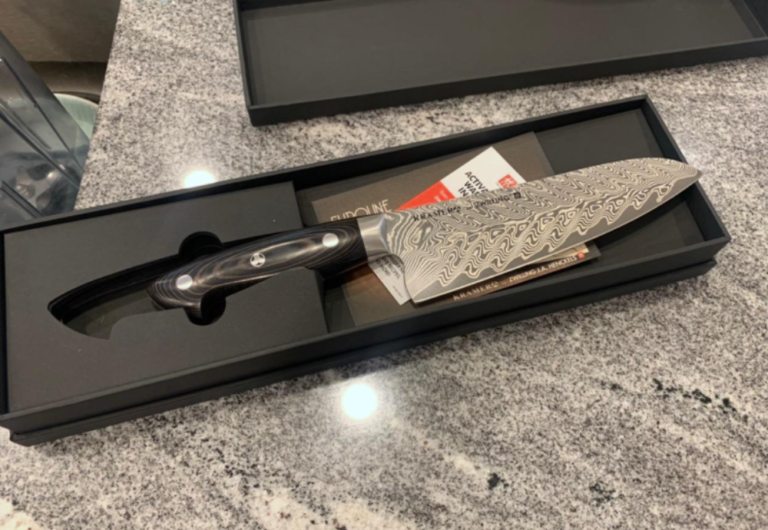
Kramer by Zwilling 7-Inch Santoku
SG2 core at 63 HRC. Top edge retention.
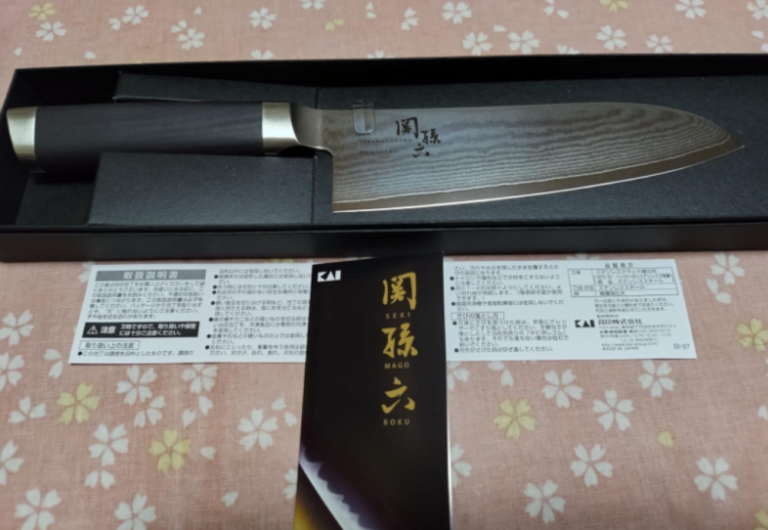
Kai Seki Magoroku 165mm Santoku (AE5200)
Real Japanese Damascus from about ₹9,500.
Specs Comparison: 7 Best Damascus Knives in India
| Knife | Score | Core Steel | HRC | Layers | Blade | Price Range | |
|---|---|---|---|---|---|---|---|
| Shun Premier 7-Inch Santoku | 8.8 | VG-MAX | 60–61 | 68 | 7 in (178 mm) | ₹24,000 – ₹28,000 | Check Price |
| Yoshihiro 46-Layer Santoku | 8.3 | VG-10 | 60 | 46 | 7 in (180 mm) | ₹25,000 – ₹30,000 | Check Price |
| Kramer by Zwilling 7-Inch Santoku | 8.7 | SG2 | 63 | 101 | 7 in (178 mm) | ₹60,000 – ₹80,000 | Check Price |
| Yoshihiro 16-Layer 8.25-Inch Gyuto | 8.2 | VG-10 | 60 | 16 | 8.25 in (210 mm) | ₹25,000 – ₹35,000 | Check Price |
| Shun Classic Blonde 7-Inch Santoku | 8.6 | VG-MAX | 60–61 | 68 | 7 in (178 mm) | ₹22,000 – ₹25,000 | Check Price |
| Dalstrong Shogun X 6-Inch Gyuto | 8.5 | AUS-10V | 62+ | 66 | 6 in (152 mm) | ₹25,000 – ₹30,000 | Check Price |
| Kai Seki Magoroku 165mm Santoku (AE5200) | 8.1 | Mo-V stainless | 58–59 | 32 | 6.5 in (165 mm) | ₹9,500 – ₹13,000 | Check Price |
Layers = cladding layers around the core (Kramer: 101 total, 50 per side).
How We Rated These Damascus Knives
Each knife is scored out of 10 on five weighted criteria. See our full method on the How We Rate page.
Core Steel & Edge
Steel type, HRC, edge angle.
Build & Layers
Cladding quality, finish, fit.
Handle & Balance
Grip when wet, weight, comfort.
Care & Rust
Rust resistance, upkeep.
Value
Price against similar knives.
The 7 Damascus Knives in India: Detailed Reviews
Scored out of 10 on the criteria above. Specs come from brand pages and Amazon.in listings. Prices are approximate ranges, so check the latest price on Amazon.
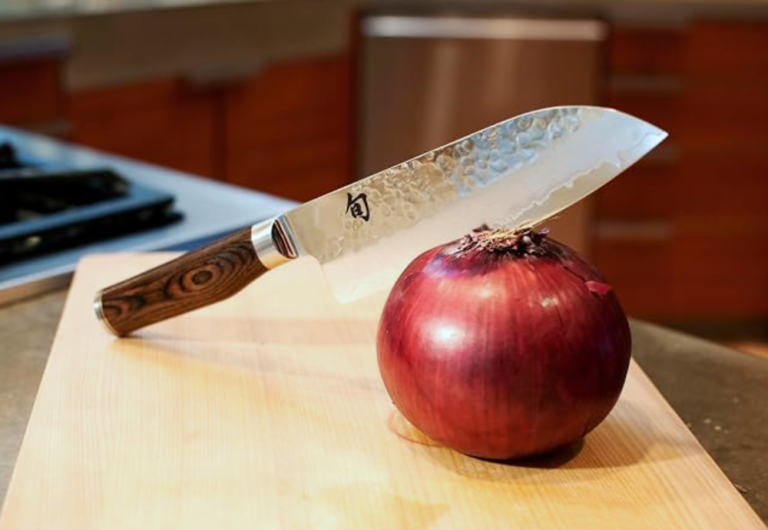
1. Shun Premier 7-Inch Santoku Knife
VG-MAX core with a hammered finish that stops vegetables sticking.
| Brand | Shun (Kai) |
|---|---|
| Core Steel | VG-MAX super steel |
| Hardness | 60–61 HRC |
| Layers | 68 cladding layers (SUS410/SUS431, 34 per side) |
| Blade Length | 7 in (178 mm) |
| Edge Angle | 16° per side |
| Handle | Walnut-colored Contour PakkaWood |
| Origin | Seki City, Japan |
| Price Range | ₹24,000 – ₹28,000 |
| Best For | Daily chopping of onions, ginger and garlic |
Indian kitchen: The hammered Tsuchime finish creates air pockets that stop onion, potato and cucumber slices from sticking. The contoured handle suits long prep sessions.
Limit: The thin 60–61 HRC edge can chip on chicken bones or frozen food.
Pros
- VG-MAX core holds its edge for months
- Hammered finish cuts food sticking
- Rust and stain-resistant cladding
- Moisture-resistant PakkaWood handle
Cons
- Premium price
- Chips on bone or frozen food
Verdict: The best all-round pick if you chop daily and can afford it.
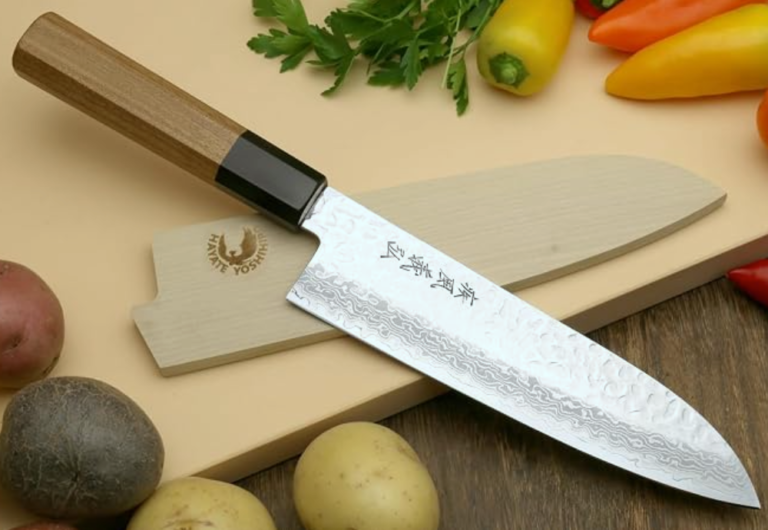
2. Yoshihiro VG-10 46 Layers Hammered Damascus Santoku Knife
Traditional Wa handle, forward balance and a wooden saya.
| Brand | Yoshihiro |
|---|---|
| Core Steel | VG-10 stainless steel |
| Hardness | 60 HRC |
| Layers | 46 cladding layers |
| Blade Length | 7 in (180 mm) |
| Handle | Octagonal Ambrosia wood (Wa style) |
| Extras | Wooden saya (sheath) |
| Origin | Sakai / Seki, Japan |
| Price Range | ₹25,000 – ₹30,000 |
| Best For | Push-cutting dense root vegetables |
Indian kitchen: The forward-weighted balance helps push-cut yam, raw banana and pumpkin. The saya protects the edge in humid coastal climates.
Limit: The wooden handle needs occasional mineral oil, and the blade must be hand washed and dried at once.
Pros
- Authentic Wa-bocho octagonal handle
- 46-layer hand-forged Damascus, Tsuchime finish
- Wooden saya included
- Balanced for push-cut chopping
Cons
- Handle needs periodic oiling
- Hand wash and dry immediately
Verdict: Pick this for traditional Japanese push-cut chopping.
3. Kramer by Zwilling Bob Kramer 7-Inch Stainless Damascus Santoku Knife
SG2 powder-steel core at 63 HRC, the hardest edge on this list.
| Brand | Kramer by Zwilling |
|---|---|
| Core Steel | SG2 (MicroCarbide powder steel) |
| Hardness | 63 HRC |
| Layers | 101 (50 per side) |
| Blade Length | 7 in (178 mm) |
| Handle | Black linen Micarta, brass center pin |
| Origin | Designed in USA, made in Seki City, Japan |
| Price Range | ₹60,000 – ₹80,000 |
| Best For | Heavy prep and large hands |
Indian kitchen: The extra-wide blade gives knuckle clearance and scoops chopped onion straight into the kadhai. Linen Micarta will not swell or crack in humid kitchens.
Limit: The 63 HRC core needs diamond or ceramic stones to resharpen.
Pros
- Highest edge retention here (SG2, 63 HRC)
- 101-layer Chevron pattern
- Wide blade, good knuckle clearance
- Waterproof Micarta handle
Cons
- Most expensive on the list
- Needs diamond or ceramic stones
Verdict: Buy it for top edge retention if budget is no issue.
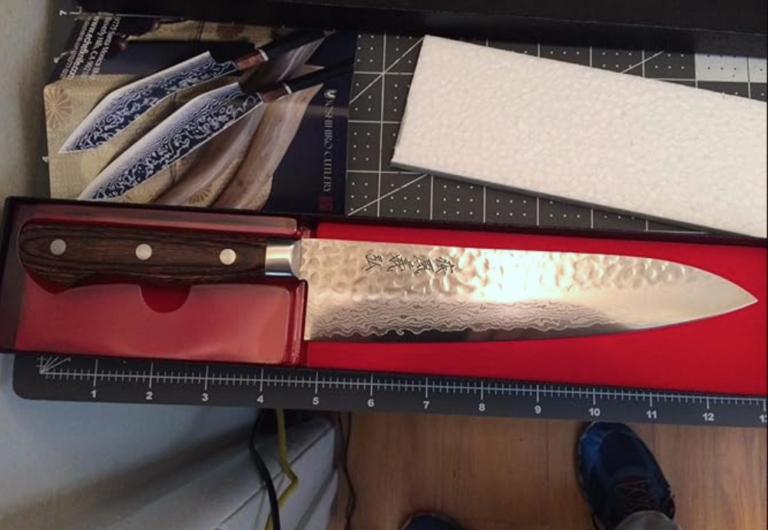
4. Yoshihiro VG-10 16 Layers Hammered Damascus Gyuto (8.25 Inch)
Thin 8.25-inch Gyuto for rocking cuts and large produce.
| Brand | Yoshihiro |
|---|---|
| Core Steel | VG-10 stainless steel |
| Hardness | 60 HRC |
| Layers | 16 cladding layers |
| Blade Length | 8.25 in (210 mm) |
| Handle | Western full-tang Mahogany wood, steel rivets |
| Origin | Sakai, Japan |
| Price Range | ₹25,000 – ₹35,000 |
| Best For | Herbs, large vegetables, rocking cuts |
Indian kitchen: The curved belly suits rocking cuts through coriander, mint and green chillies. Fewer layers keep the blade thinner and lighter; the VG-10 core is just as sharp.
Limit: The long blade needs a larger cutting board.
Pros
- Fair entry price for a handcrafted Sakai Gyuto
- 8.25 in handles melons and big vegetables
- Familiar Western full-tang handle
- Thin blade glides through hard vegetables
Cons
- Plainer pattern than 68-layer knives
- Long blade needs a bigger board
Verdict: A good first Gyuto if you like a Western-style chef’s knife.
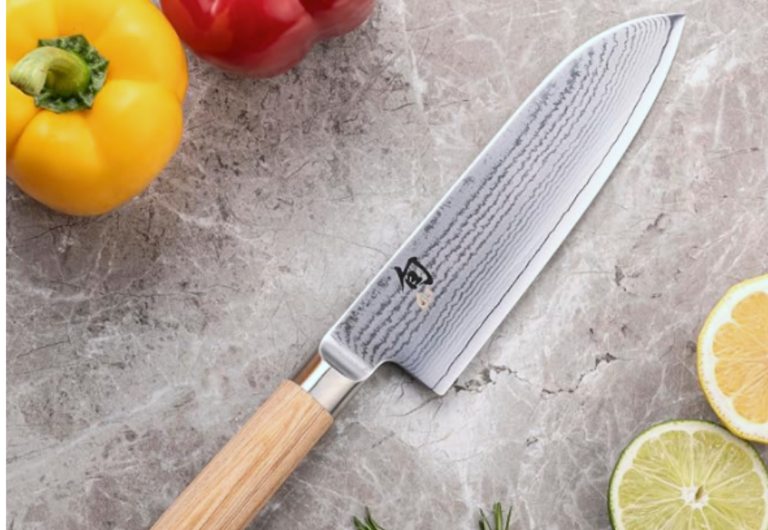
5. Shun Classic Blonde 7-Inch Santoku Knife
The Premier’s VG-MAX core with a bead-blasted finish and D-shaped handle.
| Brand | Shun (Kai) |
|---|---|
| Core Steel | VG-MAX super steel |
| Hardness | 60–61 HRC |
| Layers | 68 cladding layers |
| Blade Length | 7 in (178 mm) |
| Edge Angle | 16° per side |
| Handle | Blonde D-shaped PakkaWood |
| Finish | Bead-blasted |
| Origin | Seki City, Japan |
| Price Range | ₹22,000 – ₹25,000 |
| Best For | Precise slicing, right-handed cooks |
Indian kitchen: The D-shaped handle ridge locks into right-hand knuckles, so the knife will not twist when hands are oily or wet. The 16° edge slices tomatoes and fillets fish like vanjaram cleanly.
Limit: It suits right-handed users only and has no hammered finish.
Pros
- Same proven VG-MAX core as the Premier
- D-shaped handle for rotational control
- Bead-blasted finish shows the 68-layer grain
- ₹2,000 – ₹3,000 cheaper than the Premier
Cons
- Right-hand design only
- No hammered non-stick texture
Verdict: Choose this over the Premier if you prefer a plain finish and a D-handle.
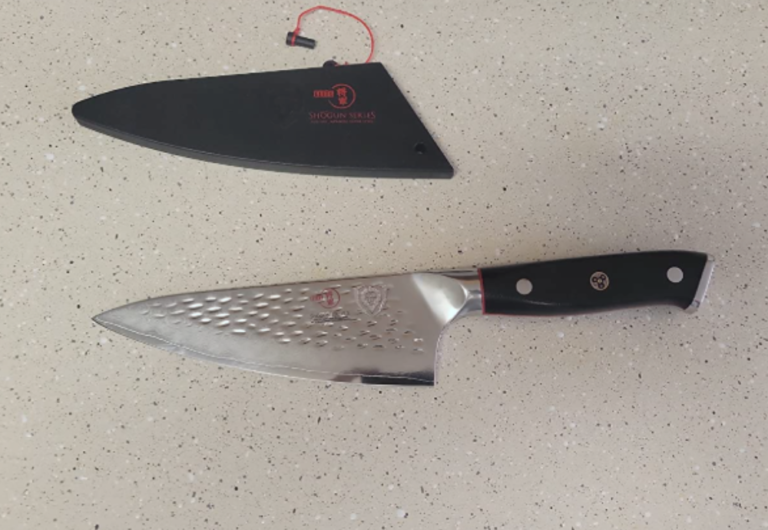
6. Dalstrong Chef’s Knife 6-Inch - Shogun Series X Gyuto
AUS-10V core at 62+ HRC with a G10 handle that never stains.
| Brand | Dalstrong |
|---|---|
| Core Steel | AUS-10V Japanese super steel |
| Hardness | 62+ HRC |
| Layers | 66 cladding layers |
| Blade Length | 6 in (152 mm) |
| Edge Angle | 8–12° per side |
| Handle | Military-grade G10 Garolite |
| Origin | Designed in Canada, made in China (Japanese steel) |
| Price Range | ₹25,000 – ₹30,000 |
| Best For | Small hands, stain-proof grip |
Indian kitchen: G10 resists heat, moisture, grease and turmeric stains. The short 6 in blade is easy to control for smaller hands.
Limit: It is a commercial brand, not a hand-forged Japanese knife.
Pros
- 66-layer AUS-10V core at a competitive price
- G10 handle is stain, water and heat proof
- Nitrogen-cooled heat treatment, 62+ HRC
- Very acute 8–12° edge out of the box
Cons
- Heavier, thicker bolster than hand-forged knives
- Made in China, not Japan
Verdict: Best for a low-maintenance handle and smaller hands.
7. Kai Seki Magoroku Damascus 165mm Santoku Knife (AE5200)
The cheapest real Japanese Damascus here, and the most forgiving.
| Brand | Kai Corporation |
|---|---|
| Core Steel | High-carbon molybdenum-vanadium stainless |
| Hardness | 58–59 HRC |
| Layers | 32 cladding layers |
| Blade Length | 6.5 in (165 mm) |
| Handle | Laminated composite wood, triangular section |
| Origin | Japan |
| Price Range | ₹9,500 – ₹13,000 |
| Best For | First real Damascus, tough daily use |
Indian kitchen: The softer 58–59 HRC core is tougher and chips less if knocked on a board. It sharpens on a basic whetstone.
Limit: It needs honing more often than VG-10 or SG2, and the pattern is plain.
Pros
- Japanese-made Damascus under ₹15,000
- Tough core, easy to sharpen on basic stones
- Sealed, water-resistant handle
- Backed by Kai Japan
Cons
- Honing needed more often
- Simple 32-layer pattern
Verdict: The best entry point into real Damascus.
Types of Damascus Steel Explained
| Type | How it is made | Where you see it |
|---|---|---|
| Pattern-welded steel | Alternating layers of high-carbon steel (1095) and high-nickel steel (15N20), forge-welded into one block | Hand-forged custom blades |
| San mai cladding | A hard core (VG-10, Blue Steel, SG2) wrapped between layered stainless outer steel | Shun, Yoshihiro, Kai |
| Stainless Damascus (Damasteel) | Powder metallurgy fuses stainless alloys into a rust-resistant, high-contrast pattern | Modern premium knives |
Full steel comparison: Types of Damascus Steel Explained. Pattern myths: The Damascus Blade Pattern Myth.
How Much Does a Real Damascus Knife Cost in India?
| Tier | Price in India | What you get |
|---|---|---|
| Fake (laser-etched) | ₹1,000 – ₹3,000 | Single-sheet steel, printed pattern |
| Entry real Damascus | ₹9,500 – ₹13,000 | Kai Magoroku, 32 layers, Mo-V core |
| Mid-range Japanese | ₹22,000 – ₹35,000 | Shun, Yoshihiro, Dalstrong; VG-10, VG-MAX, AUS-10V cores |
| Premium | ₹60,000 – ₹80,000 | Kramer by Zwilling, SG2 powder steel |
- Base price: $200–$350 USD (₹16,000–₹29,000) for authentic materials and hand-forging in Japan.
- Import duties: Basic Customs Duty 10%, Social Welfare Surcharge 10% and IGST 18% add roughly 35–40% on import.
Full breakdown: How Much Does a Real Damascus Knife Cost in India. Why Japanese steel costs more: Why Japanese Knives Are So Expensive.
Real vs. Fake Damascus: How to Identify
| Test | Real Damascus | Fake (laser-etched) |
|---|---|---|
| Spine | Pattern lines run across the top edge and tang | Smooth, plain spine |
| Edge bevel | Pattern bends and flows into the ground edge | Pattern stops in a straight line above the bevel |
| Uniqueness | Organic variation; no two blades match | Identical pattern on every unit |
| 1000-grit sandpaper | Internal layers stay visible | Surface pattern rubs off |
Step-by-step visuals: Real vs Fake Damascus: How to Identify Authentic Blades.
Damascus Layer Count Explained
A higher layer count does not make a knife sharper. Cutting performance comes from the core steel (VG-10, VG-MAX, SG2). The outer layers do three jobs:
- Core protection: Soft cladding absorbs shock so the hard core does not snap.
- Corrosion resistance: Stainless cladding shields the core from rust and acidic juices.
- Non-stick surface: Etched patterns help slices release from the blade.
Most high-end Japanese knives use 33 to 68 layers. Counts of 100+ are mainly visual. Read Damascus Layer Count Explained.
Buying Guide: What to Look for in a Damascus Knife
- Core Steel: VG-10 and VG-MAX balance edge retention and easy sharpening. SG2 holds an edge longest but is costly. AUS-10V is the budget-friendly super steel. Mo-V is the toughest and most forgiving.
- Hardness (HRC): 58–59 HRC resists chipping. 60–61 HRC is the sweet spot. 62–63 HRC holds an edge longest but chips on bone.
- Blade Shape: A Santoku (6.5–7 in) suits chopping onions, ginger and garlic. A Gyuto (8 in+) suits rocking cuts, herbs and bigger vegetables.
- Handle: Wa (octagonal) handles suit push-cuts. Western full-tang handles feel familiar. Micarta and G10 never stain or swell in humid kitchens.
- Authenticity: Buy a named brand from the brand’s own Amazon.in listing. Under ₹3,000 is not real layered steel.
- Budget: Start near ₹9,500 for real Damascus. Spend ₹22,000+ for VG-10 or VG-MAX. Go above ₹60,000 only for SG2.
How to Care for and Sharpen a Damascus Knife
- Wash: Hand wash with mild soap and dry at once. No dishwasher.
- Sharpen: Use a 1000-grit whetstone, then polish at 3000–6000 grit. Avoid pull-through sharpeners.
- Board: Use wood or soft plastic. Avoid glass, granite and steel boards.
- Wood handles: Rub with mineral oil now and then.
- Acids: Wipe off lemon and tomato juice during prep to avoid stains.
- Store: Use a saya, knife block or magnetic strip.
FAQs
No. Detergents, high heat and water spray dull the edge, strip the etched pattern contrast and damage wooden handles. Hand wash with mild soap and dry immediately.
Use water stones (whetstones): 1000 grit for basic sharpening and 3000 to 6000 grit for polishing. Avoid pull-through sharpeners and electric wheels, which can chip hard steel cores.
A Santoku is ideal for push-chopping onions, tomatoes, ginger and garlic. A Gyuto (8 inches) is better for rocking cuts, large proteins and bigger vegetables like pumpkin.
Stainless core blades (VG-10, VG-MAX, SG2) with stainless cladding resist rust well. Acidic juices like lemon or tomato pulp left on the blade can cause minor stains, so wipe it during prep.
Japanese Damascus knives are made for vegetables and boneless meat. Their thin edges are hardened to 58–63 HRC, so bone and frozen food can chip them. Use a heavy cleaver for bone-in cuts.
No. Knives sold at ₹1,000 to ₹3,000 are usually single-sheet steel with a laser-printed pattern. Real layered Damascus from a Japanese brand starts near ₹9,500.
The Kai Seki Magoroku Santoku (₹9,500 – ₹13,000). Its 58–59 HRC Mo-V core is tough, forgiving and easy to sharpen on a basic whetstone.
Yes, if you buy real layered steel with a quality core (VG-10, VG-MAX, SG2). You get better edge retention and a sharper cut than regular stainless knives, but you pay import-duty-inflated prices.
Conclusion: Which Damascus Knife Should You Buy?
Buy a Damascus knife for the core steel (VG-10, VG-MAX, SG2), not the pattern. Skip laser-printed fakes under ₹3,000, and match the blade shape to how you cook. Find your match below.
VG-MAX core with a hammered finish that stops vegetables sticking.
SG2 powder-steel core at 63 HRC, the hardest edge on this list.
Traditional Wa handle, forward balance and a wooden saya.
AUS-10V core at 62+ HRC with a G10 handle that never stains.
The cheapest real Japanese Damascus here, and the most forgiving.
Want a Japanese knife without the Damascus price? See Best kitchen knife brands in India.
Sources
- Amazon.in product listings for each knife (materials, dimensions).
- Brand pages: Kai India (Shun), eChefKnife (Yoshihiro), Kramer Knives.
Related guides: What is a Damascus chef knife? · Japanese kitchen knife types · Real vs fake Damascus

Indian knife collector with a deep respect for Japanese knife making. What began as an interest in Damascus patterns grew into a focused study of Japanese knives from Sakai and Seki. Through Shiroblade, I share simple guides on buying, using, and caring for knives, helping readers understand real craftsmanship beyond looks.
Pingback: 10 Best Kitchen Knife Under ₹1000 in India