
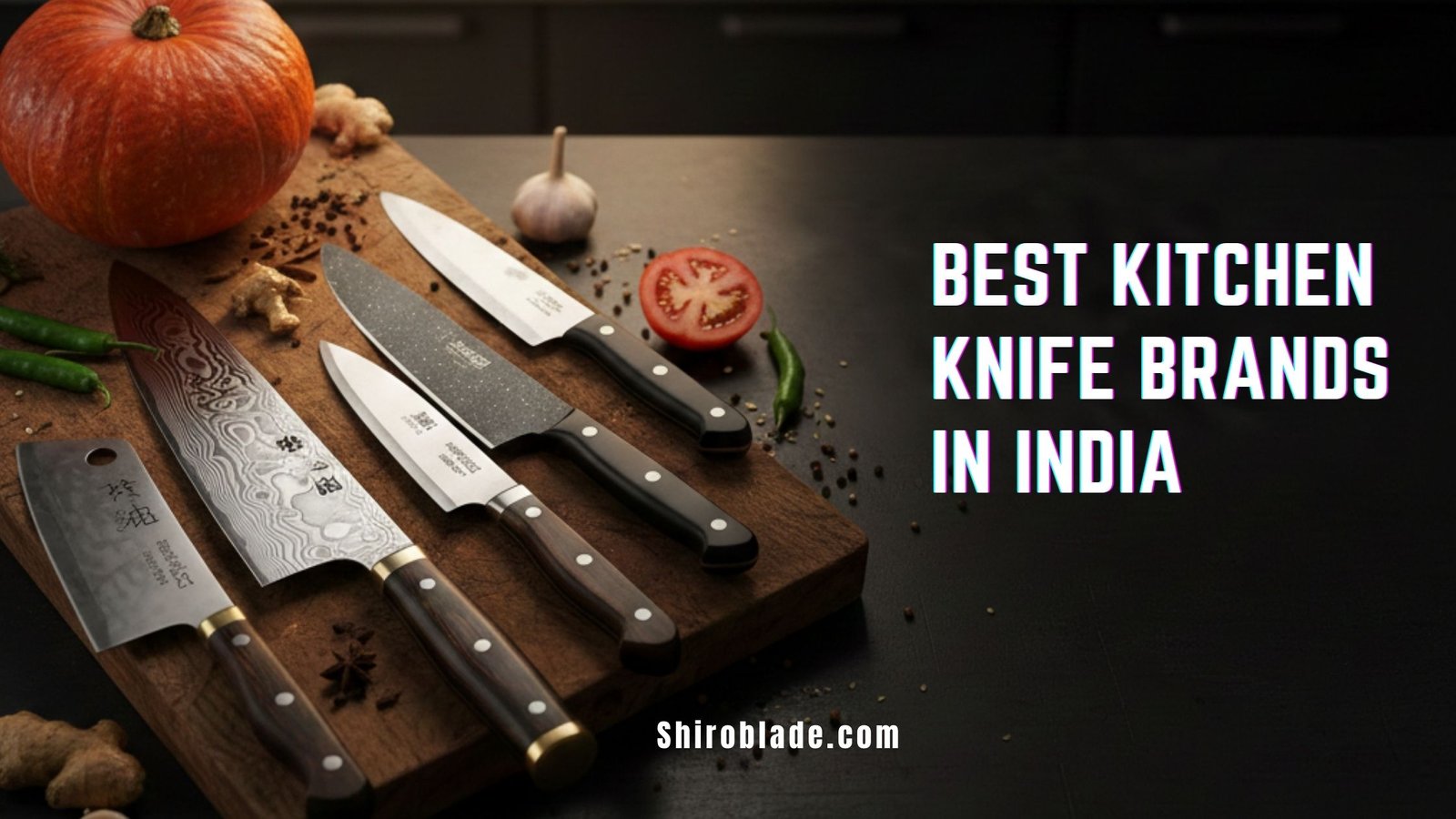
Indian home cooking has changed a lot recently. More people are falling in love with cooking and realizing that standard, dull knives just make kitchen work slower and frustrating. Switching to a good quality knife makes a massive difference—chopping vegetables or slicing meat becomes smooth, quick, and effortless.
Whether you want a sharp Japanese knife or a strong, budget-friendly Indian brand, picking the right option can be tricky. Here is a clear guide to the 10 best kitchen knife brands in India for 2026 to help you find the perfect blade for your daily needs.
Budget-Friendly Kitchen Knife Recommendations
10 best kitchen knife brands in India you should try
This guide explores the 10 best kitchen knife brands in India for 2026, covering everything from high-carbon Japanese imports to handcrafted Indian powerhouses.
Jump to: Japanese brands | German brands | Indian brands | Best chef knife
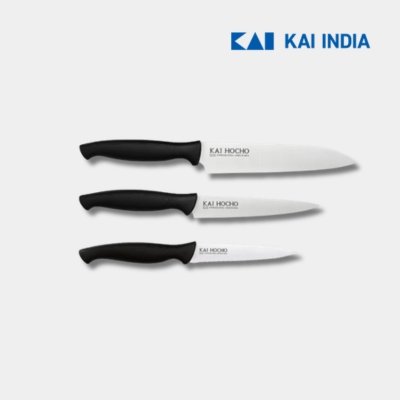
1. Kai India
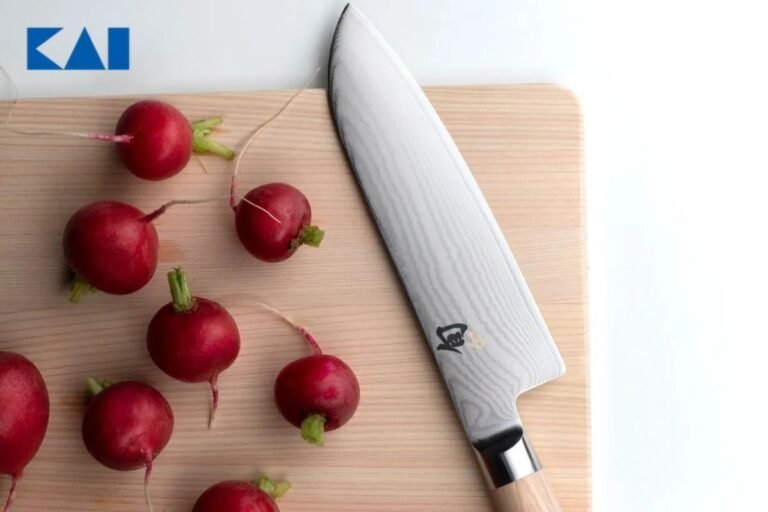
Kai India is arguably the most successful Japanese brand in the Indian market. They’ve managed to bring authentic Japanese sharpness to a price point that suits the Indian middle class.
The Technology: Most Kai knives available in India use high-carbon Japanese stainless steel. Their Hocho series is specifically designed for the Indian grip.
Performance: They are known for their “razor” edge. Unlike Western knives that rely on weight, Kai knives rely on extreme thinness and sharpness.
Key Feature: Their handles are usually made of food-grade polypropylene, making them lightweight and easy to clean—perfect for the humid Indian climate.
Best For: Daily vegetable prep and fine dicing.
2. Stahl
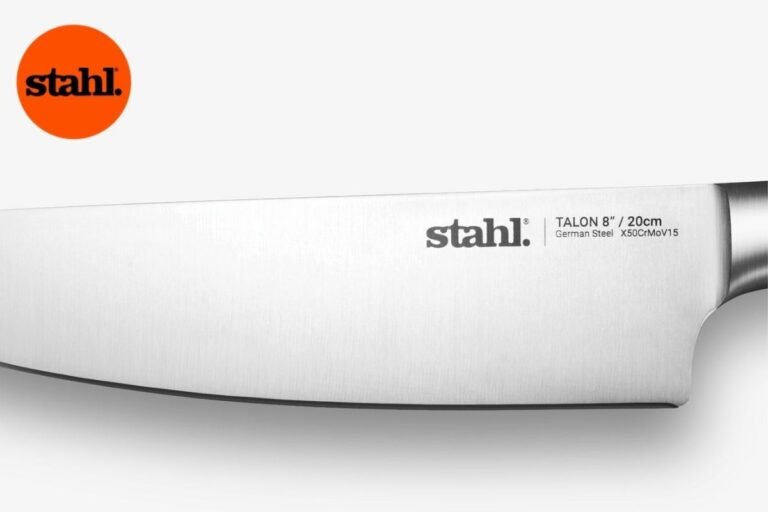
Stahl has quickly become a favorite for those who want a heavy, balanced, “luxury” feel at less cost. Their Talon Series is a standout in 2026.
The Steel: They use German 1.4116 Stainless Steel, which is the same steel used by top European brands. It’s tough, rust-resistant, and holds an edge well.
The Handle: Stahl uses premium Walnut Wood handles. It’s not just about looks; the ergonomics are designed to reduce wrist fatigue during long cooking sessions.
Full Tang: The steel runs through the entire handle, providing the kind of balance you usually only find in professional-grade knives.
Best For: Cutting hard vegetables like pumpkin or jackfruit.
3. Shun
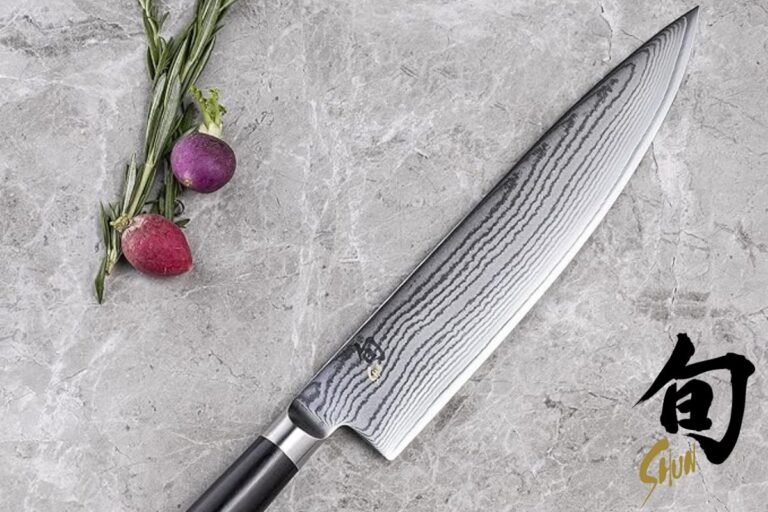
As the premium brand under the Kai parent company, Shun represents the “Sakai” of commercially available knives. Handcrafted in Seki City, Japan, by the Kai Group, these are more than tools—they are works of art.
The Damascus Edge: Shun knives feature a core of VG-MAX steel clad in 34 layers of Damascus stainless steel on each side. This creates a beautiful “wave” pattern that prevents food from sticking.
Sharpness: Out of the box, Shun is likely the sharpest knife you will ever own. It features a 16° edge, which is much steeper and sharper than traditional Indian knives.
Maintenance: Because the steel is so hard (Rockwell 61), it stays sharp for a long time but requires careful hand-washing and a wooden cutting board to avoid chipping.
Best For: Gourmet home chefs and professional use.
4. Dalstrong
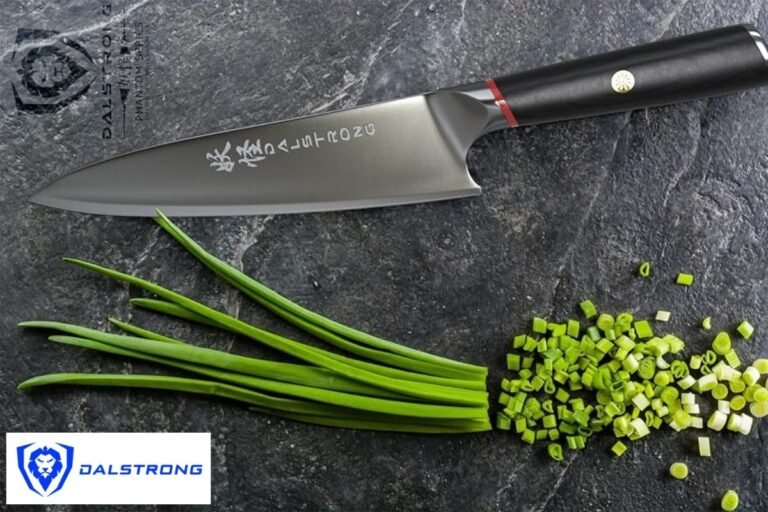
Dalstrong has disrupted the Indian market by combining aggressive, “alpha” aesthetics with high-performance metallurgy. If you want a knife that looks like it belongs in a sci-fi movie but performs like a professional tool, this is it.
The Variety: They offer multiple series, from the Shogun Series (67-layer Damascus) to the Gladiator Series (German steel).
The Steel: Many of their premium lines use AUS-10V Japanese super-steel, vacuum-treated for incredible hardness ($62+$ HRC).
Aesthetics: Known for their G10 Garolite handles and “Tsunami Rose” blade patterns, they are the most visually striking knives available today.
Best For: Home cooks who want a mix of high-end performance and bold, modern design.
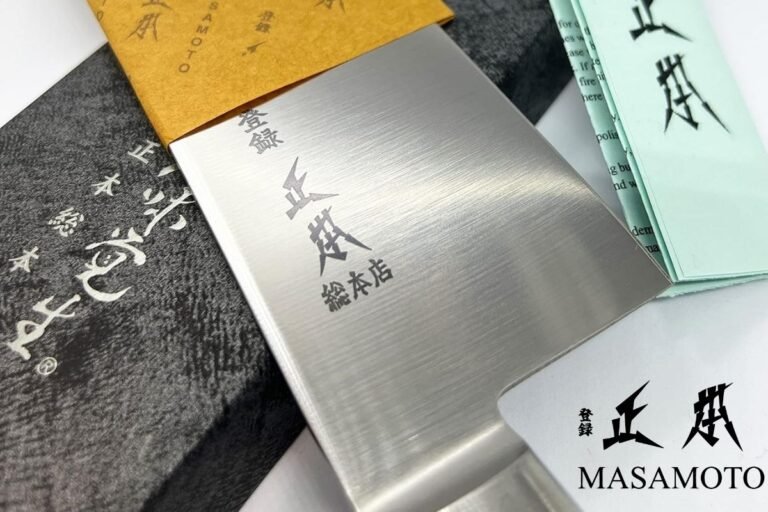
5. Masamoto
Launched by Chef Sanjeev Kapoor, Masamoto knives are designed to make professional techniques accessible to the average home cook.
High-Carbon Steel: Their premium ranges use 7Cr17 high-carbon stainless steel, which strikes a perfect balance between sharpness and easy maintenance.
Aesthetics: Masamoto knives are known for their modern, stylish designs that look great on a kitchen counter.
Best For: Modern Indian kitchens and fans of Chef Sanjeev Kapoor’s style.
6. Zhen
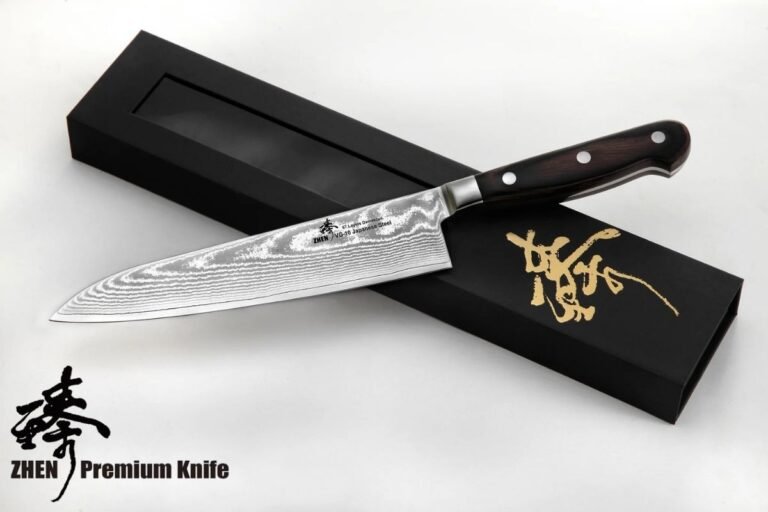
Zhen is a niche brand that has gained a cult following in India for using authentic Takefu VG-10 Damascus steel from Japan.
Layering: They often use 67-layer Damascus construction. This gives you the performance of a high-end Japanese knife at a slightly lower price point than Shun.
The Feel: Zhen knives tend to have a “Western-style” handle but a “Japanese-style” blade, making them a great transition knife for those used to heavier tools.
Best For: Precision slicing of meat and fish.
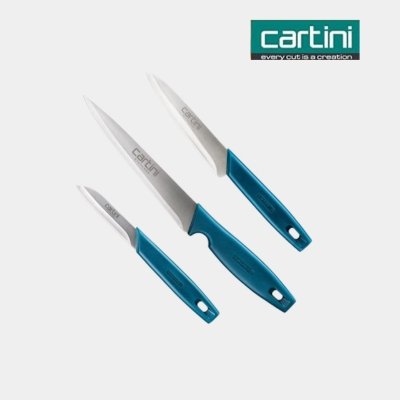
7. Godrej Cartini
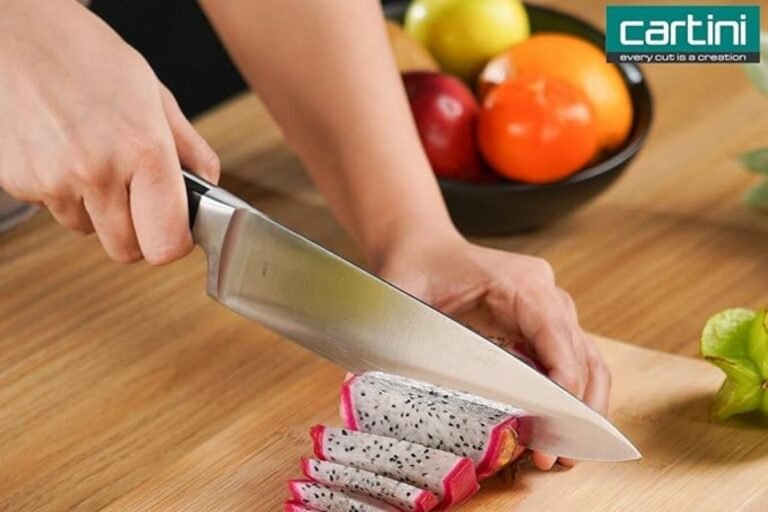
No list of Indian knives is complete without Cartini. In 2026, they remain the most trusted household brand due to their accessibility and consistent quality.
Taper Ground Blades: Cartini uses a special grinding process that makes the blade thin out toward the edge, ensuring a smooth cut every time.
The Series: They offer everything from the “Classic Chef” to the “Swift” utility knife. Their professional range is often used in culinary schools across India.
Durability: These knives are built to last. They can handle being thrown in a kitchen drawer and roughly handled without losing their utility.
Best For: Families who want a reliable, “set-it-and-forget-it” tool.
8. Suisin
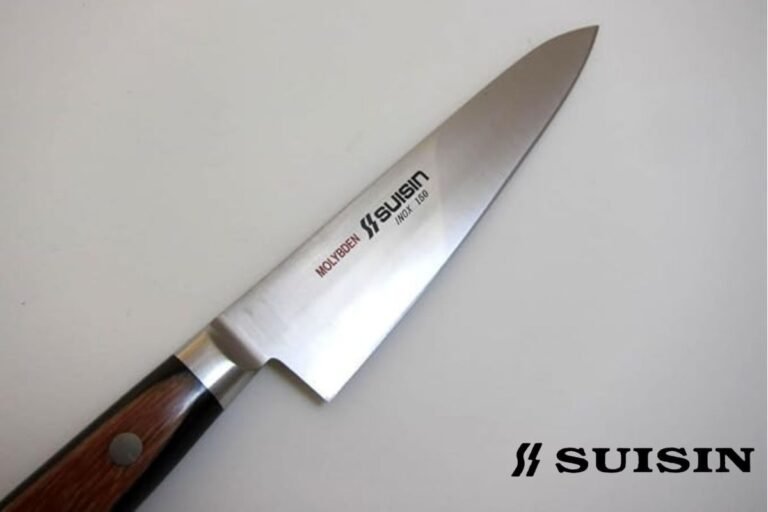
Hailing directly from Sakai, Japan, Suisin is a brand for the purist. They are world-renowned for their “Inox” series, which solved the problem of creating a stainless steel knife that feels and sharpens like high-carbon steel.
Sakai Craftsmanship: Every Suisin knife carries the heritage of Sakai’s blacksmithing traditions, focusing on perfect balance and a “ghost-like” weight.
The Inox Honyaki: Their top-tier knives are legendary among sushi chefs for being incredibly thin and laser-sharp, yet surprisingly resistant to rust.
The Handle: They often feature traditional Japanese Wa-handles (octagonal or D-shaped) made from Ho wood, providing a lightweight, nimble feel.
Best For: Serious enthusiasts looking for an authentic, lightweight Sakai blade for precision slicing.
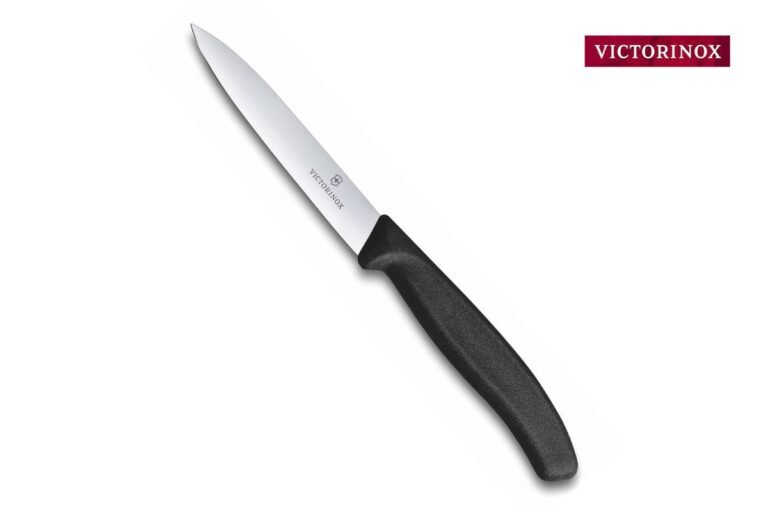
9. Victorinox
Victorinox has set the global benchmark for Swiss precision, bringing commercial-grade performance and unmatched durability to Indian kitchens.
The Build: Their Fibrox Pro and Swiss Classic series are iconic. They use high-carbon stainless steel that holds a razor-sharp edge and offers superior rust resistance.
The Handle: Ergonomic Fibrox handles designed for a slip-resistant, comfortable grip even when wet. It gives the knife a clean, professional feel that is hygienic and easy to maintain.
Versatility: While they make exceptional everyday chef knives, they are the go-to brand for precise slicing, trimming, and all-around kitchen prep.
Best For: Home cooks and professionals who prefer lightweight, ultra-sharp precision and reliable daily durability.
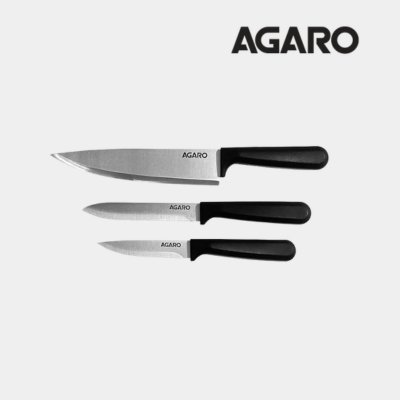
10. Agaro
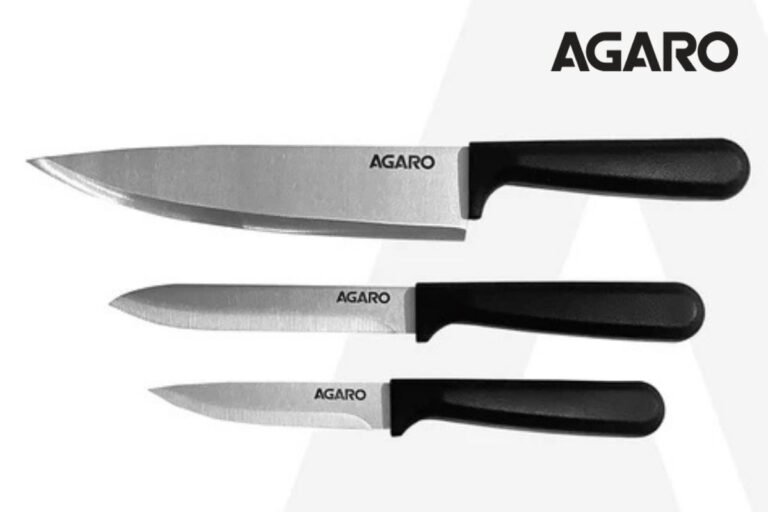
Agaro has dominated the 2026 market by offering professional-looking “sets” at unbeatable prices.
The Coating: Many Agaro knives feature a non-stick granite-finish coating. This is highly practical for dicing wet vegetables like onions or tomatoes.
Ergonomics: They use “Soft-Touch” handles that provide a very secure grip, even when your hands are wet or oily.
Value: For the price of one premium knife from other brands, Agaro offers a 6-piece or 9-piece set with a storage block.
Best For: New homeowners and students.
Best Japanese Knife Brands in India
Japanese knives are thinner and harder than most knives sold in India. You get a sharper edge, but you need to hand-wash them, use a wooden board and keep them away from bones. Four brands from the list above are Japanese:
Kai India: Hocho series in Japanese high-carbon stainless steel with a lightweight polypropylene handle. Best for daily vegetable prep and the easiest first Japanese knife. Check price on Amazon
Shun: VG-MAX core with 34-layer Damascus on each side, a 16° edge and HRC (hardness) 61. Best for gourmet cooking, but it can chip on bone or a hard board. Check price on Amazon
Zhen: VG-10 Damascus in 67 layers with a Western-style handle. Best for precision slicing of meat and fish. Check price on Amazon
Suisin: Sakai-made Inox series with a lightweight Ho wood Wa handle (Japanese-style handle). Best for enthusiasts who want a thin, nimble blade, not for heavy chopping. Check price on Amazon
New to Japanese steel? Start with our guide to Japanese kitchen knife types and read why Japanese knives are so expensive.
Best German Knife Brands in India
German-style knives have a thicker blade and a curved belly for rocking cuts. The steel is usually softer (around 56 to 58 HRC), so they handle rough use better than Japanese knives but need sharpening more often. These brands follow that approach:
Stahl: an Indian brand that uses German 1.4116 stainless steel, with a full tang (blade runs through the handle) and a walnut handle. Best for hard vegetables like pumpkin and jackfruit. Check price on Amazon
Dalstrong Gladiator Series: the German-steel line from Dalstrong, heavier than its Japanese-style Shogun Series. Best for cooks who want a full-size, weighty chef knife. Check price on Amazon
Rena Germany: a 210 mm chef knife built heavy and common in Indian hotels and commercial kitchens. Reviewed in our best kitchen knife under 1000 guide.
Best Indian Knife Brands
Indian brands are built for Indian cooking: hard pumpkin, bone-in chicken and daily rough use. They also cost far less than imported knives. Three stand out:
Godrej Cartini: taper-ground blades (thinner toward the edge) in a range from the Classic Chef to the Swift utility knife. Best for families who want a reliable everyday knife. Check price on Amazon
AdhaKen: C80 high-carbon steel with a Sheesham wood handle and brass bolsters. Best for meat and heavy prep. Wipe it dry after use, because high-carbon steel can rust. Check price on Amazon
Agaro: granite-finish non-stick coating and soft-touch handles, sold as sets with a storage block. Best as a starter set for new homeowners and students. Check price on Amazon
On a tight budget? See our picks for a knife set under ₹300, a kitchen knife set under ₹500 and a kitchen knife under ₹1000.
Best Chef Knife in India
A chef knife does most of the work in an Indian kitchen, from onions and tomatoes to pumpkin and chicken. Pick the length first: an 8-inch blade for meat and big vegetables, a 6 to 7-inch blade for daily dicing. Then match the knife to what you cut:
Light everyday knife: Kai Hocho Premium (7.36 inch) for fast vegetable prep. Check price on Amazon
Heavy-duty knife: Stahl Talon Series or Cartini Classic for hard vegetables and tougher jobs. Check price on Amazon
Premium upgrade: Shun (VG-MAX, 16° edge) or Zhen (VG-10 Damascus) if you want a Japanese edge and will hand-wash. Check price on Amazon
Meat and butchery: AdhaKen C80 high-carbon chef knife. Check price on Amazon
How To Choose Your First Professional Kitchen Knife?
Buying a knife is like buying a car—you need to know if it can handle the roads you travel. In an Indian kitchen, your knife needs to survive everything from soft tomatoes to hard Kaddu (pumpkin). Understanding the different kitchen knife types is essential to ensure you pick a blade shape that matches your specific cooking habits. For a deeper walkthrough, read our guide on how to choose a kitchen knife. Here is what actually matters:
Not sure what a chef knife is for? Read what a chef knife is used for and how to choose a kitchen knife.
Sharpness & Edge Life
The first thing to check is sharpness. A good knife should glide through a tomato skin without squishing it. But the real test is how long it stays sharp. Cheap knives feel great for a week but go blunt in a month. A quality brand like Kai or Stahl will hold its edge for 4–6 months if you use a sharpening rod occasionally.
Comfort (The Hand-Feel)
Most blades are stainless steel, but look for “High-Carbon Stainless Steel.” Why? Because carbon keeps the knife sharp for much longer. Some knives have too much Chromium; they won’t rust, but they are a nightmare to sharpen once they go blunt. High-carbon is the “sweet spot” for Indian cooking.
Material: Carbon vs. Chrome
Most blades are stainless steel, but look for “High-Carbon Stainless Steel.” Why? Because carbon keeps the knife sharp for much longer. Some knives have too much Chromium; they won’t rust, but they are a nightmare to sharpen once they go blunt. High-carbon is the “sweet spot” for Indian cooking.
The Right Length
If you handle a lot of meat or big vegetables, go for an 8-inch blade. For daily veggie dicing, a 6 or 7-inch Santoku knife is much easier to move around. For small things like garlic or chilies, a 4-5 inch paring knife is all you need.
Durability (The "Dishwasher" Test)
If you spend ₹500 or more, your knife should last years, not months. The biggest mistake Indians make is putting knives in the dishwasher. The heat and salt kill the blade. Hand-wash it, dry it, and a brand like Victorinox or Cartini will last you a decade.
Conclusion
Whether you’re looking for the investment-grade beauty of a Shun Damascus blade or the reliable, homegrown durability of Godrej Cartini, the “best” knife is ultimately the one that feels like an extension of your hand. For 2026, we recommend starting with a high-quality Chef’s Knife or a Santoku from Kai or Stahl—they offer the best entry point into the world of professional-grade cutting without a steep learning curve.
For most Indian homes, Kai is considered the top choice because it brings authentic Japanese sharpness to a price point that suits the Indian middle class. If you are looking for absolute luxury, Shun is the global gold standard.
You don’t need a 20-piece set. Most tasks can be done with:
Chef’s Knife (8-inch): Try the Stahl Talon for heavy tasks.
Paring Knife (4-inch): Anjali or Kai are perfect for peeling.
Santoku Knife: The Agaro or Wonderchef Santoku is great for fine dicing.
Not necessarily—it depends on your cooking style. Indian brands like Stahl and AdhaKen are engineered for the robustness required in Indian kitchens, such as cutting hard vegetables (like Kaddu) or heavy meat. Japanese knives excel in extreme precision and fine slicing. Both have a vital place in a modern kitchen.
Yes, they are part of the same family. Kai is the parent company that produces a wide range of reliable tools, while Shun is their luxury, handcrafted division. Both share the same Japanese heritage and high-quality standards.
Indian brands like Stahl often use a “Full Tang” German-steel construction, which provides weight and balance for powerful chopping. Japanese knives like Shun prioritize agility and lightness for speed and delicate work. Neither is “better”; it’s about whether you prefer a “power” tool or a “precision” tool.
Choose Indian (e.g., Stahl, AdhaKen, Cartini): If you want a durable, low-maintenance workhorse that can handle tough tasks, bones, and frequent daily use without fear of chipping.
Choose Japanese (e.g., Kai, Shun, Zhen): If you are a gourmet enthusiast who wants the sharpest possible edge for ultra-fine dicing, garnishing, and “work-of-art” craftsmanship.
No. Because of the high Rockwell hardness, they hold their edge much longer than local brands. You only need to “hone” them occasionally with a ceramic rod to keep the edge aligned.
No. High-carbon Japanese steel is very hard but also brittle. Using them on bones, joints, or frozen items can cause the edge to chip. For heavy-duty tasks like breaking down a whole chicken or cutting pumpkin, use a heavier German-steel or japanese steel knife like Stahl and Shun.
No. Regardless of the brand, high-quality steel (both Indian and Japanese) should always be hand-washed and dried immediately. The heat and chemicals in a dishwasher can dull the edge and damage premium wood handles like Walnut or Sheesham.
Kai India is the best starting point for everyday cooking. Shun suits premium Damascus buyers, Zhen offers VG-10 Damascus at a slightly lower price than Shun, and Suisin is the pick for traditional Sakai craftsmanship.
Yes. Stahl uses German 1.4116 stainless steel, the Dalstrong Gladiator Series is German-steel, and Rena Germany makes a heavy 210 mm chef knife. German-style knives are heavier and more forgiving than Japanese ones, but they need sharpening more often.
Godrej Cartini is the safest choice for families, AdhaKen is best for meat and heavy prep, and Stahl gives you German steel in an Indian brand. Agaro works well as a starter set.
It depends on what you cut. Kai Hocho Premium suits light daily prep, Stahl Talon or Cartini Classic handle hard vegetables, and Shun or Zhen are the premium upgrades.

Indian knife collector with a deep respect for Japanese knife making. What began as an interest in Damascus patterns grew into a focused study of Japanese knives from Sakai and Seki. Through Shiroblade, I share simple guides on buying, using, and caring for knives, helping readers understand real craftsmanship beyond looks.

Pingback: 10 Best Chef Knives Under ₹1000 in India
Pingback: 10 Best Kitchen Knife Set Under ₹500 in India - ShiroBlade
Pingback: 5 Best knife set under ₹300 in India - ShiroBlade
Pingback: How to Choose a Kitchen Knife in India (Expert Guide)
Pingback: Paring Knife Uses: What Is a Paring Knife Used For?