
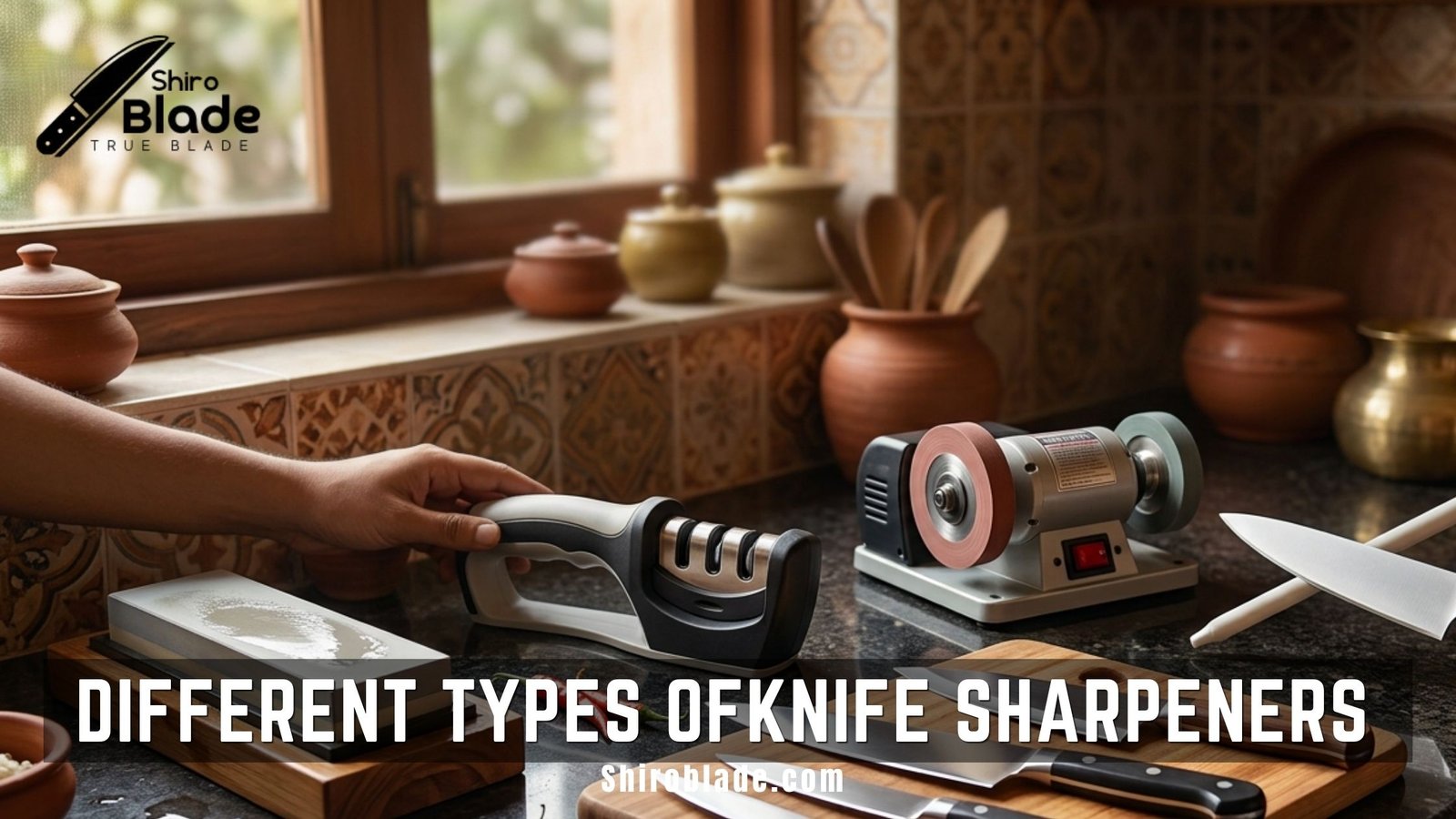
A dull knife slips on tomato skin, crushes onions instead of slicing them and makes you press hard on pumpkin. That extra pressure is where most kitchen cuts happen. The fix is a sharpener, but the right one depends on your knife’s steel, not the price tag.
This guide explains the 7 types of knife sharpeners you will find on Amazon India: pull-through, handheld, electric, whetstone, honing rod, rolling and serrated sharpeners. You will see how each one works, which knives it suits and which knives it can damage.
Affiliate disclosure: Some links on this page are Amazon.in affiliate links. If you buy through them, I may earn a small commission at no extra cost to you. Read the disclosure.
Short Answer: Types of Knife Sharpeners at a Glance
There are 7 common types of knife sharpeners. Pull-through and handheld sharpeners are cheap and quick, and suit soft budget knives. Electric sharpeners are the fastest but remove the most steel. A whetstone gives the best edge and suits every straight-edged steel knife, including Japanese ones.
A honing rod keeps a sharp edge straight between sharpenings, a rolling sharpener holds the angle for you, and a tapered rod handles serrated bread knives.
| Type | Abrasive | Best for | Skill needed |
|---|---|---|---|
|
Pull-through |
Carbide, ceramic or diamond slots |
Budget stainless knives, quick fixes |
Low |
|
Handheld |
Carbide or ceramic blades |
Touch-ups, travel, serrated edges (ceramic) |
Low |
|
Electric |
Motorised ceramic or diamond wheels |
Many knives, fast results |
Low |
|
Whetstone |
Water stone, oil stone or diamond plate |
Best edge, Japanese and Damascus knives |
Medium to high |
|
Honing rod |
Steel, ceramic or diamond |
Keeping a sharp edge straight |
Low to medium |
|
Rolling |
Diamond and ceramic discs, magnetic angle block |
Beginners who want a fixed angle |
Low |
|
Serrated |
Tapered diamond or ceramic rod |
Bread and tomato knives |
Medium |
7 Types of Knife Sharpeners Explained
Each type below does a different job. Some restore a dull edge, some only maintain a sharp one, and a few do both.
1. Pull-Through (Manual) Knife Sharpener
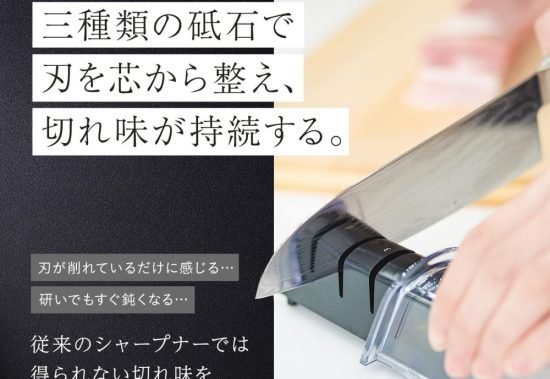
You draw the knife through a V-shaped slot a few times. The slot is set at a fixed angle, usually around 20° per side, so you don’t have to hold the angle yourself.
Most pull-through sharpeners have two or three slots. A coarse slot (tungsten carbide or diamond) cuts a new edge, and a fine ceramic slot smooths it. The Kai Seki Magoroku sharpener is a good example: diamond stones in slot 1, a ceramic wheel in slot 2 and ceramic steels in slot 3.
Good for: soft 3Cr13 or 4116 stainless knives (about 52 to 56 HRC, the hardness scale) that go dull fast. Weak point: carbide slots scrape off more steel than needed and can leave a rough edge. Keep them away from thin, hard Japanese blades and single-bevel knives.
2. Handheld Knife Sharpener
A handheld sharpener is small enough to hold in your palm. You either draw it along the blade, or rest it on the counter and pull the knife through its slot.
Tungsten carbide models like the AccuSharp are the most aggressive and suit cheap knives that need a quick bite back. Ceramic models, such as the Victorinox portable sharpener with reversible ceramic blades, remove less steel and also work on serrated edges.
Good for: quick touch-ups and travel. Weak point: it is easy to tilt the blade, so the angle is less consistent than with a fixed slot.

3. Electric Knife Sharpener
An electric sharpener spins small abrasive wheels while you guide the knife through angle slots. Most have two or three stages, from coarse to fine, and bring a dull knife back to sharp in under a minute.
That speed has a cost. Electric sharpeners remove more steel than any other type, so frequent use shortens a blade’s life. Many models are set for 20° Western edges only, so check that a 15° stage is listed before you use one on a Japanese knife.
Good for: homes with many knives, or anyone who wants speed. Weak point: steel loss, higher price and no use for single-bevel knives. On a budget knife, light passes are enough.

4. Whetstone (Sharpening Stone)
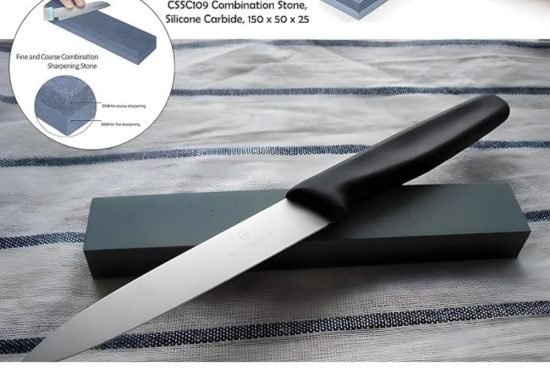
A whetstone is a flat block of abrasive that you hold the knife against by hand. You control the angle, the pressure and how much steel comes off, which is why it gives the cleanest edge of any sharpener.
Stones are graded by grit (how coarse the grains are). A 200 to 400 grit stone repairs chips, a 1000 grit stone does regular sharpening, and 3000 to 6000 grit polishes the edge. A 1000/6000 combination stone covers most home kitchens.
There are three main types of sharpening stones:
- Water stones: synthetic stones, often aluminium oxide or silicon carbide, used with water. They cut fast and are the norm for Japanese knives, but they wear down and need flattening.
- Oil stones: natural Arkansas stones (made of novaculite), plus synthetic India stones (aluminium oxide, a Norton product name, not a stone from India) and Crystolon stones (silicon carbide). They cut slower and suit softer Western steel.
- Diamond plates: diamond grit bonded to a metal plate. They stay flat and cut very hard steel and ceramic knives quickly.
Good for: every straight-edged knife, from a ₹300 knife to an SG2 gyuto (Japanese chef knife). Weak point: holding a steady angle takes practice. Our step-by-step guide on how to use a knife sharpening stone walks you through it.
5. Honing Rod (Sharpening Steel)
A honing rod, also called a honing steel or knife sharpening rod, is the long rod that comes with many knife blocks. It doesn’t grind a new edge. It pushes a bent, rolled edge back into line so the knife cuts cleanly again.
There are three common kinds:
- Steel rod: grooved or smooth steel. It realigns the edge and suits softer German and budget knives.
- Ceramic rod: slightly abrasive, so it realigns and lightly sharpens. It is the safer choice for hard Japanese knives, because a grooved steel rod can chip steel at around 60 HRC and above.
- Diamond rod: coated in diamond grit, so it removes steel. It works more like a sharpener than a hone.
Good for: keeping a sharp knife sharp, with 5 or 6 light strokes per side before you cook. Weak point: it cannot fix a truly dull or chipped edge.
6. Rolling Knife Sharpener
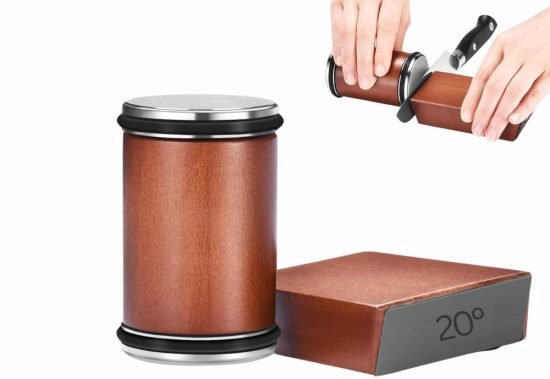
A rolling sharpener has two parts: a magnetic block that holds the knife at a fixed angle (commonly 15° or 20°) and a roller with abrasive discs. You roll the disc along the edge while the magnet keeps the angle steady.
The Turbid rolling sharpener, for example, pairs diamond and ceramic discs with a magnetic angle block. It gives a stone-like result with far less skill.
Good for: beginners who want a consistent angle on good knives. Weak point: the blade must be magnetic, so it won’t hold ceramic knives, and it is slower than a pull-through.
7. Serrated Knife Sharpener
Serrated knives have scallops (small curved teeth) that a flat stone or V-slot can’t reach. A serrated sharpener is a thin, tapered rod, usually diamond or ceramic, that fits into each scallop.
You sharpen one scallop at a time on the bevelled side only, then remove the burr (a thin ridge of metal) on the flat side with a light pass. Some pull-through and electric sharpeners have a serrated slot too, which is quicker but less precise.
Good for: bread knives, tomato knives and serrated utility knives. Weak point: it is slow work. You only need it once or twice a year, since serrated knives stay usable for a long time.

Sharpening vs Honing: What's the Difference?
Sharpening removes steel to create a new edge. Honing only straightens an edge that has bent over and removes almost no steel. Both keep a knife cutting well, but they fix different problems.
A simple rule for a home kitchen: hone before each use or a few times a week, and sharpen when honing no longer brings the bite back. If you cut onions, tomatoes and vegetables daily, expect to sharpen a budget knife every 1 to 2 months and a harder Japanese knife every 2 to 4 months.
Quick test: slice a ripe tomato. If the knife bites the skin straight away, honing is enough. If it slides off, sharpen it.
Which Knife Sharpener Suits Your Knife?
Match the sharpener to the steel. Harder steel holds an edge longer but is more brittle, so it needs a finer, gentler abrasive. Japanese knives are usually ground at about 15° per side and Western knives at about 20°.
| Knife (steel, HRC) | Best sharpener | Avoid |
|---|---|---|
|
Budget stainless (3Cr13, 4116; about 52 to 56 HRC) |
Pull-through, handheld carbide, 1000 grit stone |
Frequent electric sharpening |
|
German stainless (X50CrMoV15; about 56 to 58 HRC) |
Whetstone, 3-stage pull-through, steel or ceramic rod |
Coarse carbide only |
|
Japanese (VG10, SG2; about 60 to 63 HRC) |
Whetstone, rolling sharpener, ceramic rod |
Carbide pull-through, grooved steel rod |
|
Single-bevel Japanese (deba, yanagiba) |
Whetstone only |
Pull-through, electric, rolling |
|
Ceramic knife (zirconia) |
Diamond plate or diamond sharpener |
Steel rod, carbide, normal stones |
|
Bread knife (serrated) |
Tapered diamond or ceramic rod |
Flat stones, straight V-slots |
Not sure which knife you own? Our guide to the 15 types of kitchen knives and their uses covers common blades and steels, and the Japanese kitchen knife types guide explains single-bevel blades.
How to Choose a Knife Sharpener
Start with Your Knife's Steel and HRC
The harder the steel, the gentler the abrasive should be. Soft budget knives are fine with carbide. Knives at 60 HRC and above, including most Damascus knives with a VG10 core, need a stone, ceramic or diamond.
Set a Budget in Rupees
Pull-through and handheld sharpeners are the cheapest type, and many cost under ₹1,000. Whetstones and rolling sharpeners cost more, and electric sharpeners are usually the most expensive. Prices change often, so check the latest price on Amazon before you buy.
Match It to Your Skill and Time
If you want results in 30 seconds, pick a pull-through or electric sharpener. If you’re happy to spend 10 minutes and learn a skill, a whetstone gives a better edge and lasts for years.
Fixed Angle or Free Hand
Fixed-angle tools (pull-through, electric, rolling) give the same edge every time, but only at the angle they are built for. A free-hand stone works at any angle, which matters if you own both Western and Japanese knives.
Check the Base and Grip for Safety
Polished granite counters are slippery. Look for a rubber base on pull-through sharpeners and a non-slip holder for stones. A wide handle or finger guard keeps your hand away from the edge.
Ready to pick one? See our tested knife sharpener picks, with specs, pros and cons for each type.
Common Knife Sharpening Mistakes to Avoid
- Using a carbide pull-through on a Japanese knife. It can chip a thin, hard edge.
- Pressing hard. Light, even strokes sharpen better and remove less steel.
- Skipping the burr. If you can’t feel a small burr along the edge, you haven’t reached the edge yet.
- Putting a serrated knife in a straight V-slot. It flattens the scallops.
- Never honing. A few strokes on a rod can delay the next sharpening by weeks.
- Letting a water stone dry out. Keep it wet so the metal particles (swarf) wash away instead of clogging the stone.
Conclusion: Which Type of Knife Sharpener Should You Buy?
For a budget stainless knife, a 2 or 3-stage pull-through sharpener is enough. For a German or Japanese knife, buy a 1000/6000 whetstone and a ceramic honing rod. Add a tapered rod if you own a bread knife, and go electric only if speed matters more than steel life.
For specific models, compare the best knife sharpeners in India. Still choosing the knife itself? Read how to choose a kitchen knife for Indian cooking.
FAQs
Which type of knife sharpener is best for home use?
For most home cooks, a 2 or 3-stage pull-through sharpener is the easiest choice. If you own German or Japanese knives, a 1000/6000 combination whetstone gives a better edge and removes less steel.
Is a whetstone better than a pull-through sharpener?
For edge quality, yes. A whetstone lets you control the angle and removes only the steel needed. A pull-through is faster and needs no skill, but it removes more steel and leaves a rougher edge.
Does a honing steel sharpen a knife?
A plain steel rod does not. It only straightens a rolled edge. A ceramic rod sharpens lightly, and a diamond rod removes enough steel to work as a sharpener.
Can I sharpen a Japanese knife with an electric sharpener?
Only a double-bevel Japanese knife, and only on a model with a 15° stage, using light passes. Never use one on single-bevel knives like a deba or yanagiba. A whetstone is the safest option.
How often should I sharpen my kitchen knife?
Hone before each use or a few times a week. Sharpen when the knife slides on tomato skin, which is roughly every 1 to 2 months for a budget knife and every 2 to 4 months for a Japanese knife in daily use.
Can a normal sharpener sharpen a ceramic knife?
No. Ceramic is harder than steel, so carbide, steel rods and most stones barely touch it. Use a diamond plate or a sharpener with diamond abrasive.

Indian knife collector with a deep respect for Japanese knife making. What began as an interest in Damascus patterns grew into a focused study of Japanese knives from Sakai and Seki. Through Shiroblade, I share simple guides on buying, using, and caring for knives, helping readers understand real craftsmanship beyond looks.
Pingback: What Is Honing? Honing vs Sharpening a Knife - ShiroBlade
Pingback: How to Remove Rust from Knives: 5 Safe Methods - ShiroBlade