
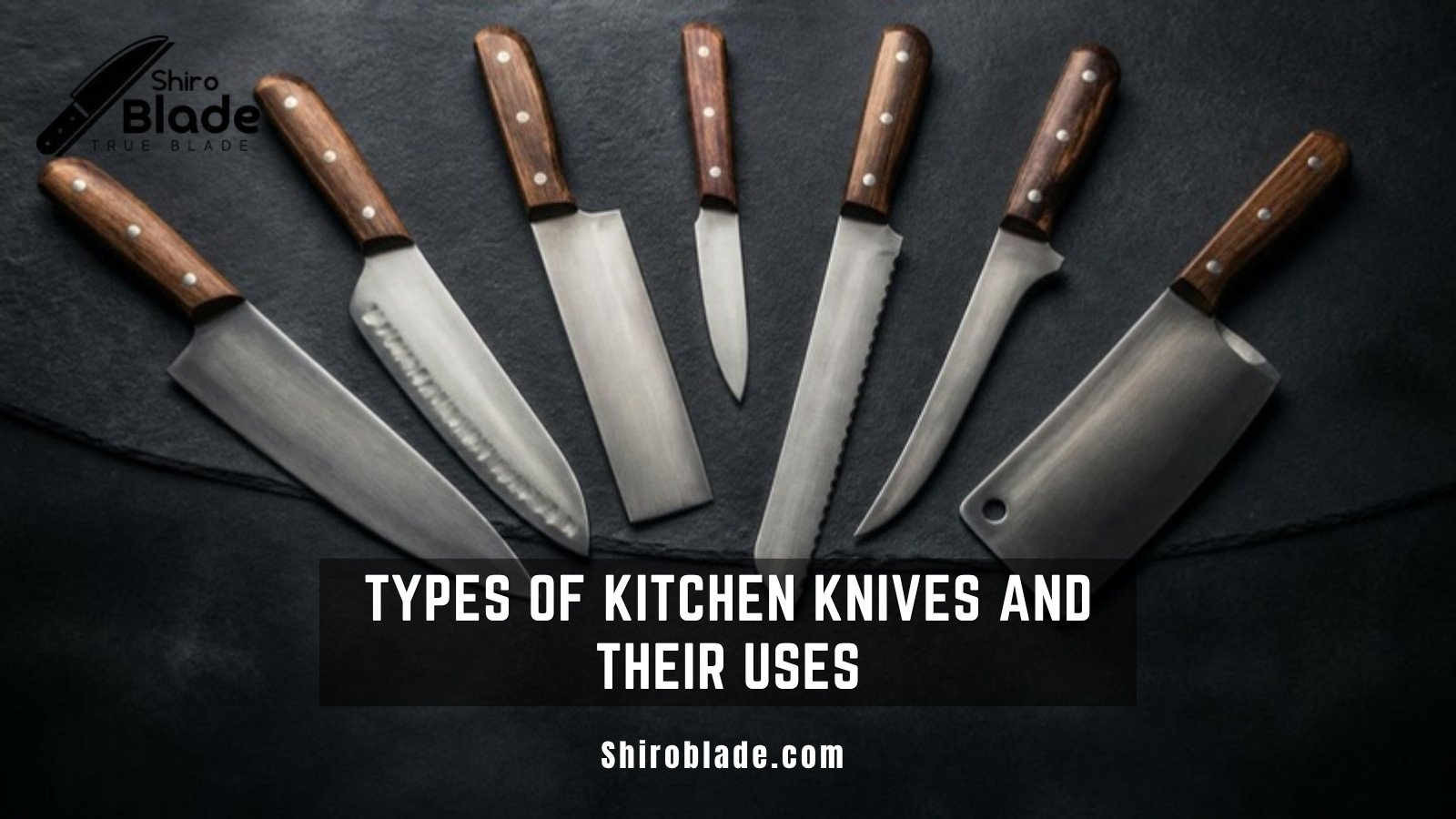
There are more than 30 types of kitchen knives, but a home cook in India needs only four or five of them. The rest are for specific jobs like filleting fish or carving a roast.
This guide covers 15 types of kitchen knives, what each one does, what it is bad at, and which ones are worth buying for Indian cooking.
Affiliate disclosure: Some links on this page are Amazon.in affiliate links. If you buy through them, I may earn a small commission at no extra cost to you. Read the disclosure.
Short Answer: Which Knives Do You Actually Need?
Most Indian home cooks need only three kitchen knives: one all-purpose knife, a paring knife and a bread knife. For the all-purpose knife, a short 6-7 inch blade (a santoku, a vegetable knife or a small chef’s knife) suits small kitchens and daily onion and tomato chopping. Move up to an 8-inch chef’s knife only if you often cut large items like pumpkin or whole chicken.
| Knife type | Blade length | Best for | Do you need it? |
|---|---|---|---|
|
Chef’s knife |
6-8 in (15-20 cm) |
Onions, tomatoes, chicken, herbs |
Yes |
|
Paring knife |
3-4 in (8-10 cm) |
Peeling, coring, deveining |
Yes |
|
Bread knife |
8-10 in (20-25 cm) |
Bread, cakes, melons |
Yes |
|
Utility knife |
5-6 in (12-15 cm) |
Small veg, sandwiches |
Useful |
|
Santoku / Nakiri |
6.5-7 in (16-18 cm) |
Veg-heavy cooking |
Optional |
|
Boning / Fillet |
5-9 in (12-23 cm) |
Meat and fish off the bone |
Only if you cut meat or fish often |
|
Cleaver |
7-8 in (18-20 cm) |
Hard veg, bone-in cuts |
Optional |
15 Types of Kitchen Knives and Their Uses
1. Chef's Knife (Gyuto in Japanese)
The chef’s knife is the one knife that does most of the work. The blade is wide and gently curved, usually 6 to 10 inches (8 inches is the common size), so you can rock it through onions, tomatoes, ginger and herbs.
A Western chef’s knife has a heavier spine and a ~20° edge angle per side. A Japanese Gyuto (Japanese chef’s knife) is thinner and usually sharper, with a ~15° angle.
- Best for: chopping, slicing, dicing, mincing, boneless chicken
- Weak at: thick bones and frozen food. The edge will chip or roll
- Typical steel: 3Cr13 or 4116 in budget knives, X50CrMoV15 in German knives, VG10 or SG2 in Japanese ones
Read the full breakdown in what a chef’s knife is used for.
2. Santoku Knife
Santoku means three virtues: slicing, dicing and mincing. The blade is shorter (6.5-7 in), flatter and lighter than a chef’s knife, with a rounded tip called a sheep’s foot.
Many santokus have Granton dimples (scalloped hollows on the blade) that help sticky food like potato slices fall off.
- Best for: vegetables, boneless fish, paneer, fast push-cut chopping
- Weak at: rocking cuts and bones. The flat edge doesn’t rock well
- Good fit if: your hands are small or you want a lighter knife
3. Nakiri (Japanese Vegetable Knife)
The Nakiri has a rectangular blade with a flat edge and no tip. The whole edge touches the board at once, so you get clean cuts through cabbage, cauliflower and cucumber with no uncut skin at the bottom.
- Best for: cabbage, carrot, radish, gourds, thin slicing
- Weak at: meat, bones, and anything needing a tip
- Tip: use a plastic or wood board. The flat edge hits the board hard
4. Paring Knife
A paring knife is 3-4 inches long and works in your hand, not on the board. Use it where a big blade is clumsy: peeling a mango, coring a tomato, hulling strawberries, deveining prawns.
- Best for: peeling, trimming, coring, scoring
- Weak at: anything that needs weight behind the cut
- Safety: cut away from your thumb, and never hold the item on a countertop edge
5. Utility Knife (Petty)
The utility knife sits between a paring knife and a chef’s knife, at 5-6 inches. It is thin and light, so it handles tomatoes, sandwiches, small onions and fruit.
- Best for: mid-size jobs that feel silly with an 8-inch blade
- Weak at: hard veg like pumpkin or raw banana. The thin blade can bind
- Note: the Japanese version is called a Petty
6. Indian Vegetable Knife
This is the wide, flat, budget knife most Indian homes already own. The blade is broad, with a straight or slightly curved edge, usually in basic stainless steel.
It is fine for daily chopping, but cheap versions are thick behind the edge and need regular sharpening. See our picks in best kitchen knife under 1000 in India.
- Best for: onion, potato, brinjal, beans
- Weak at: fine slicing and edge retention in the cheapest steels
7. Aruvamanai / Boti (Traditional Indian Blade)
The aruvamanai (Tamil) or boti (Hindi and others) is a curved blade fixed to a base. You hold the food and push it against the blade, with the blade standing still.
It is still the fastest way to shred cabbage, cut coconut, slice raw jackfruit or break down gourds. Most modern knives can’t copy that.
- Best for: bulk veg, greens, coconut, jackfruit
- Weak at: precision work, and it needs counter or floor space
- Safety: keep your fingers behind the blade line and push, don’t pull
8. Bread Knife (Serrated Knife)
A bread knife has teeth (serrations) that grip a hard crust and saw through without squashing the soft crumb. Blade length is usually 8-10 inches.
- Best for: bread, pav, cakes, watermelon, pineapple
- Weak at: precision cuts. It tears most food
- Care: serrations can’t be sharpened on a flat whetstone. Plan to replace it when it dulls
9. Tomato Knife
A small serrated knife (4-5 inches), often with a forked tip, made for soft skins. A sharp plain-edge utility knife does the same job, so this one is optional.
- Best for: ripe tomatoes, peaches, soft fruit
- Weak at: everything else
10. Boning Knife
A boning knife is narrow, 5-6 inches, and stiff or slightly flexible. It lets you work the tip around joints and cut meat off the bone.
- Best for: chicken, mutton, removing silver skin
- Weak at: vegetables. The blade is too thin and narrow
- Why it matters in India: bone-in meat is common, and a boning knife saves a lot of wasted meat
11. Fillet Knife
A fillet knife is longer (6-9 inches) and more flexible than a boning knife. It follows the spine of a fish and slides under the skin.
- Best for: fish like seer, pomfret, salmon
- Weak at: hard cuts. The blade flexes and the tip can snap
12. Carving / Slicing Knife
This is a long (10-14 inch), thin blade for even slices of roast meat, ham or large cooked fish. Some have a Granton edge so slices release easily.
- Best for: cooked meat served whole
- Weak at: daily prep. Most Indian kitchens rarely use one
13. Cleaver
Two types get mixed up. A Chinese vegetable cleaver (Cai Dao) has a tall, thin rectangular blade, 7-8 inches. It slices veg quickly and the flat side crushes garlic. Don’t use it on bones.
A bone cleaver is thick and heavy, made to chop through bone. Pick the right one for the job, because a vegetable cleaver on a bone will chip.
14. Cheese Knife
Cheese knives have holes or a forked tip so soft cheese doesn’t stick. They are a nice extra if you serve cheese boards, and you can skip them otherwise.
15. Japanese Specialty Knives
Japanese cutlery has a knife for almost every job. These are the ones you’ll see most:
- Deba: thick single-bevel knife for breaking down whole fish
- Yanagiba: long, thin single-bevel knife for slicing raw fish (sashimi)
- Kiritsuke: multi-purpose slicer, usually for experienced users
- Honesuki: small triangular blade for deboning chicken
These need careful care and good sharpening skills. For a full overview, see our guide to Japanese kitchen knife types.
Types of Knife Edges
The edge changes how a knife cuts and how you keep it sharp.
- Straight (plain) edge: clean slicing, easy to sharpen. Best for most tasks
- Serrated edge: saws through crust and tough skin. Hard to sharpen
- Granton (hollow-ground): dimples that reduce sticking
- Single bevel: sharpened on one side only, common on Japanese knives. Very sharp, but needs skill
- Double bevel: sharpened on both sides, the default in Western and most home knives
Types of Knife Steel
Steel decides how sharp the knife gets, how long it stays sharp, and how easily it rusts. HRC (Rockwell hardness) is the measure of hardness. A higher HRC means a harder, longer-lasting edge, but also a more chip-prone one.
| Steel | Typical HRC | Rust resistance | Notes |
|---|---|---|---|
|
3Cr13 / 4116 |
~52-56 |
Good |
Budget, easy to sharpen, loses edge faster |
|
X50CrMoV15 |
~56-58 |
Good |
German standard, tough |
|
VG10 |
~60-61 |
Good |
Japanese stainless, holds an edge well |
|
SG2 / R2 |
~62-64 |
Good |
Powder steel, very sharp, more brittle |
|
Carbon steel (e.g. Blue Super) |
~61-65 |
Low |
Takes a razor edge but rusts if left wet |
|
Damascus (layered) |
Depends on core |
Depends |
Pattern on the blade, core steel does the cutting |
Want a pattern-forged knife? Start with best Damascus knives in India.
Western vs Japanese vs Indian Knives
| Feature | Western (German) | Japanese | Indian |
|---|---|---|---|
|
Blade |
Thick, heavy, curved belly |
Thin, light, flatter |
Broad, flat, thick spine |
|
Edge angle |
~20° per side |
~15° per side |
Often uneven, 25°+ |
|
Steel |
Softer, tougher |
Harder, sharper |
Basic stainless |
|
Feel |
Rock and chop |
Push and slice |
Chop and slap |
|
Chip risk |
Low |
Higher |
Low |
See best kitchen knife brands in India to compare makers across all three styles.
Types of Knife Handles
- Western handle: wood or plastic scales riveted to a full tang (the blade runs the full length of the handle). Heavier, more balanced to the blade
- Wa handle: Japanese-style round or octagonal wood handle. Lighter, balanced toward the handle
- Moulded plastic / steel handle: hygienic, but can be slippery when wet
- Pakka wood / composite: water-resistant and common on budget knives
Pick a handle you can grip comfortably with wet hands, since most Indian cooking is messy.
Common Knife Cuts and Which Knife to Use
| Cut | What it is | Best knife |
|---|---|---|
|
Chop |
Rough, uneven pieces |
Chef’s, santoku |
|
Dice |
Even cubes |
Chef’s, nakiri |
|
Mince |
Very fine pieces |
Chef’s |
|
Julienne |
Thin matchsticks |
Chef’s, santoku |
|
Chiffonade |
Thin ribbons of leaves |
Chef’s, utility |
|
Slice |
Thin even pieces |
Santoku, nakiri |
|
Peel / core |
Skin or centre removal |
Paring |
Which Knives Should You Buy? (By Budget and Cooking Style)
- Starter (1 knife): one all-purpose knife of 6-8 inches (a chef’s knife or santoku). Choose the shorter end if your kitchen or hands are small
- Basic kit (3 knives): chef’s knife, paring knife, bread knife
- Vegetarian cook: a nakiri or santoku plus a paring knife
- Non-veg cook: chef’s knife, boning knife, and a cleaver for bone-in cuts
- Tight budget: a good set can start low, see knife set under 300
How to Choose the Right Kitchen Knife
- Match the knife to what you cook. Daily veg means a chef’s knife or santoku. Bone-in meat means a boning knife or cleaver
- Check the steel. 3Cr13 is easy to sharpen but needs more upkeep. VG10 holds an edge longer
- Check the handle. It should feel secure when wet
- Look at weight and balance. A heavier knife cuts with less effort, a lighter one tires your hand less
- Check the spine and grind. A thick spine behind the edge makes any knife feel dull
Want ready picks? See best kitchen knife under 1000 in India for budget options.
For a deeper walkthrough, read our full guide on how to choose a kitchen knife.
Common Mistakes When Buying Knives
- Buying a large block set where half the knives never get used
- Choosing a very hard Japanese knife, then using it on bones
- Picking a knife by looks. Check the steel and handle first
- Ignoring how you’ll sharpen it
How to Care for Your Knives
- Wash by hand and dry right away. Dishwashers dull and rust blades
- Hone often, sharpen when needed. Honing realigns the edge. Sharpening removes metal
- Use the right board. Wood or plastic only. Granite counters and glass boards will chip the edge quickly, so don’t cut on your countertop
- Store safely. A magnetic strip, block, or sheath. Never loose in a drawer
- Keep carbon steel dry. Wipe it after use to avoid rust
Conclusion
Most Indian kitchens do well with a chef’s knife, a paring knife and a bread knife. Add a nakiri or santoku if you cook a lot of vegetables, and a boning knife if you cut meat at home.
Start with one good knife and learn it well. For ready recommendations, check best kitchen knife under 1000 in India or best Damascus knives in India.
FAQs
How many types of kitchen knives are there?
There are over 30 kitchen knife types worldwide. Around 8 cover most home cooking: chef’s, paring, utility, bread, boning, santoku, cleaver and carving.
What are the 3 most important kitchen knives?
A chef’s knife for general prep, a paring knife for small precise work, and a serrated bread knife for bread and soft items.
What is the best all-purpose kitchen knife?
A chef’s knife or santoku in the 6-8 inch range. Pick 6-7 inches for a small kitchen or small hands, and 8 inches if you cut large vegetables or meat often. It handles onions, tomatoes, herbs and boneless meat. Avoid hard bones.
What is the difference between a chef's knife and a santoku?
A chef’s knife is longer with a curved belly for rocking cuts. A santoku is shorter, flatter and lighter, made for push cuts on veg and boneless meat.
Which knife is best for vegetables?
A nakiri or santoku. A chef’s knife also works well if you prefer rocking cuts.
Which knife is best for cutting chicken and meat?
A boning knife for deboning, and a cleaver for bone-in pieces. A chef’s knife handles boneless meat.
How many knives does a home cook need?
Three to five: chef’s, paring, bread, and optionally a utility knife and a santoku or boning knife.

Indian knife collector with a deep respect for Japanese knife making. What began as an interest in Damascus patterns grew into a focused study of Japanese knives from Sakai and Seki. Through Shiroblade, I share simple guides on buying, using, and caring for knives, helping readers understand real craftsmanship beyond looks.

Pingback: 10 Best Kitchen Knife Brands in India 2026