
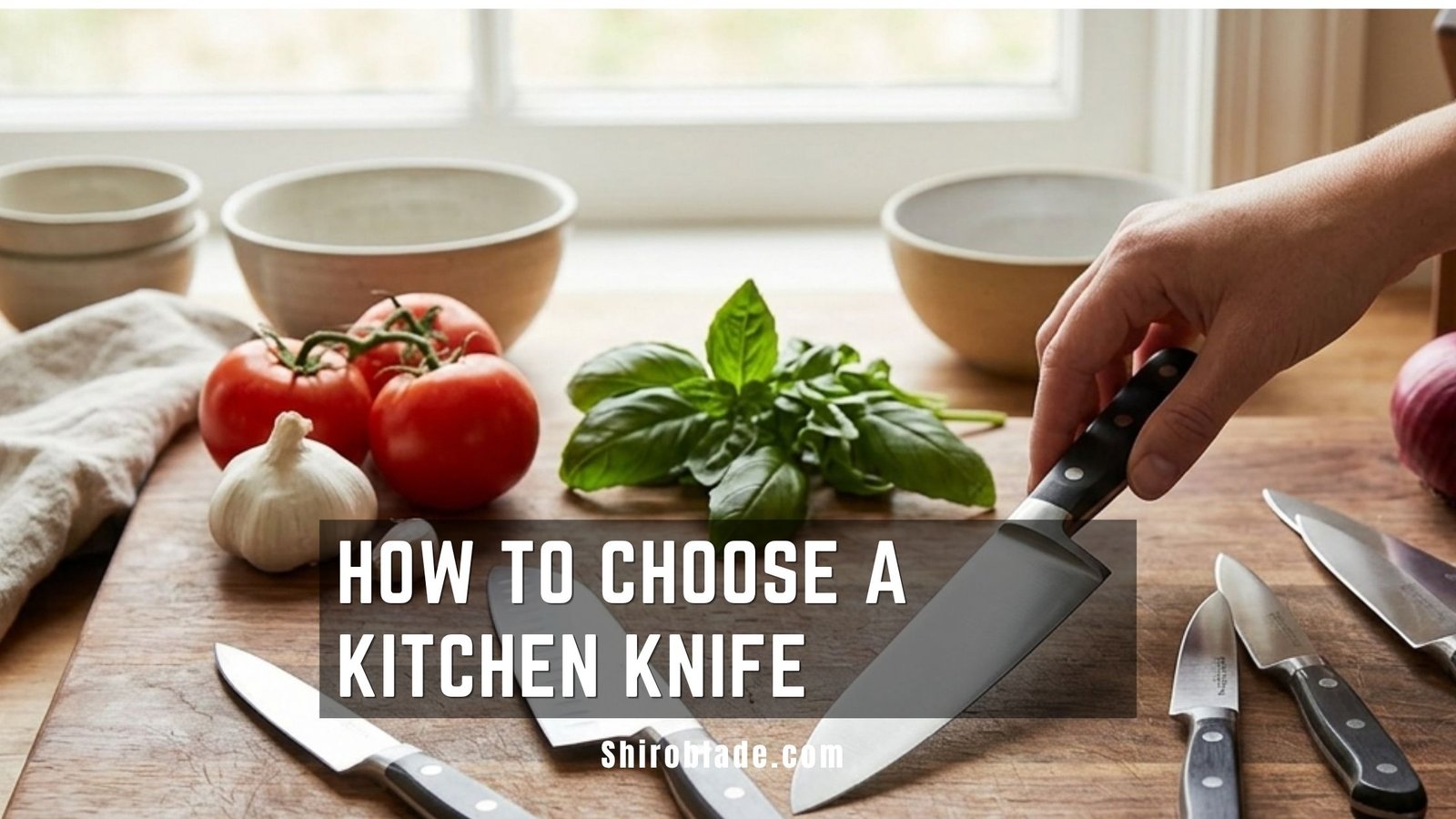
Learning how to choose a kitchen knife comes down to six checks: the knife type, the blade steel, the hardness (HRC), the blade length, the tang and the handle. Get those right and a ₹1,500 knife will outcut a ₹5,000 knife bought on looks.
This guide is written for Indian kitchens: onions and tomatoes every day, chicken with bone, hard pumpkin, humid weather and granite counters. You will know exactly what to look for on an Amazon.in listing, and what to ignore.
How to Choose a Kitchen Knife: The Short Answer
For most Indian home cooks, the right first knife is a stainless steel chef knife, 7 to 8 inches (18–20 cm) long, around 56–60 HRC, with a non-slip handle. Add a small paring knife and a cleaver for bones, and you can cook almost anything.
| Factor | What to choose | Why it matters |
|---|---|---|
|
Knife type |
Chef knife or santoku first |
Handles 80–90% of daily prep |
|
Blade steel |
Named stainless steel (5Cr15MoV, X50CrMoV15, VG10) |
Decides rust resistance and edge life |
|
Hardness |
56–60 HRC |
Holds an edge without chipping easily |
|
Blade length |
7–8 inch (18–20 cm) |
Fits a normal Indian cutting board |
|
Tang |
Full tang or a well-bonded stamped blade |
Balance and a handle that won’t loosen |
|
Handle |
Textured synthetic or sealed wood |
Safe grip with wet, oily hands |
Step 1: Decide Which Types of Kitchen Knives You Actually Need
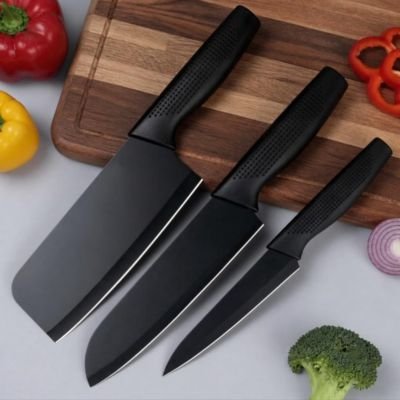
Don’t start with a 13-piece knife set. Most pieces in cheap sets stay in the block. Three knives cover nearly every Indian recipe.
| Knife type | Typical blade length | Best use in an Indian kitchen |
|---|---|---|
|
Chef knife / Gyuto (Japanese chef knife) |
18–21 cm |
Onions, tomatoes, potatoes, boneless chicken, herbs |
|
Santoku |
16.5–18 cm |
Vegetable-heavy cooking, thin slicing, push-cutting |
|
Nakiri (Japanese vegetable knife) |
16–18 cm |
Leafy greens, gourds, cabbage |
|
Paring knife |
8–10 cm |
Peeling, deseeding chillies, garlic, fruit |
|
Cleaver |
15–20 cm, thick spine |
Chicken and mutton with bone, coconut, hard pumpkin |
|
Bread knife |
20–25 cm, serrated |
Pav, bread loaves, cakes, ripe tomatoes |
If you cook mostly vegetables, a santoku or chef knife plus a paring knife is enough. If you cook meat with bone, add a cleaver so your main knife never touches bone. Read what a chef’s knife is used for to see why it does most of the work.
Step 2: Choose the Right Blade Steel for a Kitchen Knife
Steel is the single biggest factor in how sharp a knife gets, how long it stays sharp and whether it rusts. A good listing names the steel grade. “Stainless steel” or “high carbon” alone tells you almost nothing.
| Steel | Typical HRC | Edge retention | Rust resistance | Ease of sharpening |
|---|---|---|---|---|
|
3Cr13 / 4Cr13 |
52–55 |
Low |
High |
Very easy |
|
5Cr15MoV |
55–57 |
Medium |
High |
Easy |
|
X50CrMoV15 (German) |
56–58 |
Medium |
High |
Easy |
|
AUS-8 / AUS-10 |
57–60 |
Medium-high |
High |
Moderate |
|
VG10 |
60–61 |
High |
High |
Moderate |
|
SG2 / R2 (powder steel) |
62–64 |
Very high |
High |
Harder, needs a whetstone |
|
Carbon steel (White #2, Blue #2) |
61–64 |
Very high |
Low (will rust) |
Easy on stones |
HRC values are typical ranges. The final number depends on each maker’s heat treatment, so trust the figure on the brand’s own listing.
Stainless Steel Knives: Best for Most Indian Homes
Stainless steel resists rust from tamarind, lime, onion juice and humid weather. Budget 3Cr13 knives get sharp but dull within weeks of daily use. 5Cr15MoV and German X50CrMoV15 are the sweet spot: tough, rust-resistant and easy to sharpen at home.
Japanese Stainless Steels: VG10, AUS-10 and SG2
These steels run harder (60+ HRC), so they take a thinner, sharper edge and hold it much longer. The trade-off: harder steel is more brittle and can chip if you hit bone, frozen food or a steel plate.
Carbon Steel Knives: Sharpest, but High Maintenance
Carbon steel gets frighteningly sharp and is a joy on a whetstone. It will rust and stain if you leave it wet or cut lemon and leave it. Choose it only if you will wipe the blade dry every time.
Is a Damascus Kitchen Knife Better?
Damascus is a layered pattern, not a steel grade. Performance comes from the core steel inside (often VG10 or AUS-10). Many cheap “Damascus” knives are laser-etched patterns on basic steel. Learn the signs in our real vs fake Damascus knife guide.
Step 3: Understand Knife Hardness (HRC) and Edge Angle
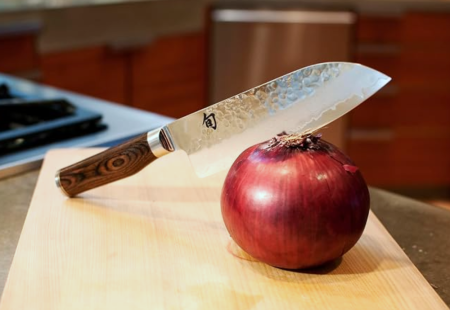
HRC (Rockwell hardness) measures how hard the steel is. Higher HRC holds a sharp edge longer but chips more easily. Lower HRC is tougher and easier to sharpen but dulls faster.
- 52–56 HRC: forgiving and easy to sharpen. Fine for beginners and rough use.
- 56–59 HRC: the best all-rounder for Indian cooking.
- 60–64 HRC: precise slicing and long edge life. Needs careful use and a whetstone.
The edge angle is how steeply the edge is ground. German-style knives are traditionally sharpened around 20° per side, which is durable. Japanese-style knives use about 12–15° per side, which cuts more cleanly but is more delicate.
Step 4: Pick the Right Blade Length for Your Kitchen
An 8-inch (20 cm) chef knife is the standard. In a small Indian kitchen with a compact cutting board, a 6 to 7 inch blade often feels more controlled. A 7–8 inch option such as the Kai Hocho Premium Chef Knife (7.36 inch) suits most home cooks.
- Small hands or small board: 15–18 cm.
- Average home cook: 18–20 cm.
- Large batches, big vegetables like cabbage or pumpkin: 21–24 cm.
A simple rule: the blade should be about 5 cm longer than the widest vegetable you cut most often.
Step 5: Check the Tang, Construction and Balance
Full tang means the steel runs through the whole handle. It adds weight and strength and stops the handle from loosening. Partial tang knives are lighter but can work loose with heavy use.
Forged vs stamped: forged blades are hammered from one piece and usually heavier, with a bolster (the thick collar at the handle). Stamped blades are cut from a sheet and are lighter. A good stamped knife, such as Victorinox’s Fibrox range, cuts as well as many forged knives.
Balance: hold the knife at the point where blade meets handle. If it tips sharply forward or backward, it will tire your wrist during long prep. A neutral or slightly blade-forward balance suits chopping onions in volume.
Weight: a typical 8-inch Western chef knife weighs around 200–250 g. Japanese gyutos of the same length are often lighter. Heavier knives push through hard pumpkin; lighter ones are faster for fine chopping.
Step 6: Choose a Kitchen Knife Handle That Grips When Wet
Indian cooking means oily, wet hands. A slippery handle is a safety problem, not a style choice.
- Textured plastic or TPE: best grip when wet, dishwasher-tolerant, cheap.
- Pakkawood or G10: resin-stabilised, does not crack or absorb water, looks premium.
- Natural wood: warm feel but needs oiling. Avoid unsealed wood in humid kitchens.
- Wa handle (Japanese-style handle): light and octagonal or D-shaped. Suits a pinch grip.
Check the joint where the blade meets the handle. Gaps trap food and water, which leads to rust and smell.
Step 7: Japanese vs German Kitchen Knives for Indian Cooking
This is the most common upgrade question. The short version:
| Feature | Japanese style | German style |
|---|---|---|
|
Hardness |
60–64 HRC |
56–58 HRC |
|
Blade |
Thin, light |
Thicker, heavier |
|
Edge angle |
12–15° per side |
15–20° per side |
|
Best at |
Vegetables, fine slicing, fish |
Heavy prep, rough use, harder produce |
|
Weak point |
Chips on bone and frozen food |
Dulls faster, needs regular honing |
For a vegetarian or vegetable-heavy kitchen, a Japanese santoku or gyuto is a real upgrade. For a home that cooks chicken with bone daily, a German-style knife plus a cleaver is the safer pair. Our guide to Japanese kitchen knife types explains each shape.
Step 8: Set a Realistic Kitchen Knife Budget in India
- ₹300–₹1,000: 3Cr13 or 4Cr13 steel. Fine for a first knife or a backup. Expect to sharpen often.
- ₹1,000–₹3,000: 5Cr15MoV, German-style or Victorinox-class knives. The best value for most homes.
- ₹3,000–₹8,000: entry Japanese knives in VG10 or AUS-10, and genuine Damascus-clad blades.
- ₹8,000 and above: SG2, carbon steel and handmade knives from Sakai and Seki.
Spending more buys edge retention and fit-and-finish, not a knife that never needs sharpening. See our best kitchen knives under ₹1,000 if you want a tested starting point.
Step 9: How to Check a Kitchen Knife Before You Buy (Online or In Store)
- Find the steel grade in the listing or the brand site. No grade, no purchase.
- Look for an HRC number. Serious brands publish it.
- Read the blade length in cm or mm, not just “large”.
- Zoom into photos of the handle joint for gaps or rough welds.
- Read 1-star reviews for rust, chipping or loose handles. These repeat if they are real problems.
- Check the return window on Amazon.in in case the edge arrives damaged.
Red Flags: Kitchen Knives to Avoid
- “Surgical steel” or “German steel” with no grade named.
- “Never needs sharpening” claims. Every edge dulls.
- “Damascus” knives priced under ₹1,500. The pattern is almost always etched.
- Hollow metal handles with a visible seam. They can trap water.
- Big sets where every knife is the same thin 3Cr13 blade with a different shape.
How to Care for a New Kitchen Knife in an Indian Kitchen
- Cut on wood or plastic only. Steel plates, granite counters and glass boards destroy an edge in minutes.
- Hand wash and dry immediately. Dishwasher heat and detergent dull edges and damage handles.
- Don’t hack bones or coconut with a chef knife. Use a cleaver such as the Cartini Godrej Essential Kitchen Cleaver (18 cm).
- Hone weekly, sharpen every 1–3 months depending on use. A 1000/6000 grit whetstone covers most knives.
- Store safely in a block, on a magnetic strip or with a blade guard, never loose in a drawer.
Choosing the Right Kitchen Knife: Final Advice
Start with one good stainless chef knife or santoku, 18–20 cm long, in a named steel between 56 and 60 HRC, with a grippy handle. Add a paring knife and a cleaver when you need them. Skip the big cheap sets and the fake Damascus.
Ready to buy? Compare trusted makers in our best kitchen knife brands in India guide, then pick a budget from there.
FAQs About Choosing a Kitchen Knife
What is the most important thing when choosing a kitchen knife?
The blade steel. A named steel such as 5Cr15MoV, X50CrMoV15 or VG10 tells you how well the knife resists rust, how long it stays sharp and how easy it is to sharpen. Handle grip and blade length come next.
Which kitchen knife is best for Indian cooking?
A 7–8 inch (18–20 cm) stainless steel chef knife or santoku with 56–60 HRC hardness suits most Indian cooking. Pair it with a paring knife for small tasks and a cleaver for chicken or mutton with bone.
Is a Japanese or German knife better for an Indian kitchen?
Japanese knives are harder and sharper, which makes them better for vegetables. German knives are softer and tougher, which makes them better for rough use. If you cut meat with bone often, a German-style knife plus a cleaver is safer.
What HRC is good for a kitchen knife?
56–59 HRC is the best all-round range for home cooks. Below 55 HRC dulls quickly; above 60 HRC holds an edge longer but can chip on bones or hard surfaces.
Is high carbon stainless steel good for kitchen knives?
Yes, if the grade is named. High carbon stainless steels like 5Cr15MoV or X50CrMoV15 balance sharpness and rust resistance. The phrase alone, with no grade, is a marketing term.
How many knives does a home kitchen need?
Three: a chef knife or santoku, a paring knife and either a bread knife or a cleaver depending on what you cook. Large sets usually add knives you will never use.

Indian knife collector with a deep respect for Japanese knife making. What began as an interest in Damascus patterns grew into a focused study of Japanese knives from Sakai and Seki. Through Shiroblade, I share simple guides on buying, using, and caring for knives, helping readers understand real craftsmanship beyond looks.



Pingback: 5 Best knife set under ₹300 in India - ShiroBlade
Pingback: 10 Best Kitchen Knife Under ₹1000 in India
Pingback: Japanese Kitchen Knife Types : The Right Blade for Every Task
Pingback: 10 Best Kitchen Knife Brands in India 2026
Pingback: 6 Best Knife Set Under ₹200 in India (2026) - ShiroBlade
Pingback: What is a Chef's Knife? Uses Explained - ShiroBlade