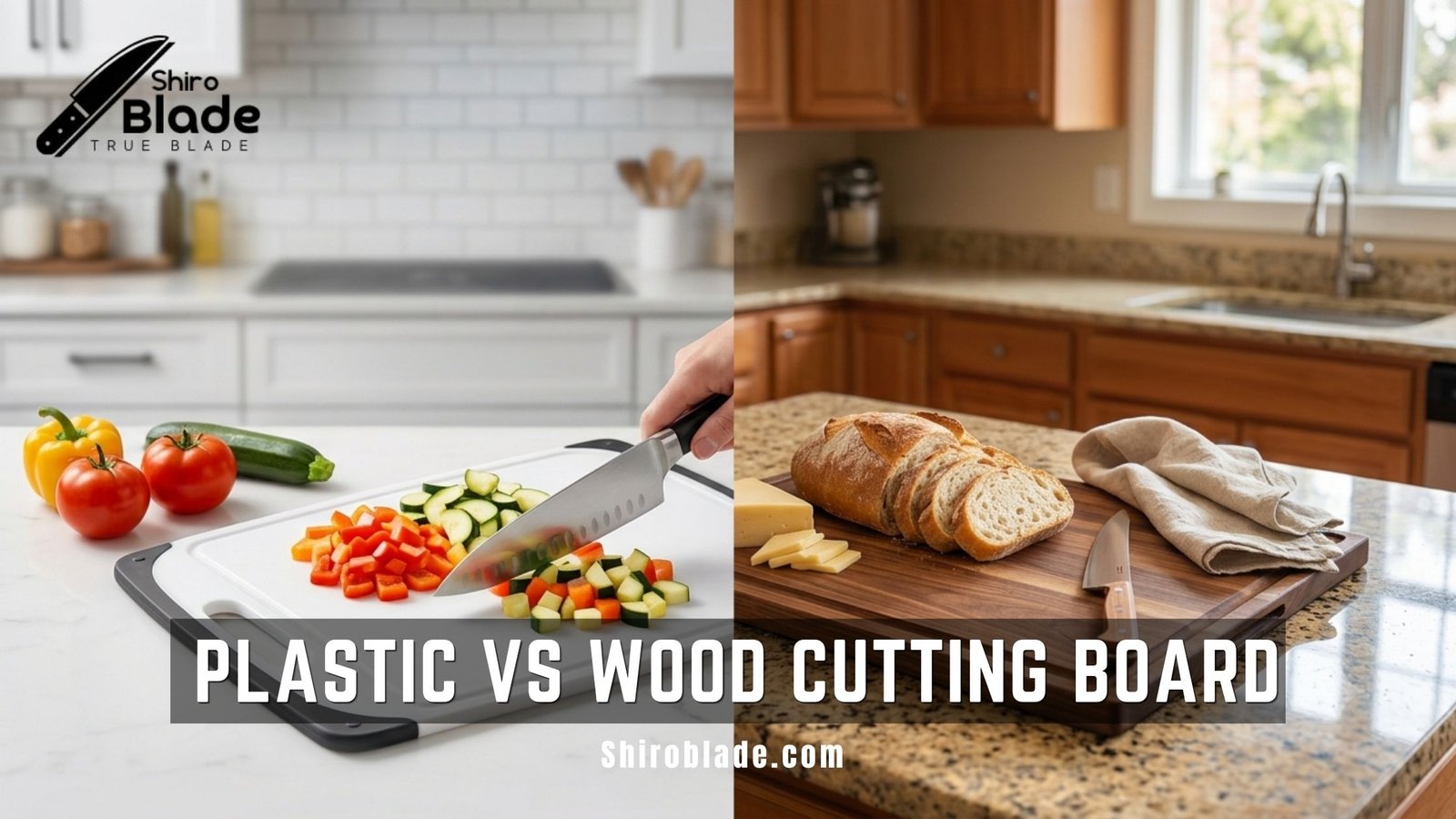
Plastic vs wood cutting board is one of the oldest arguments in the kitchen, and most advice online picks a side without the data. The honest answer depends on what you cut, how you clean, and what knife you use.
This guide compares both from a knife owner’s view, using food safety guidance from the USDA, the UC Davis bacteria research and the 2023 microplastics study. For a full overview of every material, see our types of cutting boards guide.
Short Answer: Plastic or Wood?
Use both. A thick plastic board is the easier choice for raw chicken, mutton and fish because you can scrub it hard, rinse it in hot water and keep it only for non-veg. A wooden board is the better choice for vegetables, fruit and bread: it is kinder to your knife edge, sheds no plastic, and lasts for years with simple oiling.
If you can buy only one, choose wood for a mostly vegetarian kitchen and thick plastic if you cook non-veg often.
| Factor | Plastic | Wood |
|---|---|---|
|
Knife-friendliness |
Good |
Very good (end grain is best) |
|
Raw meat hygiene |
Very good |
Good with drying and care |
|
Particles shed |
Microplastics |
Wood fibres (natural) |
|
Turmeric stains |
Stains, fades in sun |
Stains, sand or fade |
|
Care |
Wash only |
Wash, dry, oil monthly |
|
Dishwasher |
Thick boards only |
No (glued boards crack) |
|
Lifespan |
1 to 2 years of daily use |
Many years if oiled |
|
Price in India |
Lower |
Higher |
|
Best for |
Raw non-veg, fish |
Vegetables, fruit, bread |
What Is a Plastic Cutting Board?
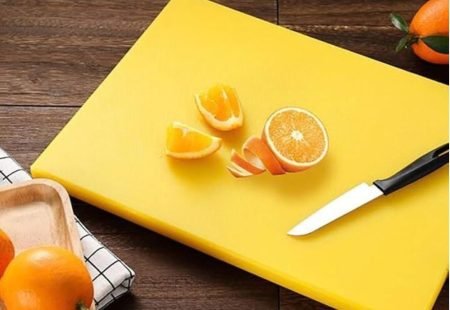
Most plastic boards are made from one of two materials. Polyethylene (HDPE) is softer and used in commercial kitchens. Polypropylene (PP) is stiffer and cheaper, and most budget home boards in India use it.
Plastic is non-porous, light and cheap enough to own two or three. The weak point is knife scars: every cut leaves a groove, and grooves are where bacteria hide. Compare tested models in our best plastic cutting boards in India.
What Is a Wooden Cutting Board?
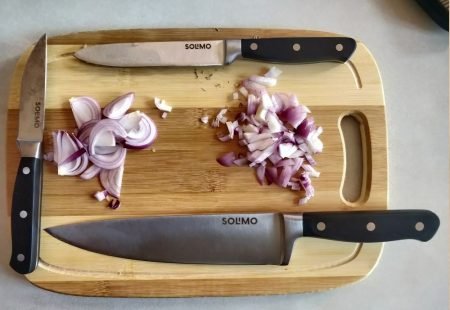
Good wooden boards use closed-grain hardwoods. On the Janka hardness scale, hard maple sits around 1,450 lbf, walnut around 1,010 lbf and cherry around 950 lbf. That range is firm enough to resist deep scars but soft enough to protect your edge. In India, acacia, rubberwood, teak and neem boards are the most common. See our best wooden chopping boards in India for picks in each of these woods.
How the board is built matters too. End grain (fibres standing up) is the gentlest on knives; edge grain is durable and better value; a single face-grain plank marks and warps more easily.
Plastic vs Wood Cutting Board: Head-to-Head
1. Effect on Your Knife Edge
Winner: Wood. Both are softer than knife steel, but wood fibres part and close around the edge, while plastic is slightly stiffer and grips the blade. On an end-grain board, a 60+ HRC Japanese knife like VG10 or SG2 holds its edge noticeably longer. If you own a Damascus knife, wood is the safer partner.
2. Hygiene and Bacteria
Winner: Close, with a slight edge to plastic for raw meat. The USDA Food Safety and Inspection Service says you can use either wood or a non-porous surface like plastic for raw meat, and notes non-porous surfaces are easier to clean.
Research by Dean Cliver’s team at UC Davis in the 1990s found bacteria on wooden boards were drawn into the wood and did not multiply, while bacteria in knife-scarred plastic were hard to wash out. The practical lesson: a new plastic board is easy to sanitise, but a deeply grooved one is not, and a well-dried wooden board is safer than most people think.
3. Microplastics and Particles
Winner: Wood. A 2023 study in Environmental Science & Technology estimated a person could be exposed to 7.4 to 50.7 g of microplastics a year from a polyethylene board and about 49.5 g from a polypropylene board.
To be fair, the same study found wooden boards released 4 to 22 times more fine particles than plastic, but those are natural wood fibres. The researchers’ early tests on mouse cells showed no toxic effect from either, so this is a reason to prefer wood, not a reason to panic about plastic.
4. Turmeric Stains and Smells
Winner: Tie. Haldi stains both. Turmeric’s colour (curcumin) fades in sunlight, so drying either board in the sun helps. Plastic can be scrubbed with baking soda; wood can be lightly sanded. Garlic and fish smells wash out of plastic more easily, while wood needs lemon and salt.
5. Care and Maintenance
Winner: Plastic. Plastic needs only soap and water, and thick boards can go in the dishwasher. Wood must be hand-washed, dried standing up and oiled about once a month. Soaking a wooden board or leaving it wet on the counter is the fastest way to crack it. See our full guide on how to clean a wooden cutting board.
6. Durability and Lifespan
Winner: Wood. A daily-use plastic board usually needs replacing within a year or two, once grooves are deep enough to catch your fingernail. A good hardwood board lasts many years, and when it gets scarred you can sand it smooth again. Plastic cannot be restored.
7. Weight and Stability
Winner: Wood. A 2 to 3 cm hardwood board is heavy enough not to slide on wet granite. Light plastic boards slide unless you put a damp cloth underneath. A board that moves under a sharp knife is how most kitchen cuts happen.
8. Cost in India
Winner: Plastic. Plastic boards cost much less, so owning separate veg and non-veg boards is easy. A good hardwood board costs more, but spread over its lifespan it is often the cheaper option.
Which Should You Choose?
| Your kitchen | Best choice | Why |
|---|---|---|
|
Mostly vegetarian |
Wood |
Kind to knives, no plastic, lasts years |
|
Cook chicken or fish often |
Plastic for non-veg + wood for veg |
Separate raw meat, protect your edge |
|
Own Japanese or Damascus knives |
End-grain wood |
Gentlest surface for hard, thin edges |
|
Want zero maintenance |
Thick plastic |
Wash and go, dishwasher-safe |
|
Small kitchen, tight budget |
One thick plastic board |
Cheap, light, easy to store |
Want something even more hygienic and stain-free than both? Read our honest take on steel cutting board pros and cons.
The Best Setup: A Two-Board System
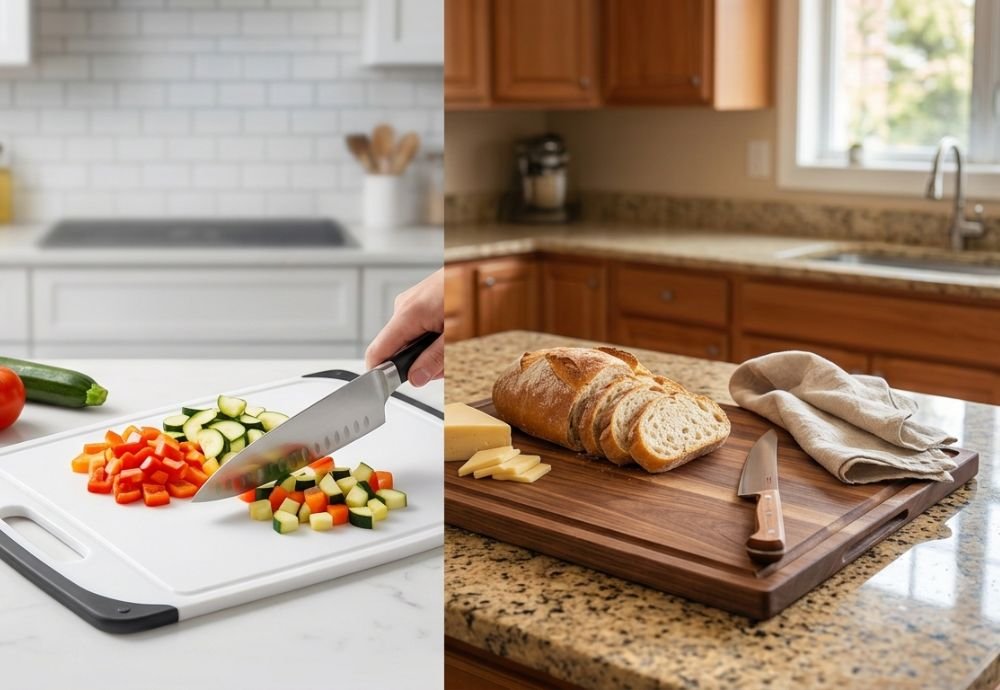
The USDA recommends one board for fresh produce and bread and a separate one for raw meat, poultry and seafood. In an Indian kitchen, that means:
- Plastic board (2 cm thick): only for raw chicken, mutton and fish. Wash it right after use.
- Wooden board: for onions, tomatoes, vegetables, fruit and anything eaten raw.
Pair both with a sharp knife. If you’re unsure which knife suits which job, see our types of kitchen knives guide.
Conclusion
In the plastic vs wood cutting board debate, neither wins everything. Plastic wins on cost, easy cleaning and raw meat. Wood wins on knife care, lifespan and avoiding microplastics. Most Indian kitchens are best served by one of each.
Ready to buy? See our best wooden chopping boards in India, our best plastic cutting boards or the full guide to best chopping boards in India.
FAQs
Is a plastic or wood cutting board more hygienic?
Both are safe when cleaned properly. Plastic is easier to sanitise when new, but deep knife grooves trap bacteria. UC Davis research found bacteria do not multiply on dry wood. Replace any board with deep grooves.
Do plastic cutting boards release microplastics?
Yes. A 2023 study estimated 7.4 to 50.7 g a year from polyethylene boards and about 49.5 g from polypropylene boards per person. Early lab tests showed no toxic effect, but wood avoids the issue.
Which is better for raw chicken, plastic or wood?
Plastic is the more practical choice for raw chicken because you can scrub it hard and rinse it in hot water. Keep that board only for non-veg.
Which board is better for my knives?
Wood, especially end grain. The fibres part around the edge, so knives stay sharp longer than on plastic.
Can I put a wooden cutting board in the dishwasher?
No. The USDA notes laminated (glued) boards may crack and split, and most wooden boards sold in India are glued. Hand-wash and dry them standing up.
How often should I replace a plastic cutting board?
Replace it when grooves are deep enough to catch your fingernail. For daily use, that is usually within a year or two.

Indian knife collector with a deep respect for Japanese knife making. What began as an interest in Damascus patterns grew into a focused study of Japanese knives from Sakai and Seki. Through Shiroblade, I share simple guides on buying, using, and caring for knives, helping readers understand real craftsmanship beyond looks.