
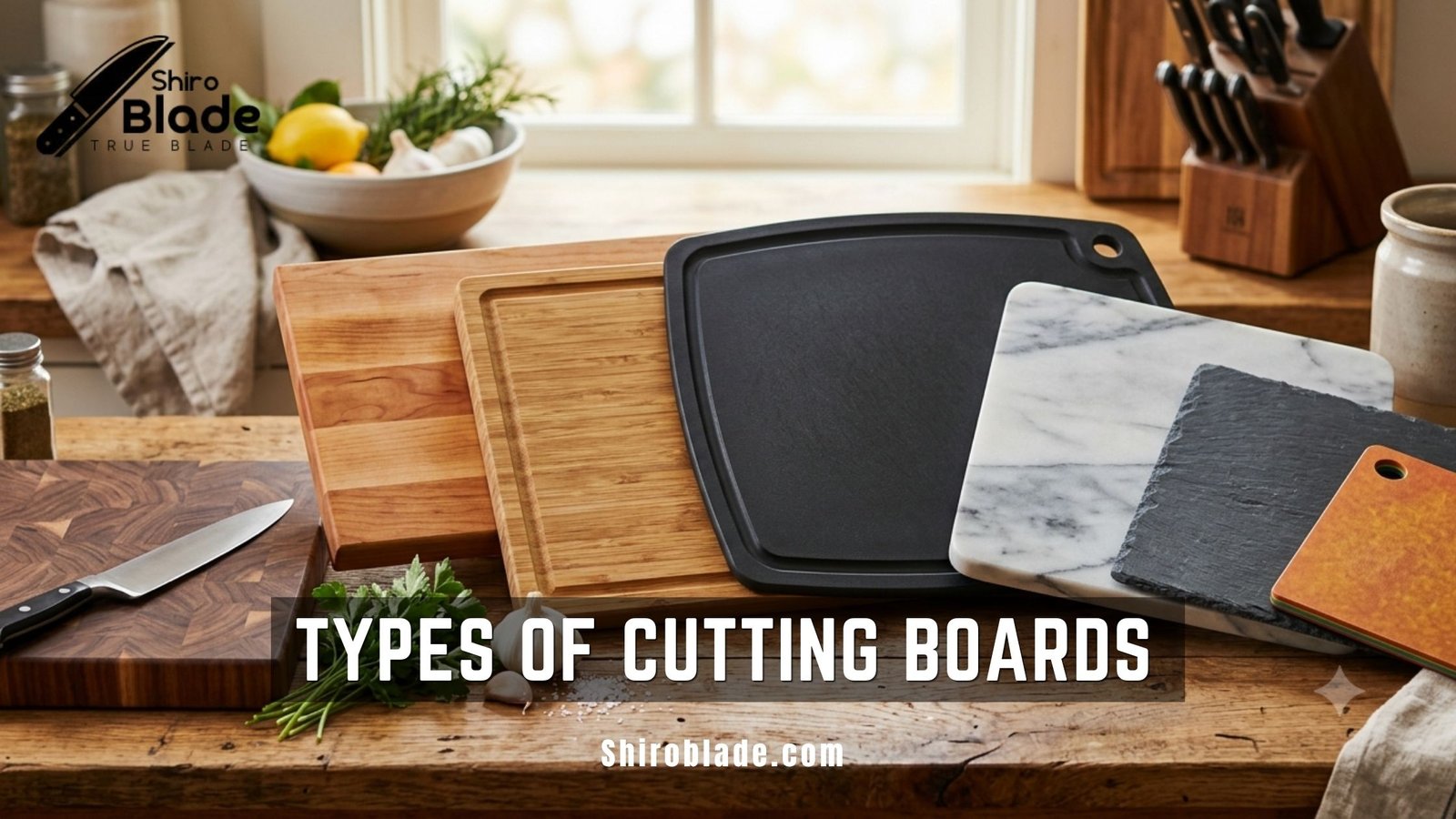
There are 9 main types of cutting boards, and the material you cut on decides how long your knife stays sharp, how clean your kitchen stays, and how much care the board needs. In Indian homes, three types dominate: wood, steel and plastic. Many cooks still cut on a steel plate or straight on the granite slab, which is far harder on knife edges than a proper board.
This guide explains every board type from a knife owner’s view: what it is made of, how it treats your edge, how hygienic it is, and which jobs it suits in an Indian kitchen. If you just want product picks, see our best chopping boards in India guide.
Short Answer: Which Type of Cutting Board Is Best?
For most Indian kitchens, you need two boards: a thick plastic board for raw chicken, mutton and fish, and a wood or bamboo board for vegetables and fruit. If you own Japanese knives, end-grain wood or a synthetic rubber board is the gentlest surface you can buy.
The three main types in India are wood, steel and plastic. Wood is kindest to your knife, steel is the most hygienic and longest-lasting, and plastic is the cheapest board to keep only for non-veg. Avoid cutting on glass, marble and granite.
| Board type | Knife-friendly | Hygiene | Best for |
|---|---|---|---|
|
Wood |
Very good |
Good with care |
Veg, fruit, bread |
|
Stainless steel |
Fair (dulls faster) |
Excellent |
Non-veg, dough, daily use |
|
Plastic |
Good |
Very good |
Raw meat, fish, daily veg |
|
Bamboo |
Fair |
Good |
Veg, serving |
|
Synthetic rubber |
Excellent |
Very good |
Japanese knives |
|
Hinoki (Japanese cypress) |
Excellent |
Good with care |
Sushi, fish, fine slicing |
|
Composite (wood fibre) |
Fair |
Very good |
Dishwasher users |
|
Glass |
Very poor |
Very good |
Serving only |
|
Marble / granite |
Very poor |
Good |
Pastry, serving only |
9 Types of Cutting Boards Explained
In Indian kitchens, three types cover almost every home: wood, steel and plastic. The other six are specialist boards for Japanese knife owners, pastry or serving.
1. Wooden Cutting Boards
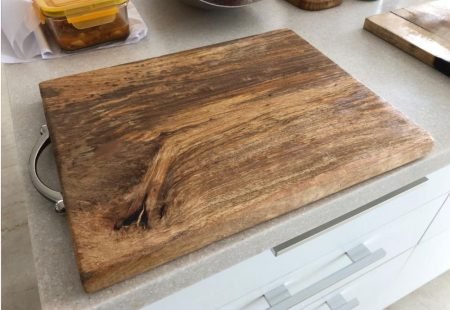
Wood is the classic board and still the best all-round surface for vegetables. Good boards use closed-grain hardwoods. Hardness is measured on the Janka scale (the force needed to press a steel ball into the wood): hard maple sits around 1,450 lbf, walnut around 1,010 lbf and cherry around 950 lbf.
That range matters. Below about 900 lbf, the board scars fast; well above 1,500 lbf, it starts to wear your edge. In India, you’ll mostly find acacia, rubberwood, teak and neem boards.
Hygiene: Research by Dean Cliver’s team at UC Davis in the 1990s found bacteria on wooden boards were drawn into the wood and did not multiply, while knife-scarred plastic was harder to clean. Wood still needs drying and oiling, and it can crack if it soaks.
See our picks in best wooden chopping boards in India.
2. Stainless Steel Cutting Boards
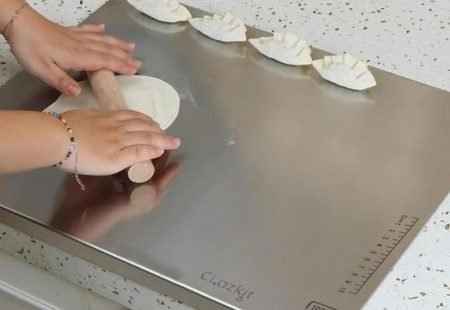
Stainless steel boards are one of the three most common boards in Indian kitchens, alongside wood and plastic. Most are 304-grade (food-grade) stainless steel, and their strengths are real: they are non-porous, don’t absorb raw meat juices, don’t stain with turmeric, don’t warp or crack, and last for years.
Knife feel: Annealed 304 steel is softer than a 56 to 62 HRC knife edge, so it won’t chip a blade on contact. But it doesn’t give, so the edge takes every impact and dulls faster than on wood or plastic. You’ll also hear a click and feel the blade slide more on a wet board.
How to use one well: Slice with a smooth push or pull stroke instead of hard chopping, hone your knife more often, and keep thin Japanese knives for wood or plastic. Steel is also the ideal surface for kneading dough and rolling rotis.
3. Plastic Cutting Boards
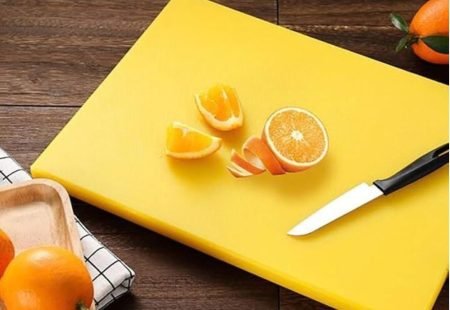
Plastic boards are made from polyethylene (HDPE, the softer material used in commercial kitchens) or polypropylene (stiffer and cheaper, common in home boards). They are non-porous, light and cheap, which makes them the easiest board to keep only for raw non-veg.
Knife feel: Good. The edge sinks in slightly instead of skating. Thin 0.5 cm boards flex and warp; 2 cm boards stay flat.
Weak point: Knife grooves. The USDA Food Safety and Inspection Service advises throwing out any board, plastic or wood, once it develops deep, hard-to-clean grooves. See our tested picks in best plastic cutting boards in India.
4. Bamboo Cutting Boards
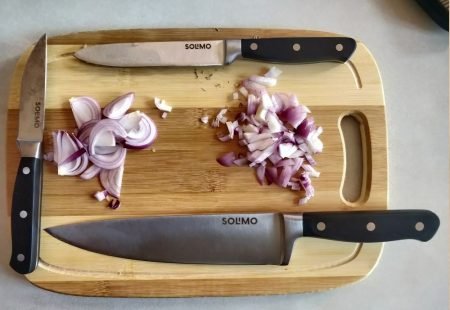
Bamboo is a grass, not a wood. Boards are made by gluing strips together under pressure. According to Michigan State University Extension, bamboo is harder and less porous than hardwoods, so it absorbs less moisture.
Knife feel: Fair. That hardness, plus the natural silica in bamboo and the glue lines, dulls edges faster than maple or acacia. It is light, cheap and sustainable, which makes it a good vegetable or serving board, not the best partner for a hard Japanese knife.
5. Synthetic Rubber Cutting Boards
Synthetic rubber boards (Hasegawa and Asahi are well-known Japanese makers) are what many Japanese restaurant kitchens use. They are soft enough that the edge sinks in cleanly, yet non-porous like plastic.
They are heavy, so they don’t slide, and the surface can be sanded to remove knife marks. In India they are mostly imported and cost several times more than plastic, so they make sense only if you own expensive Japanese knives.
6. Hinoki (Japanese Cypress) Boards
Hinoki is a soft, aromatic Japanese softwood used by sushi chefs. It is gentler on the edge than any hardwood, which protects thin single-bevel knives like the Yanagiba (sushi slicer).
The trade-off is care. You wet the board before use so fish juices don’t soak in, dry it standing up, and accept that it marks easily. It is an enthusiast’s board, not a daily Indian kitchen board.
7. Composite (Wood Fibre) Boards
Composite boards are made from wood fibre or paper pressed with food-safe resin. They are thin, heat-resistant, dishwasher-safe and almost maintenance-free.
Knife feel: Fair. The resin makes the surface harder than wood, so you’ll hear a light click and sharpen a little more often. Choose one if you want a dishwasher-safe board that won’t warp.
8. Glass Cutting Boards
Tempered glass boards are non-porous and easy to wipe, which is why they get sold as hygienic. For a knife, they are the worst surface you can use: zero give, and the blade skates sideways, which is dangerous with onions and tomatoes. Keep glass for serving cheese or cut fruit.
9. Marble and Granite Boards
Stone stays cool, which pastry makers love. Granite also contains quartz, a mineral at least as hard as most knife steel. Cutting on a marble board or straight on your granite kitchen top dulls an edge in a few strokes. Use stone for pastry, chocolate and serving only.
Edge Grain vs End Grain vs Face Grain Wood Boards
How a wooden board is cut matters as much as the wood itself.
- End grain: Short blocks glued with the fibres standing up, like a brush. The edge slips between fibres, which then close up again. It is the gentlest wood surface and hides knife marks, but it is heavy, costly and needs more oil.
- Edge grain: Long strips glued side by side with the fibres running lengthwise. It is durable, stable and cheaper. It is the best value for most home cooks.
- Face grain: One wide plank. It looks attractive but shows knife marks quickly and is more likely to warp.
Which Cutting Board Type for Which Job?
| Job | Best board type | Why |
|---|---|---|
|
Raw chicken, mutton, fish |
Thick plastic (2 cm) or rubber |
Non-porous, can be scrubbed and rinsed in hot water |
|
Daily vegetables and fruit |
Edge-grain wood or bamboo |
Gentle on the edge, stable while chopping |
|
Japanese knives (VG10, SG2) |
End-grain wood, rubber or hinoki |
Softest surfaces, protect thin hard edges from chipping |
|
Bone-in chicken with a cleaver |
Heavy plastic or thick end-grain wood |
Takes impact without cracking or bouncing |
|
Kneading dough, rolling rotis |
Stainless steel or marble |
Smooth, cool, no cutting involved |
|
Serving |
Wood, marble or glass |
Looks good, no knife work |
Not sure which knife you’ll pair with your board? Our types of kitchen knives guide matches each knife to its job.
Cutting Board Colour Coding
Commercial kitchens often colour-code plastic boards so raw meat never touches ready-to-eat food. A common system is red for raw meat, yellow for raw poultry, blue for raw fish, green for salad and fruit, brown for vegetables and white for bakery and dairy.
At home, two colours are enough: one for raw non-veg, one for everything else. That single habit is the biggest hygiene step you can take, and the USDA gives the same advice: keep a separate board for raw meat, poultry and seafood.
How to Care for Each Type of Cutting Board
- Plastic: Hot soapy water after each use. Thick boards can go in the dishwasher; thin ones warp.
- Wood and bamboo: Hand-wash, never soak, dry standing up, and oil with food-grade mineral oil once a month.
- Rubber: Wash like plastic; sand lightly when knife marks build up.
- Hinoki: Wet before use, rinse after, and dry upright away from the stove.
- Steel, glass, stone: Wash normally; they need almost no care.
Sanitising: The USDA recommends 1 tablespoon of unscented liquid chlorine bleach per gallon of water (about 3.8 litres), which works out to a little under 1 teaspoon per litre. Flood the board, leave it a few minutes, rinse and air-dry. This works for both plastic and wood.
How to Choose the Right Type of Cutting Board
- Match the board to your knife. If you own a Damascus or Japanese knife at 60+ HRC, cut mainly on wood, rubber or hinoki. On steel or bamboo, expect to sharpen more often; skip glass and stone entirely.
- Buy two, not one. One board for raw non-veg, one for vegetables.
- Go thick. 2 cm or more for any board you chop on; thin boards slide, flex and warp.
- Check the size against your sink. A board you can’t wash easily is a board you won’t wash properly.
- Replace on time. Deep grooves you can catch with a fingernail mean it’s time for a new board.
Conclusion
Of the 9 types of cutting boards, Indian kitchens mostly choose between three: wood, steel and plastic. Wood is kindest to your knife, steel is the most hygienic and durable, and plastic is the cheapest board to keep only for non-veg. Rubber and hinoki suit Japanese knife owners, while glass and stone are best kept for serving.
Ready to buy? Compare the top picks in our best chopping boards in India guide.
FAQs
What are the main types of cutting boards?
The main types are plastic, wood, bamboo, synthetic rubber, hinoki (Japanese cypress), composite wood fibre, stainless steel, glass, and marble or granite. In Indian homes, wood, steel and plastic are the three most common.
Which type of cutting board is the most hygienic?
Non-porous boards like plastic and rubber are the easiest to sanitise because they can be scrubbed with hot water and bleach solution. Well-dried wooden boards are also safe, and research from UC Davis found bacteria do not multiply on wood. Any board with deep grooves should be replaced.
Which cutting board is best for Japanese knives?
End-grain wood, synthetic rubber and hinoki are the gentlest surfaces. Japanese steels like VG10 and SG2 run at 60+ HRC and chip on hard boards, so avoid bamboo, glass, steel and stone.
Are steel cutting boards good for knives?
Steel boards are hygienic, stain-free and last for years, which is why they’re popular in India. The trade-off is that steel doesn’t give under the edge, so your knife dulls faster than on wood or plastic. Use slicing strokes instead of hard chopping, hone more often, and use a cleaver for bones.
Is bamboo better than wood for a cutting board?
Bamboo is harder, lighter, cheaper and absorbs less moisture, but that hardness dulls knives faster. Hardwood like maple or acacia is kinder to your edge.
How many cutting boards do I need?
At least two: one only for raw chicken, mutton and fish, and one for vegetables, fruit and cooked food. This keeps raw meat bacteria away from food you won’t cook again.

Indian knife collector with a deep respect for Japanese knife making. What began as an interest in Damascus patterns grew into a focused study of Japanese knives from Sakai and Seki. Through Shiroblade, I share simple guides on buying, using, and caring for knives, helping readers understand real craftsmanship beyond looks.


Pingback: Paring Knife Uses: What Is a Paring Knife Used For?