
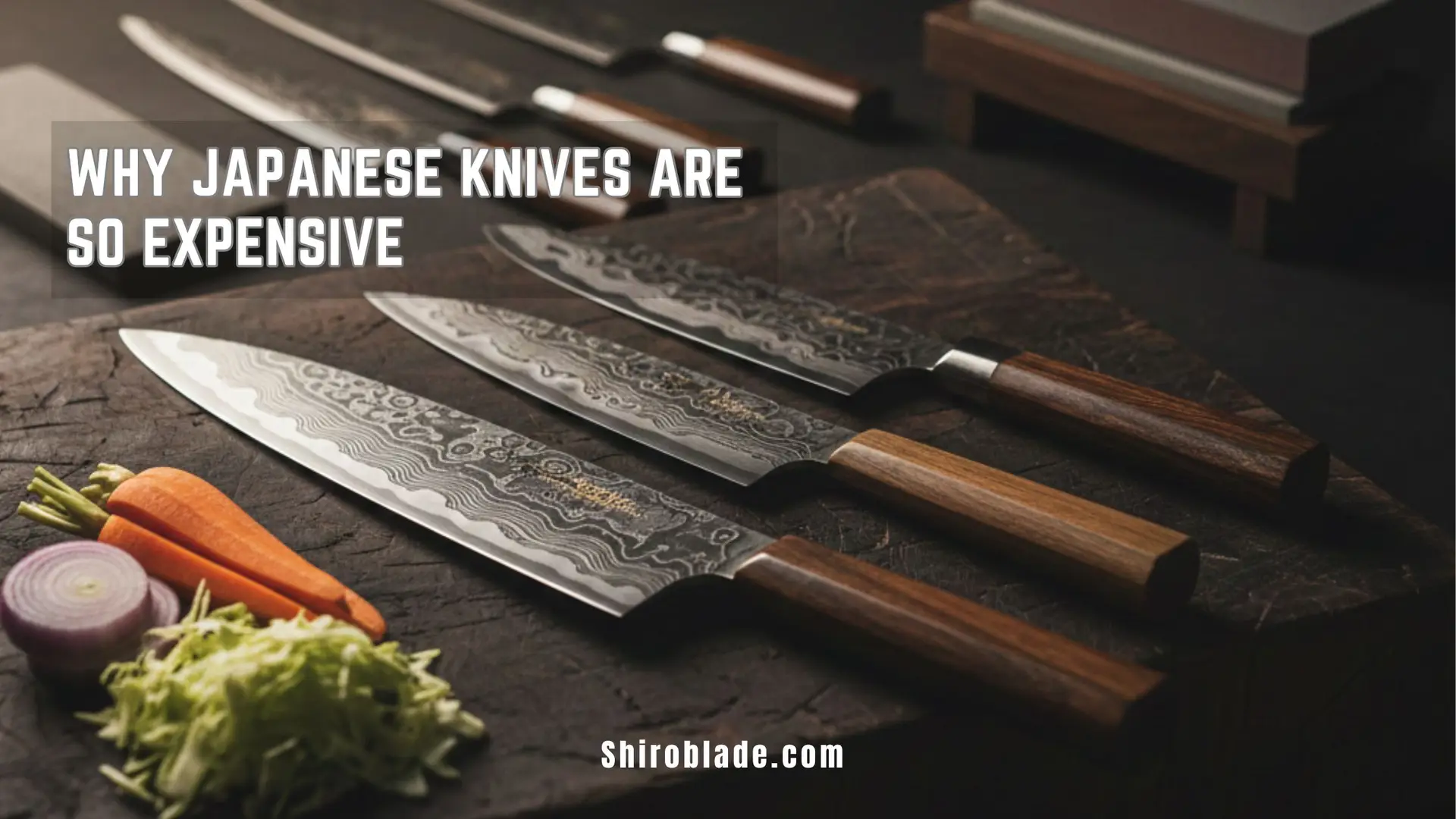
If you’ve ever browsed for a professional kitchen blade, you’ve likely experienced “sticker shock.” In India, a high-end Japanese Damascus chef knife from a brand like Kai Shun often starts around ₹14,000, while master-crafted Sakai pieces or Dual Core limited editions can easily exceed ₹30,000 to ₹55,000. For the rarest artisan-forged blades, collectors might even pay upwards of ₹1,00,000.
But is this just clever marketing, or are Japanese knives worth the investment? Based on the craftsmanship seen in heritage workshops, the high price tag is a reflection of a 600-year-old legacy.
Reasons why Japanese Knives are so Expensive?
1. The Legacy of the Samurai
The most expensive Japanese knives aren’t just tools; they are descendants of the Katana. When the Samurai class was abolished, master swordsmiths transitioned their skills to culinary blades. This traditional Japanese blacksmithing is a “slow art.” A single high-end blade can involve up to 100 different stages and several weeks of labor by an artisan—which is why a handmade Sakai Takayuki Gyuto can cost over ₹22,000.
2. High-Carbon Steel vs. Mass-Produced Stainless
The primary reason for the price gap in Japanese vs. Western knives is the steel quality.
Western Knives: Usually made of softer stainless steel (56-58 HRC) that is tough but dulls quickly.
Japanese Knives: Use premium high-carbon steel (like Shirogami or Aogami) or powdered steels (like SG2/VG-10). These materials allow the knife to reach an incredible hardness of 60–66 HRC on the Rockwell scale. This provides the legendary edge retention Japanese knives are famous for—allowing you to slice through a tomato with zero resistance for months without sharpening.
3. The Complexity of Forge Welding (Damascus)
When you see a Damascus chef knife, you are looking at a process called “forge welding.” Artisans layer different types of steel—often 33, 45, or 67 layers—to create a blade that is both hard at the core and flexible on the outside. This creates the Suminagashi (floating ink) pattern. Because of this labor-intensive layering, a quality Damascus Nakiri in the Indian market is usually priced between ₹8,500 and ₹15,000.
4. Single Bevel Precision
While most kitchen knives are sharpened on both sides, many traditional Japanese blades feature a single bevel (Kataba).
Producing a single-bevel knife requires extreme precision during the forging and grinding process.
These blades allow for “surgical” precision, essential for tasks like slicing sashimi. Because this requires more manual skill than a standard double-bevel grind, professional Yanagiba blades for sushi can cost anywhere from ₹25,000 to ₹60,000.
5. Hand-Finished "Wa-Handles"
Even the handle adds to the cost of artisan culinary tools. Traditional Wa-handles (octagonal or D-shaped) are often made from rare, natural woods like Ebony, Rosewood, or Mahogany. Each handle is hand-fitted to the blade’s tang, ensuring a perfectly balanced weight that feels like an extension of the chef’s hand.
Types of Japanese Knives
While Japanese cuisine uses dozens of specialized shapes, most collectors focus on a few key types. The Gyuto is the versatile Japanese chef’s knife (beef sword), while the Santoku (three virtues) is a compact all-rounder for meat, fish, and vegetables. For plant-forward cooking, the Nakiri features a flat, rectangular blade designed for precision vegetable chopping. Professionals often invest in the Yanagiba, a long, single-bevel “willow leaf” blade used for slicing sashimi, or the heavy Deba for butchering whole fish. In the Indian market, entry-level versions of these shapes start around ₹4,000, while premium Damascus versions typically range from ₹12,000 to ₹35,000.
Making an Informed Decision: Choosing the Right Japanese Knife
To ensure you get the best value, match the knife to your style. For most Indian home kitchens, a 180mm Santoku or 210mm Gyuto in VG-10 steel (priced around ₹15,000) offers the best balance of performance, beauty, and durability. Always buy from reputable sources to ensure your investment lasts a lifetime.

Indian knife collector with a deep respect for Japanese knife making. What began as an interest in Damascus patterns grew into a focused study of Japanese knives from Sakai and Seki. Through Shiroblade, I share simple guides on buying, using, and caring for knives, helping readers understand real craftsmanship beyond looks.

Pingback: Real vs Fake Damascus Knife: 6 Ways to Tell if Your Damascus Knife is Authentic
Pingback: Damascus Layer Count Explained: Does More Layers Mean a Better Knife?
Pingback: How Much Does a Real Damascus Knife Cost
Pingback: 10 Best Kitchen Knife Brands in India 2026
Pingback: What is a Damascus Chef Knife? Guide for India Buyers