
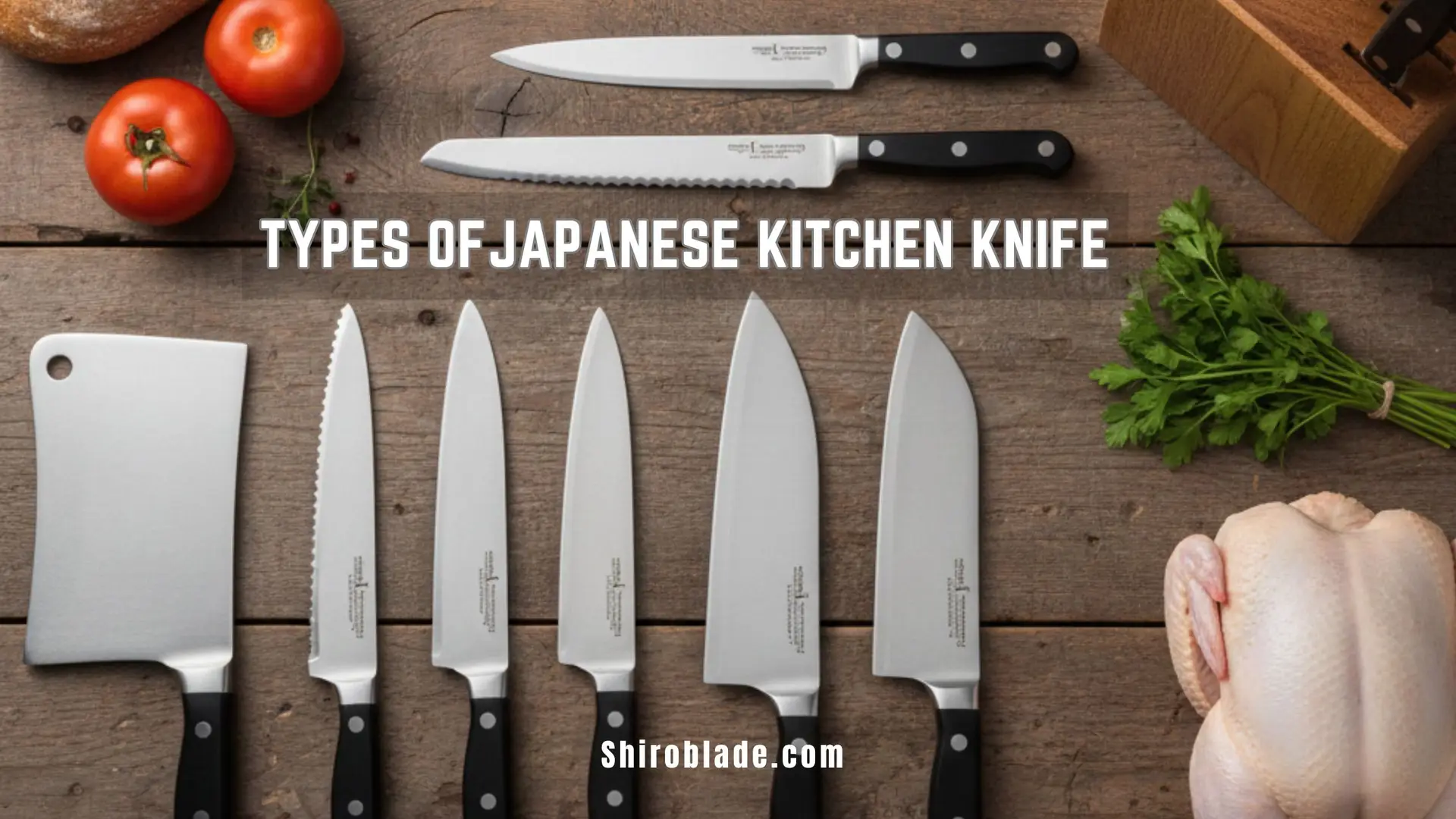
Guide for Japanese Kitchen Knife Types
When you first hold a handcrafted Japanese knife, you immediately notice a difference in balance and weight. For centuries, the city of Sakai has been the heart of Japanese bladesmithing, transitioning from the production of samurai swords to the finest kitchen cutlery in the world. But for many home cooks and even professional chefs, the sheer variety of shapes can be overwhelming. Understanding Japanese kitchen knife types is about more than just finding a sharp edge; it is about understanding how different geometries affect the flavor, texture, and presentation of your food.
Why Japanese Knives are Popular
The global rise of Japanese cutlery is driven by a pursuit of perfection. Unlike Western knives, which are typically made from softer steel designed to “take a beating,” Japanese blades utilize high-carbon steel that is hardened to an extreme degree. This allows the craftsman to grind the edge to a much finer angle. When a knife is this sharp, it doesn’t just cut; it glides. In Japanese cuisine, the “cleanliness” of a cut is vital. If you crush the cells of an onion or a piece of tuna with a dull, thick blade, the juices leak out, and the flavor changes. A Japanese blade preserves the integrity of the ingredient, ensuring that every bite tastes exactly as nature intended.
Different Types of Japanese Kitchen Knife - Right Blade for Every Task
1. The All-Rounders: Best for Daily Kitchen Tasks
Most culinary journeys into Japanese steel begin with a multi-purpose tool. These are designed to be the backbone of your kitchen, capable of handling a wide variety of ingredients with ease.
Gyuto (The Professional Chef’s Choice)
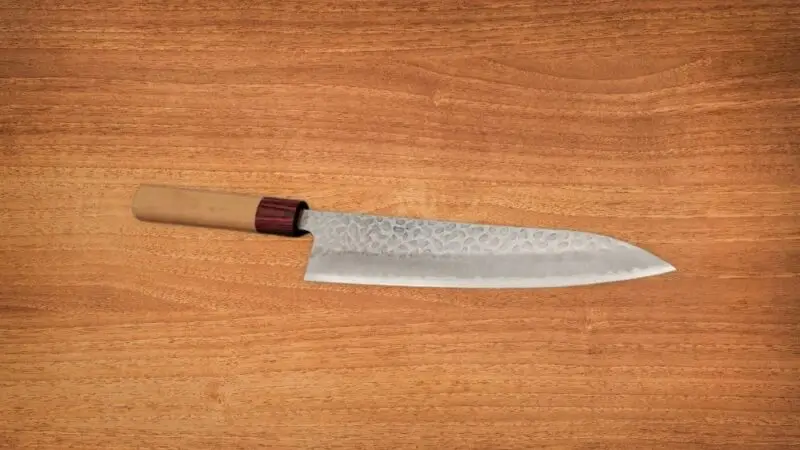
The Gyuto is the quintessential bridge between Eastern and Western culinary traditions. While it looks similar to a European chef’s knife, the Gyuto is thinner, lighter, and holds its edge significantly longer. The word “Gyuto” literally means “cow sword,” reflecting its original purpose for butchering meat, but today it is used for almost everything.
The profile of a Gyuto features a gentle curve toward the tip, which allows for the “rocking” motion that many Western cooks are accustomed to. However, because the steel is so hard, it is also incredibly effective for “push-cutting.” Whether you are slicing through a ribeye steak or dicing a mountain of carrots, the Gyuto provides the reach and power necessary for professional-grade prep work. If you are only going to own one high-end Japanese knife, this is almost always the recommended starting point.
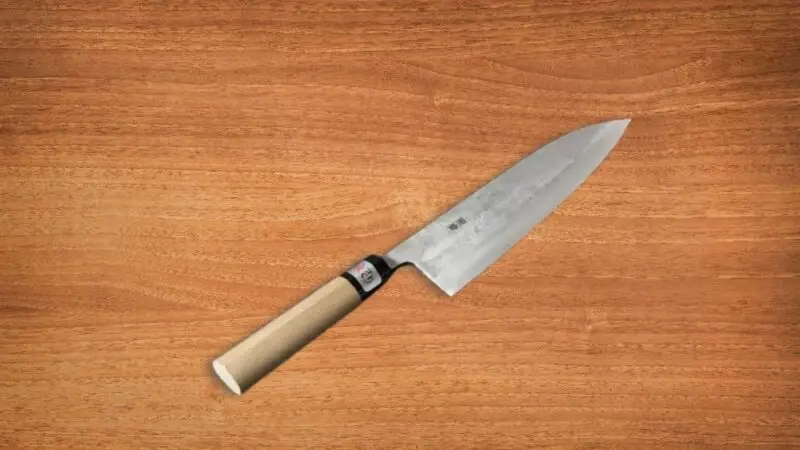
Santoku (The Home Cook’s Multi-Purpose Blade)
If the Gyuto is a sword, the Santoku is a precision scalpel for the home kitchen. The name “Santoku” translates to “Three Virtues,” which refers to its ability to handle meat, fish, and vegetables. It was developed in the mid-20th century as a more compact alternative to the larger Gyuto, specifically designed for the smaller workspaces found in Japanese homes.
A Santoku is characterized by its “sheepsfoot” tip, where the spine curves down to meet the edge. This design makes the knife feel very safe and controllable. It has a flatter edge than a Gyuto, which means it is intended for an up-and-down chopping motion rather than rocking. For those who find long blades intimidating, the Santoku offers a nimble, friendly experience without sacrificing the legendary sharpness of Sakai steel.
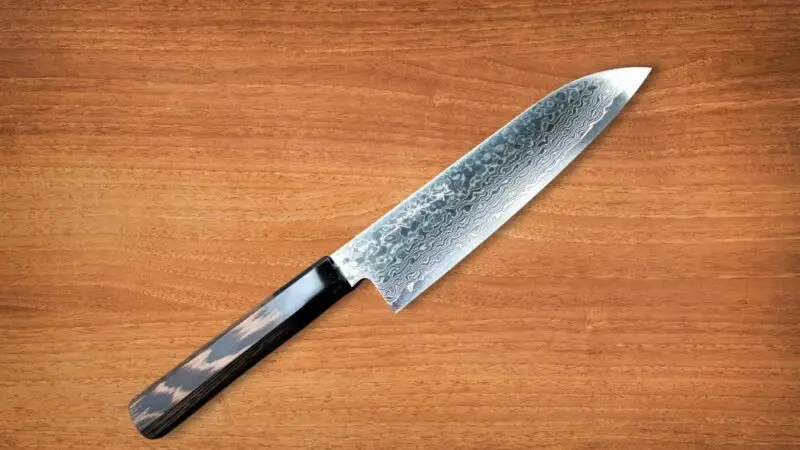
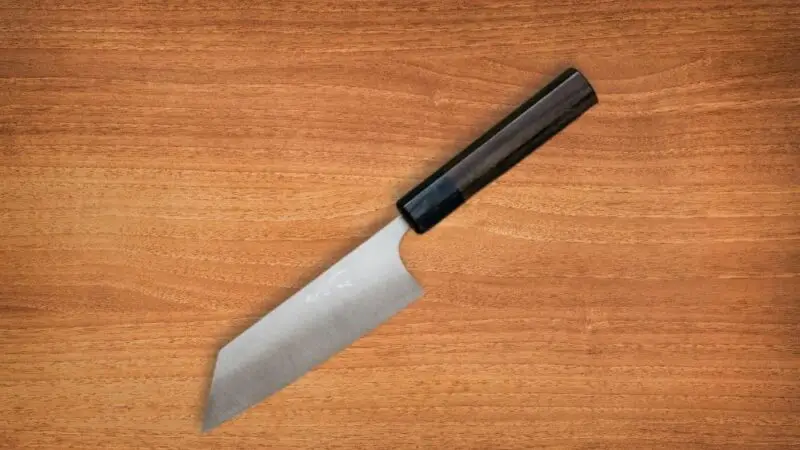
Bunka (The Versatile Aesthetic Choice)
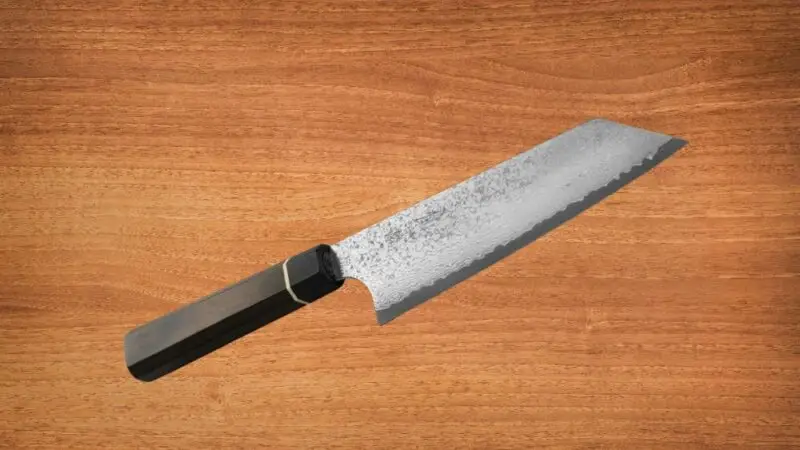
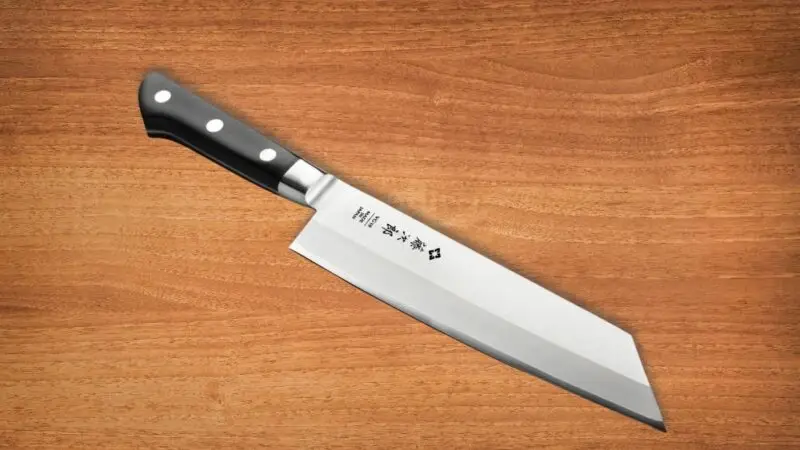
The Bunka is a striking knife that commands attention. It shares the same “three virtues” utility as the Santoku but features a “K-tip” or reverse tanto point. This aggressive, triangular tip isn’t just for looks; it allows for incredibly fine detail work. You can use the tip to score meat, peel garlic, or perform intricate decorative cuts on vegetables that would be difficult with a rounded Santoku. Because Bunkas are often finished with stunning Damascus patterns, they have become a favorite for collectors who want a tool that performs as well as it looks on a magnetic knife rack.
2. The Specialists: Precision Tools for Produce and Meat
As you move beyond the basic prep work, you begin to realize that certain ingredients require a specific touch. This is where the specialist blades shine, turning tedious chores into a satisfying craft.
Nakiri (The Vegetable Expert)
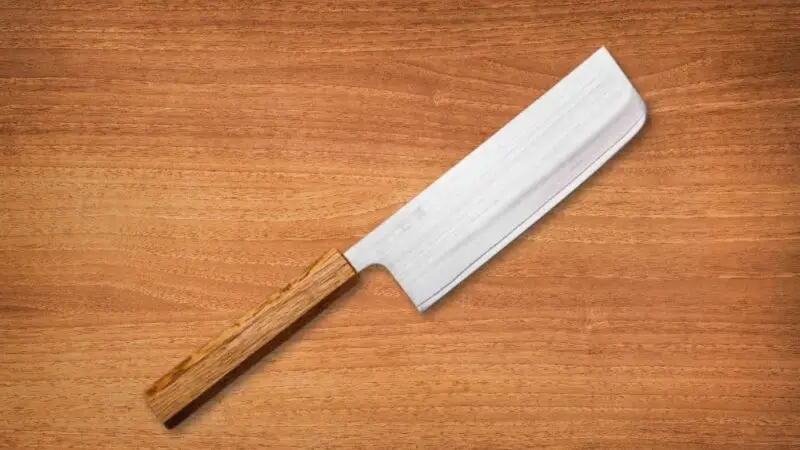
The Nakiri is a joy to use for anyone who cooks a plant-based diet. It is a double-bevel, rectangular blade that looks like a small cleaver, but don’t be fooled—it is not for bones. The Nakiri is incredibly thin and flat. This flatness ensures that the entire edge hits the cutting board at the same time.
When you use a curved knife on an onion, you often end up with “accordion” slices that are still connected at the bottom. The Nakiri eliminates this. It produces clean, consistent slices of everything from delicate herbs to dense sweet potatoes. Because the blade is tall, you can also use it as a scoop to transfer your chopped vegetables from the board to the pan.
Petty (The Small Task Specialist)
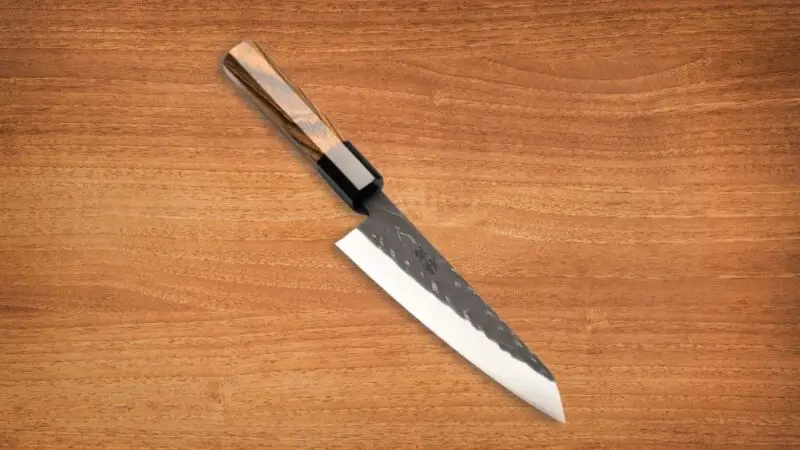
Every kitchen needs a “sidekick,” and the Petty knife is exactly that. Ranging from 120mm to 150mm, the Petty is used for tasks where a large chef’s knife would be clumsy. It is the perfect tool for peeling fruit in your hand, de-seeding peppers, or trimming silver skin from a tenderloin. Despite its small size, a Sakai-forged Petty is treated with the same respect and craftsmanship as a full-sized sword, often featuring beautiful Damascus cladding.
Sujihiki (The Long Slicer)
The Bunka is a striking knife that commands attention. It shares the same “three virtues” utility as the Santoku but features a “K-tip” or reverse tanto point. This aggressive, triangular tip isn’t just for looks; it allows for incredibly fine detail work. You can use the tip to score meat, peel garlic, or perform intricate decorative cuts on vegetables that would be difficult with a rounded Santoku. Because Bunkas are often finished with stunning Damascus patterns, they have become a favorite for collectors who want a tool that performs as well as it looks on a magnetic knife rack.
3. The Traditional Masters: Sakai Heritage Blades
When you move into the world of Sakai Heritage Blades, you are entering the realm of the “Single-Bevel.” Unlike the knives we have discussed so far, which are sharpened on both sides (double-bevel), these traditional tools are flat—even slightly concave—on one side and angled on the other. This design allows the knife to glide through food with zero resistance, a necessity for the delicate textures of Japanese cuisine.
Deba (The Heavy Fish Butchery Knife)
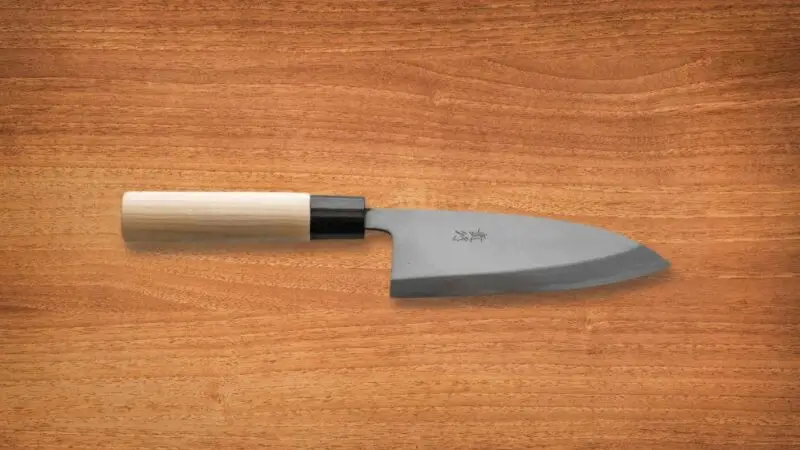
The Deba is the heavyweight of the Japanese kitchen. It is a thick, sturdy blade with a deep spine, designed specifically for the rigorous task of filleting fish. In Sakai, the Deba is forged to be heavy so that the weight of the knife does the work for you. The heel of the blade is strong enough to chop through the heads of large fish or small poultry bones, while the tip is tapered for delicate precision when separating flesh from the ribcage. Holding a Deba feels like holding a piece of history; it is a rugged tool that demands respect and proper technique, ensuring that not a single gram of expensive seafood goes to waste.
Yanagiba (The Ultimate Sashimi Slicer)
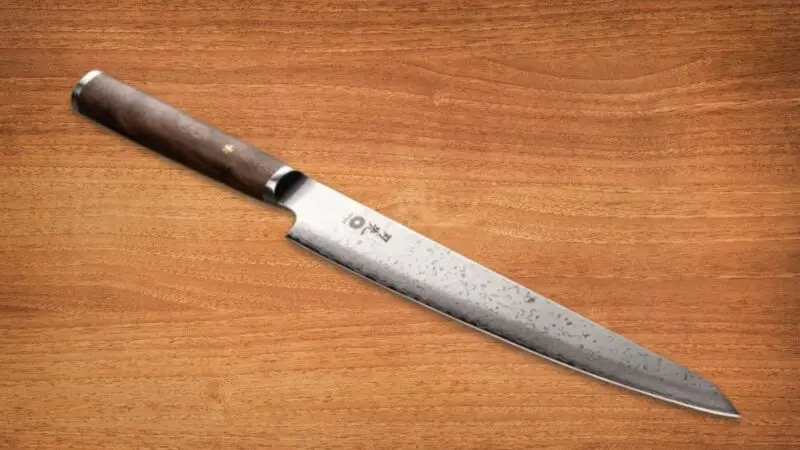
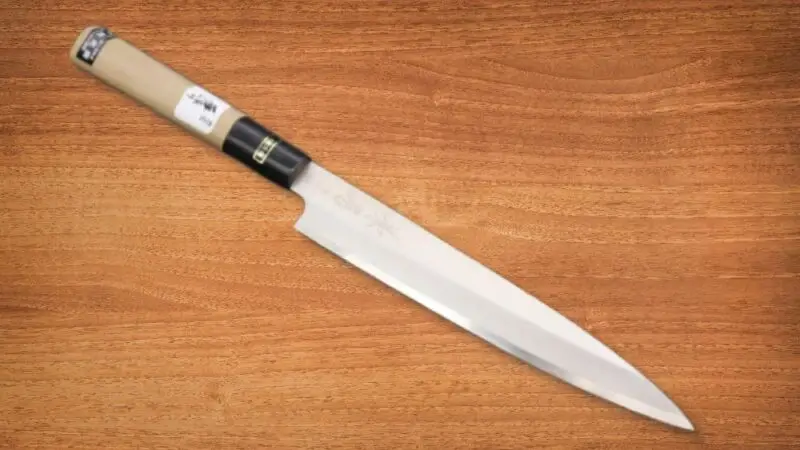
The Yanagiba is perhaps the most iconic Japanese knife in the world. Its long, slender profile is reminiscent of a willow leaf, which is exactly what “Yanagiba” means in Japanese. This knife has one purpose: to slice raw fish with a single, unbroken pull stroke. By using a long blade, the chef avoids the “sawing” motion that ruins the texture of sashimi. Because it is a single-bevel Sakai blade, it creates a surface on the fish so smooth it actually reflects light. This preservation of the cell structure is why high-end sushi tastes cleaner and more vibrant—the knife literally protects the flavor of the ocean.
Kiritsuke (The Status Symbol of Master Chefs)
In the hierarchy of the traditional Japanese kitchen, the Kiritsuke holds a special place. Historically, it was a “master’s knife,” reserved only for the Executive Chef (the Houchou-nin). This is because the Kiritsuke is a hybrid of two different knives: the Usuba (for vegetables) and the Yanagiba (for fish). It is notoriously difficult to use because of its flat profile and length. Using a Kiritsuke is a statement of skill. Today, “double-bevel” versions exist for the modern cook, but the traditional Sakai Kiritsuke remains the ultimate status symbol for those who have mastered the art of the blade.
4. Task-Specific & Specialty Blades
As you refine your cooking, you may find that even a great all-rounder isn’t quite right for every specific ingredient. This is where the Japanese philosophy of “one tool for one task” truly shines. These specialty blades are designed to solve very specific culinary problems.
Usuba (Traditional Single-Bevel Vegetable Knife)
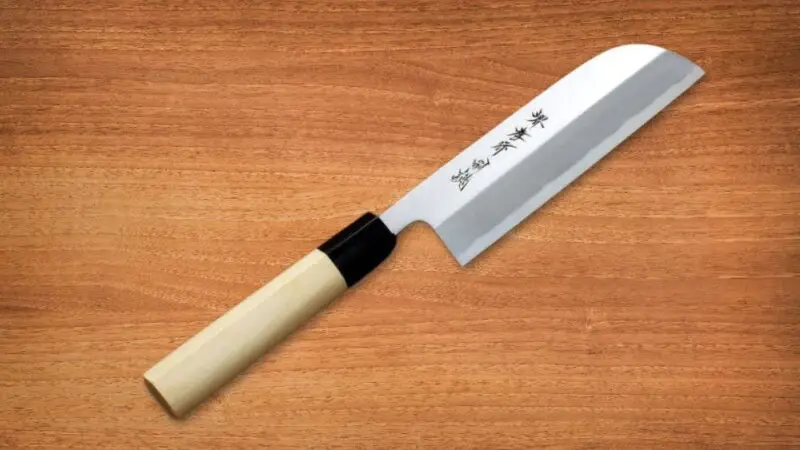
While the Nakiri is for everyone, the Usuba is for the professional. It is the single-bevel counterpart to the Nakiri and is used for the most intricate vegetable work imaginable. The edge is so thin that a master chef can peel a radish into a translucent sheet long enough to wrap an entire roll. Because the back of the blade is concave (known as Urasuki), the vegetable doesn’t stick to the knife, allowing for lightning-fast, paper-thin slicing. It is a beautiful, demanding tool that represents the peak of vegetable preparation.
Honesuki (The Poultry Butchery Specialist)
If you prefer to buy whole chickens and break them down yourself, the Honesuki is a revelation. Unlike a Western boning knife, which is flexible, the Honesuki is stiff and robust. It features a triangular shape that is perfect for getting into the tight spaces of a wing or thigh joint. The edge is designed to be tough so that it won’t chip if it accidentally grazes a bone. It turns the chore of poultry butchery into a quick, surgical process, saving you money and giving you better cuts of meat for your stocks and stews.
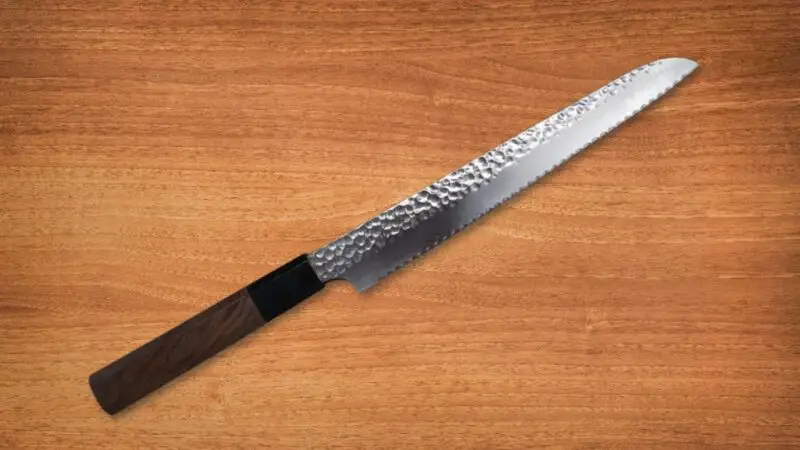
Pankiri (The Japanese Bread Knife)
Even in the world of bread, Japanese engineering stands out. The Pankiri features a specialized serrated edge. While many Western bread knives “tear” through a loaf, creating a mess of crumbs, the Pankiri is designed to “slice” through both hard crusts and the softest, cloud-like brioche. The teeth are shaped to minimize friction, ensuring that your beautiful sourdough or delicate sandwich bread retains its shape and structure.
Ko-Bunka and Specialty Slicers
Finally, there are the “in-between” knives like the Ko-Bunka and the Takohiki. The Ko-Bunka is a small, agile blade that brings the power of a Bunka to small tasks like dicing shallots or garlic. The Takohiki, with its unique square tip, is a specialized sashimi slicer from the Tokyo region, traditionally used for slicing octopus. These knives remind us that in the world of Japanese cutlery, there is always a tool perfectly suited for the ingredient at hand, no matter how niche.
Damascus vs. Sakai Forging: Why the Finish Matters
When you are browsing for a high-end Japanese knife, you are often faced with a choice between a clean, polished look and a complex, patterned one. This is not just about aesthetics; the finish of a blade tells the story of its creation and dictates how it will behave on your cutting board.
The Art of Suminagashi (Damascus)
The mesmerizing swirls of a Damascus blade are known in Japan as Suminagashi, or “floating ink.” This finish is created by layering different types of steel—usually a hard core steel for the edge, protected by multiple layers of softer, folded steel on the outside.
While many are drawn to Damascus for its sheer beauty, it serves a functional purpose as well. The layering process adds a level of toughness to the brittle high-carbon core, acting as a shock absorber. Furthermore, the micro-textures created by the layers can help reduce the surface tension between the blade and the food. This means that when you are slicing through a fatty piece of wagyu or a starchy potato, the Damascus pattern helps the food slide off the blade rather than sticking to it.
The Sakai Uchihamono Heritage
In Sakai, the focus is often on the “soul” of the forge. Unlike mass-produced knives that are stamped out of large sheets of metal, a Sakai-forged blade is hammered into shape by a master blacksmith. This hand-forging process—Uchihamono—aligns the grain of the steel, making it incredibly dense and durable.
When you choose a Sakai-made knife, you are participating in a 600-year-old tradition. These knives often feature a “Kasumi” or mist finish, where the boundary between the hard edge and the soft iron body is visible as a beautiful, cloudy line. This is a mark of authenticity; it shows that the knife was made using the traditional San Mai (three-layer) construction method, ensuring a razor-sharp edge that is easy to maintain.
Which for Which? Matching the Blade to Your Cooking Style
Choosing a knife is a personal decision that should be based on your actual habits in the kitchen. To simplify the “Which for Which” dilemma, consider which of these categories best describes your culinary lifestyle.
For The Daily Home Cook
If your kitchen time is spent preparing family meals—chopping onions, slicing chicken breasts, and dicing carrots—you do not need a 10-piece set. Your “Which for Which” starts with a Santoku or a medium-sized Gyuto. These are the most forgiving blades. Pair one of these with a Petty knife for fruit and small tasks, and you will find that 95% of your cooking is covered. Look for a Tsuchime (hammered) finish, as the dimples will help your vegetables fall away from the blade, speeding up your prep time.
For The Professional and the Perfectionist
For those who take their technique seriously or work in a professional environment, the Gyuto is non-negotiable. Its length (typically 210mm to 240mm) provides the leverage needed for long shifts. However, the true specialist in this category is the Sujihiki. If you pride yourself on the presentation of your roasts or proteins, the Sujihiki will give you those clean, restaurant-style slices that a standard chef’s knife simply cannot achieve.
For The Plant-Based Specialist
If meat is rarely on your menu, the Nakiri is your ultimate partner. While a Gyuto can cut vegetables, the Nakiri is designed for them. The flat edge and thin profile allow you to process large volumes of produce with a rhythmic, satisfying chop. If you want to take your vegetable artistry even further, adding a Bunka gives you a precision tip for decorative garnishes and intricate dicing.
For The Seafood and Sushi Lover
Japanese cuisine is defined by its relationship with the sea. If you enjoy buying whole fish from the market, you cannot rely on Western-style knives. The Deba is essential for safely breaking down the fish without damaging your finer blades. Once the fillets are prepared, the Yanagiba becomes the star. It is the only tool that can produce the shimmering, glass-like surface on a piece of sashimi that preserves the delicate fats and flavors of the fish.
Final Thoughts on Your Journey into Japanese Cutlery
Building a collection of Japanese kitchen knives is a marathon, not a sprint. You do not need to buy every specialty blade at once. The beauty of the Japanese system is that it allows you to grow as a cook. You might start with a versatile Sakai-made Santoku and, as you find yourself filleting more fish or experimenting with intricate vegetable garnishes, you can add a Deba or an Usuba to your kit.
Whether you choose the intricate beauty of Damascus or the rugged, professional finish of a Sakai Heritage blade, remember that these are more than just tools. They are the result of centuries of dedication. When you match the right knife to the right task, cooking stops being a chore and starts being a craft.
FAQ's
Sakai knives are hand-forged by specialized masters rather than stamped by machines, resulting in superior balance and a much longer-lasting edge.
While visually stunning, the layered Damascus steel also acts as a shock absorber for the hard core and helps reduce food sticking to the blade.
Double-bevel blades are sharpened on both sides for general use, while single-bevel blades are sharpened on one side for extreme precision in Japanese cuisine.
The Gyuto is the perfect replacement as it shares the familiar “chef knife” shape but offers a thinner, sharper, and lighter Japanese profile.
Traditional Wa-handles are lightweight wood for a blade-forward balance, while Western Yo-handles are heavier and riveted for a handle-heavy grip.
No; their hard steel is brittle and will chip on bones or frozen food. Always use a dedicated Deba or a Western knife for heavy-duty tasks.
You only need three to start: a Gyuto (all-purpose), a Petty (detail work), and a Nakiri (vegetables) or Sujihiki (slicing).
Avoid dishwashers and glass boards; sharpen only with whetstones to preserve the specialized geometry and the beauty of the Damascus pattern.

Indian knife collector with a deep respect for Japanese knife making. What began as an interest in Damascus patterns grew into a focused study of Japanese knives from Sakai and Seki. Through Shiroblade, I share simple guides on buying, using, and caring for knives, helping readers understand real craftsmanship beyond looks.

Pingback: What is a Damascus Chef Knife? A Buyer’s Guide for India
Pingback: Why Japanese Knives Are So Expensive? Are They Actually Worth the Price?
Pingback: The Damascus Blade Patterns Myth: There Is No Such Thing
Pingback: 10 Best Kitchen Knife Brands in India 2026
Pingback: 10 Best Chef Knives Under ₹1000 in India