
Finding a reliable professional-grade chef knife in India can be a frustrating challenge when you are working with a strict budget. Most people assume that high-performance cutlery is reserved for high priced luxury brands, but the truth is that you can find exceptional tools that offer professional-level precision and durability for under ₹1000.
Whether you are looking for the rocking motion of a Western chef knife or the precision of a Japanese-style blade, this price range offers specific models that provide the perfect balance, edge retention, and ergonomic design required for heavy-duty kitchen work.
10 Best Chef Knifes Under ₹1000 in India
Instead of wasting money on low-quality sets, investing in one of these high-performance chef knives ensures you have a tool capable of handling everything from intricate dicing to high-volume chopping with ease.
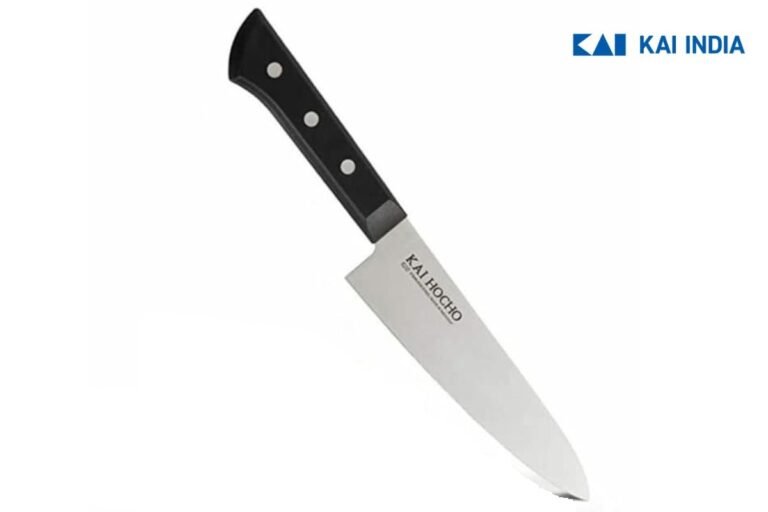
1. Kai Gift Box Hocho Premium Chef Knife (7.36 Inch)
The Kai Hocho Premium (Model: 000IN5102) is the cornerstone of the Kai India lineup. It is a multipurpose Western-style traditional knife designed specifically for the heavy vegetable-to-meat ratio of Indian cooking.
-
Technical Specifications: This knife features a 7.36-inch (18.7 cm) blade. While the larger Santoku in this series hits the 250g mark, this Chef variant is built for agility with a weight of 141 grams. It is manufactured by Kai India in their Neemrana, Rajasthan facility.
-
Material & Construction: The blade is made of modern high-carbon steel, which allows it to hold a “razor-sharp” edge far longer than standard stainless steel. The handle is made of reinforced Nylon, providing a superior thermal and impact resistance compared to standard plastic.
-
Performance: It is designed for “fine cutting,” meaning it makes refined slices without crushing the cells of vegetables. It features a T-shaped bolster and a handle designed for a firm, ergonomic grip.
-
Maintenance: It is not dishwasher safe. Due to the carbon steel content, it must be hand-washed with lukewarm water and dried immediately with a soft cloth to prevent oxidation.
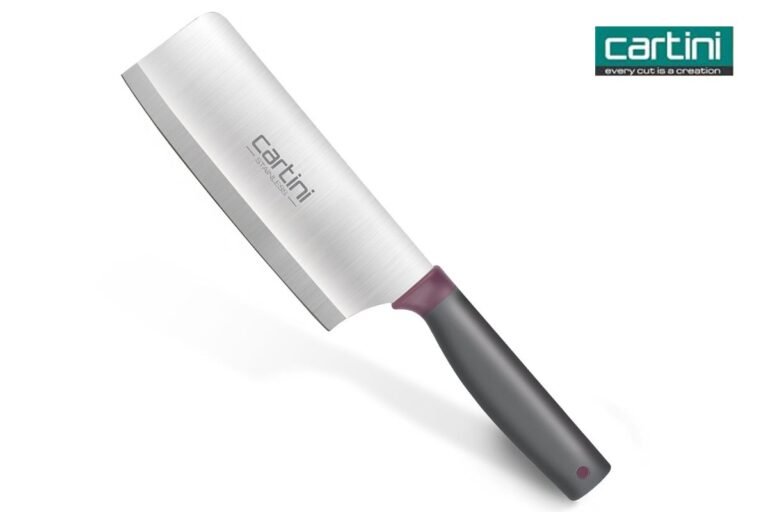
2. Cartini Godrej Essential Kitchen Cleaver (18 cm)
For tasks where a chef knife might chip—like splitting a whole chicken or hacking through a hard Kaddu (Pumpkin)—the Cartini Essential Cleaver is the heavy-duty tool required.
-
Technical Specifications: This cleaver features a 18 cm (7-inch) blade with a significant 2.0 mm thickness. The product has a total length of 31.5 cm and a net weight of 212 grams.
-
Blade Geometry: It is forged from AISI 420J2 high-grade stainless steel. A key feature is the Taper Ground edge, which reduces the surface area of the blade in contact with the food, allowing it to glide through dense materials more effectively.
-
Durability: The handle is made from food-grade virgin polypropylene, ensuring it is hygienic and impact-resistant. Godrej provides a 1-year manufacturer warranty.
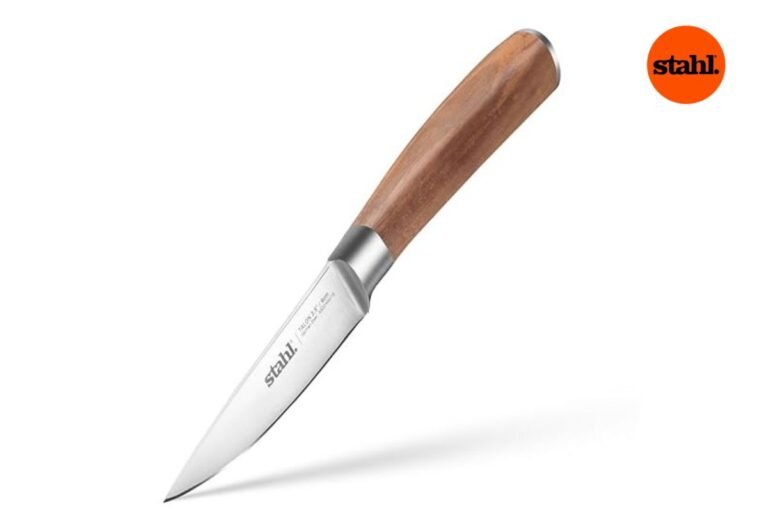
3. Stahl Stainless Steel Talon Paring Knife (9 cm)
Stahl’s Talon Series is for the cook who values precision and premium materials even in a small budget tool.
-
Technical Specifications: The knife features a 9 cm (3.5-inch) blade. It is part of the “Talon” line, which is Stahl’s designation for their precision-engineered paring tools.
-
Premium Materials: The standout feature is the Ergonomic Walnut Wood handle. In a market dominated by plastic, the walnut wood offers a natural, warm grip. The blade is made of high-grade stainless steel with a Dual Precision Edge.
-
Functional Design: The fine-tipped blade is crafted for intricate tasks: peeling ginger, de-veining prawns, or creating detailed garnishes. It is designed for “minimal maintenance,” retaining sharpness over long periods of use.
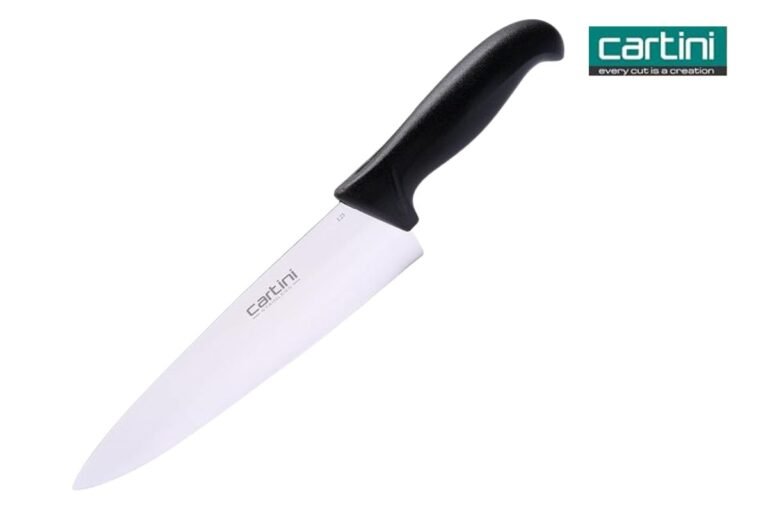
4. Cartini Classic Chef Knife (Small)
The Cartini Classic (Model: 4683) is the ultimate “no-nonsense” knife for Indian households, known for its extreme durability.
-
Technical Specifications: The blade is crafted from AISI 420 J2 stainless steel with a certified hardness of 53-55 HRC. It weighs 180 grams and has a total length of 28 cm.
-
Design & Feel: The blade is approximately 3 mm thick at the spine, providing a very sturdy, non-bendy feel during heavy chopping. It features a Taper Ground blade and an ergonomically contoured handle made of food-grade virgin polypropylene.
-
Longevity: This knife is designed to be easily re-sharpened at home using a simple honing stone, making it a favorite for decades in Indian kitchens.
5. Victorinox Swiss Classic Paring Knife (10 cm)
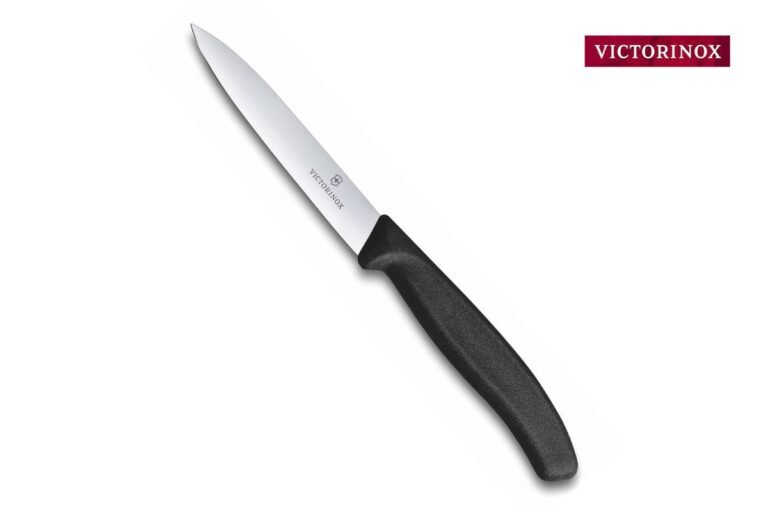
The Victorinox 6.7703 is a Swiss-made essential. It is world-renowned for its “out-of-the-box” sharpness that puts much larger knives to shame.
-
Technical Specifications: A 10 cm (4-inch) rigid blade with a normal straight edge. It is remarkably lightweight, at just 27 grams.
-
Swiss Engineering: Crafted from first-class stainless steel with a pointed tip. Unlike most budget knives, this is officially dishwasher safe.
-
Trust Factor: It carries a Lifetime Guarantee from Victorinox against any defects in material or workmanship. It is the perfect tool for “precision jobs” like de-seeding chilies or dicing garlic.
6. Kai Hocho Premium Nakiri Knife (120 mm)
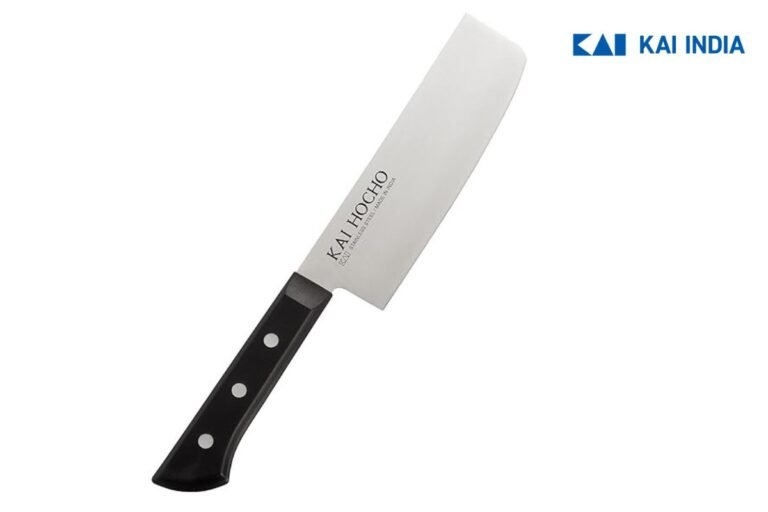
The Nakiri (Model: 000IN5122) is a traditional Japanese vegetable knife, optimized for the rapid, vertical chopping used for leafy greens and onions.
Technical Specifications: The blade length is 120 mm, and the item weighs 110 grams.
Hybrid Construction: It combines traditional Japanese styling with modern carbon steel, making the blade rust-resistant while maintaining the high edge-retention of carbon.
Handle & Grip: It features a Nylon resin handle that is ergonomic and comfortable for “pinch grip” use. The flat edge ensures full contact with the cutting board, preventing the “accordion effect” where vegetables stay attached by a thread.
7. Crystal CL-926 Stainless Steel Chef's Knife
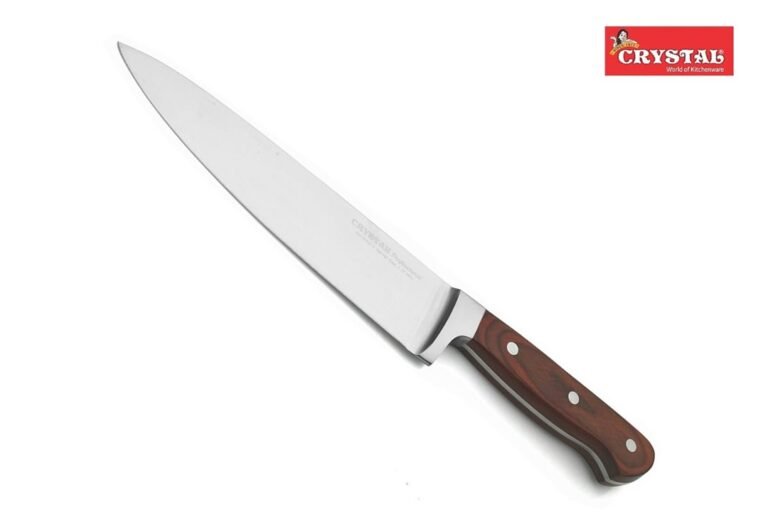
Crystal, a powerhouse from Rajkot, Gujarat, offers the CL-926 for cooks who prefer the heft and durability of German steel.
-
Technical Specifications: Forged from German Stainless Steel, this knife is significantly heavier than the Kai, weighing 270 grams (0.27 kg).
-
Design: It features a Sleek Black Finish and an “Ergonomic Perfect Grip” handle. The steel is specifically treated for high corrosion resistance and to retain its edge even after “prolonged usage” in a busy kitchen.
-
Best For: Slicing larger portions of meat and thick-skinned vegetables where the weight of the knife helps the cut.
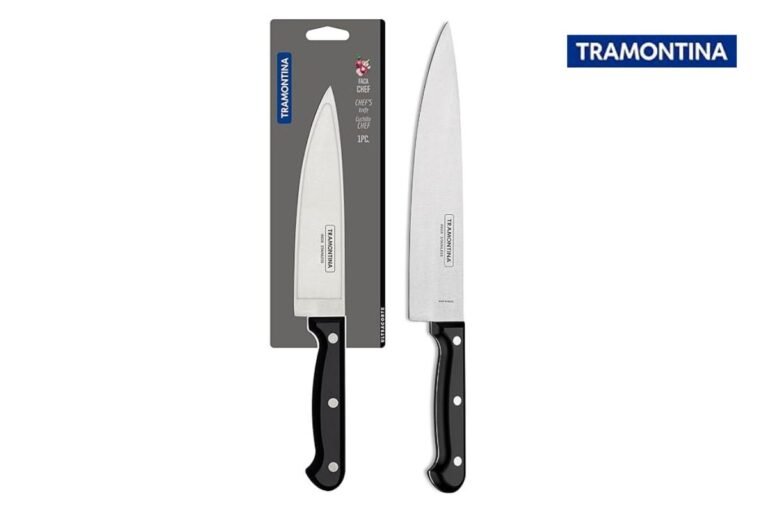
8. Tramontina Ultracorte Chef Knife (15 cm)
Imported from Brazil, the Tramontina Ultracorte focuses on international standards of safety and hygiene.
-
Technical Specifications: A 15 cm (5.9-inch) blade made of high-quality stainless steel. It measures 27.4 cm in total length.
-
Hygiene Focus: The handle features built-in antimicrobial protection, which inhibits the growth of bacteria and fungi—a critical feature for humid climates. It is dishwasher safe.
-
Warranty: It comes with a 5-year warranty, signaling the manufacturer’s confidence in its Brazilian-made durability.
9. Captoola 7-Inch High Carbon Bunka Knife
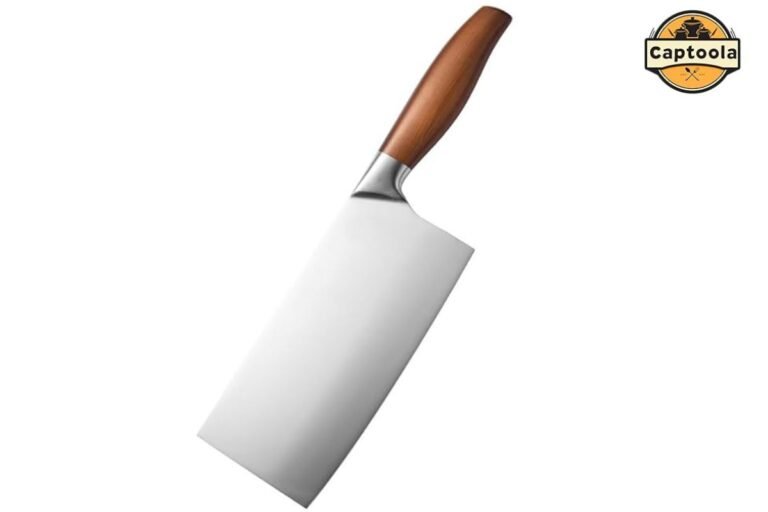
The Captoola Bunka is for the enthusiast who wants a Japanese “K-tip” design and a non-stick blade surface.
-
Technical Specifications: The blade is 7 inches long and 2.5 mm thick, made from Hand-Forged High Carbon Steel.
-
Special Features: It features a Hammered Pattern (Tsuchime) on the blade that creates air pockets, preventing food from sticking. The “Kiritsuke” tip allows for precision piercing and detail work. It uses a slip-resistant ABS handle.
-
Sharpness: The edge is hand-polished to a 12-15 degree angle per side for maximum sharpness right out of the box.
10. Rena Germany Universal Chef Knife (210 mm)
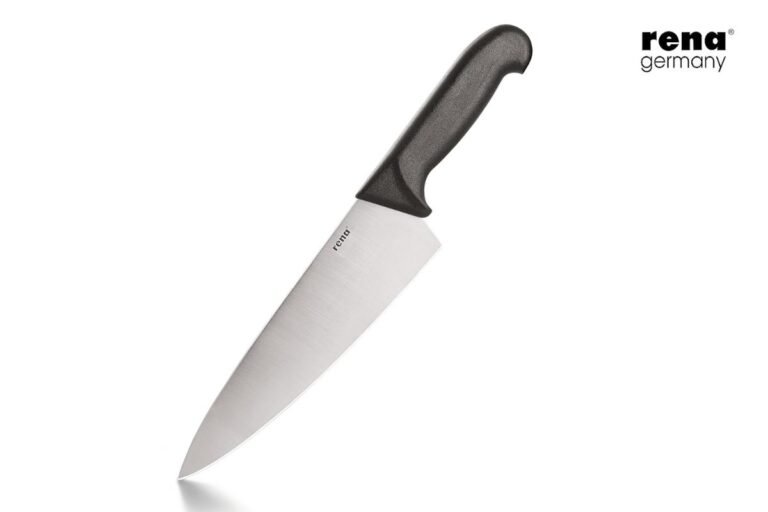
A staple in Indian hotels and commercial kitchens, the Rena Germany knife (Model: 11231R0) is built like a tank.
-
Technical Specifications: A massive 210 mm (8.2-inch) blade with a professional-grade 3.0 mm thickness. The handle length is 140 mm, and the weight is approximately 200 grams.
-
Commercial Build: Made from food-grade AISI 420J2 stainless steel using German technology. It is designed for heavy-duty commercial use and features an unbreakable virgin polypropylene handle.
-
Performance: The thick spine and “rocker-style” edge allow for effortless chopping of large volumes of vegetables or dense meats.
Why Not to Choose Multi-Set Knife Blocks?
As you research, you will see 6-piece or 3-piece “Knife sets” for ₹899. Don’t buy them, Spend al your money on single piece.
Steel Grade
Branded individual knives use specific alloys like AISI 420J2 or German Steel. Cheap sets use “generic” thin steel that bends easily.
Handle Safety
Professional individual knives have reinforced handles (like Nylon or Wood). Cheap sets use hollow plastic that can snap while you are cutting something hard.
Wasted Budget
You only need a Chef Knife and a Paring Knife. Spending your full ₹1000 on one Rena or Kai ensures you have a tool that lasts 10 years, rather than 6 useless blades.
Conclusion
A professional-grade chef knife is the most important tool you will own. If you want a lightweight, razor-sharp Japanese feel, the Kai Hocho Premium is the best choice. If you want a heavy, “tank-like” knife that can handle the toughest Indian vegetables, go for the Rena Germany or Cartini Classic. By choosing one quality blade, you aren’t just buying a tool; you are buying speed, safety, and precision.
Honing (using a steel rod) doesn’t remove metal; it just straightens the microscopic edge of the blade. You should do this every week. Sharpening (using a whetstone) actually grinds the metal to create a new edge. You only need to sharpen a quality knife 2–3 times a year.
Glass is harder than steel. Every time your knife hits a glass board, the edge rolls or chips instantly. Always use wood or high-quality plastic boards to protect your investment.
No. Even high-carbon steel is brittle. Attempting to “hack” through frozen food or bone with a chef knife can cause the blade to snap or develop large chips. Use a Cleaver for those tasks.
No. If you have a high-carbon knife (like the Kai), those are likely rust spots from moisture. You can usually remove them with a specialized “rust eraser” or a paste of baking soda and water. To prevent this, always wipe the blade dry immediately after washing.
Try the “Tomato Test.” If your knife squashes the tomato instead of sliding through the skin with almost no pressure, it is dull. Another way is the “Paper Test”: a sharp knife should slice through a piece of printer paper cleanly without tearing.

Indian knife collector with a deep respect for Japanese knife making. What began as an interest in Damascus patterns grew into a focused study of Japanese knives from Sakai and Seki. Through Shiroblade, I share simple guides on buying, using, and caring for knives, helping readers understand real craftsmanship beyond looks.
Pingback: What is a Chefs Knife? What is it Used For?